Malta is a popular destination for expats thanks to its warm climate, English-speaking community, and economic opportunities, such as buying real estate in a market that has been steadily growing year‑on‑year.
Foreigners can obtain a Malta residence permit, RP, by purchasing property for at least €220,000. The rental option is also available.




1. Fast and easy path to residency. The process of obtaining a residence permit by investment can take as little as 3 months. Investors are not required to secure employment in Malta, establish a business, or meet other typical grounds for residency.
2. Owning a valuable asset. The Malta Global Residence Programme, MGRP, allows investors to acquire a tangible asset, real estate, in one of Europe's most stable property markets.
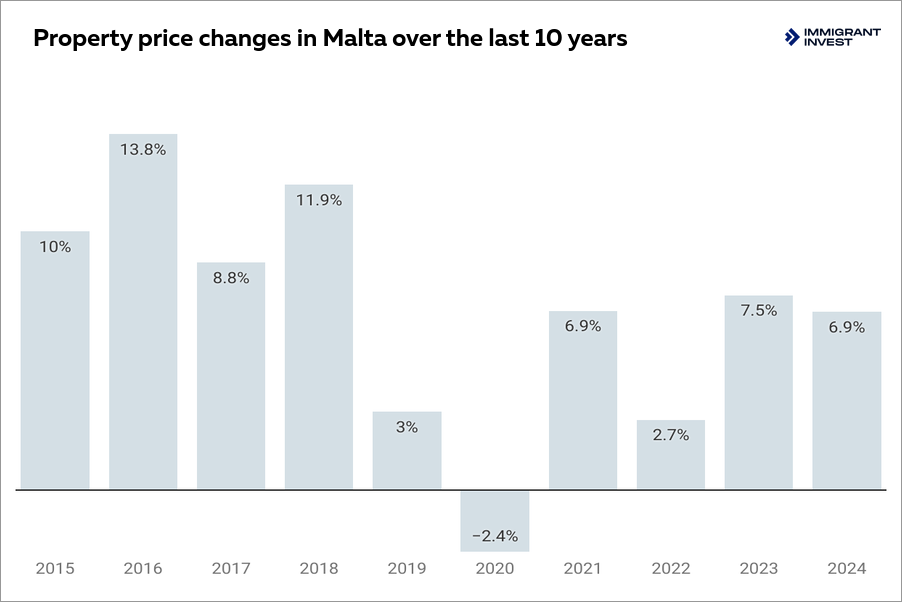
Malta’s property sector has demonstrated steady long-term growth, driven by high demand and limited supply. Whether choosing to live in the property or hold it as a long‑term investment, ownership under the MGRP offers security, potential for capital appreciation, and diversification of one’s asset portfolio.
3. Inclusion of family members. Investors can add their immediate family members to the application. This includes spouses or partners, children under 25, siblings, parents, and grandparents.
4. No physical presence required. Property buyers do not need to live on the island permanently to keep their status. However, they must not spend more than 183 days per year in any other country to avoid becoming tax residents there. This means they can freely move between different countries without the need to be physically present in Malta.
5. Special tax regime. Malta offers a highly competitive tax framework under the Global Residence Programme. Qualifying individuals benefit from:
Additionally, Malta’s network of over 70 double taxation treaties provides further protection against tax duplication.
The Malta Global Residence Programme, MGRP, allows foreigners to obtain a Maltese residence permit through the purchase of real estate. The minimum property value required depends on the region:
In addition to the property investment, the applicant must pay an administrative fee of €5,500—6,000 and an annual tax. The tax is either €15,000 or 15% of the income, whichever is higher. Legal fees and property taxes also apply.
Requirements. To qualify for the MGRP, the investor must:
Family members. The investor may include the following dependants in the application:
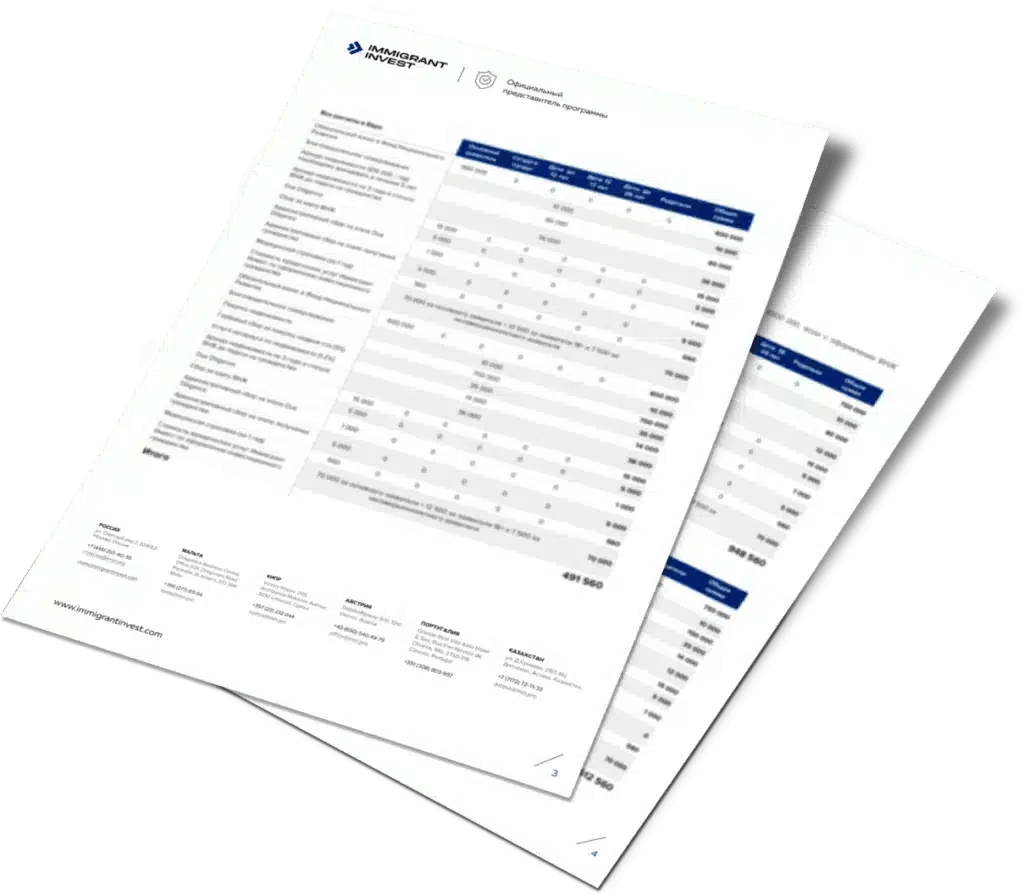
| Expense | Real estate purchase | Real estate rent |
| Real estate | €220,000+ In the south of Malta or Gozo €275,000+ In other regions | €8,750+ per year In the south of Malta or Gozo €9,600+ per year In other regions |
| Administrative fee | €5,500 In the south of Malta or Gozo €6,000 In other regions | €6,000 In all regions |
| Annual taxes | €15,000+ | €15,000+ |
| Fees, taxes and services when buying real estate | Up to 6.5% of the property’s price | — |
| Documents translation and apostille, notary fees | €3,000+ | €3,000+ |
| Health insurance | €700+ | €700+ |
| Total | €258,500+ / €317,575+ | €33,450+ / €34,300+ |
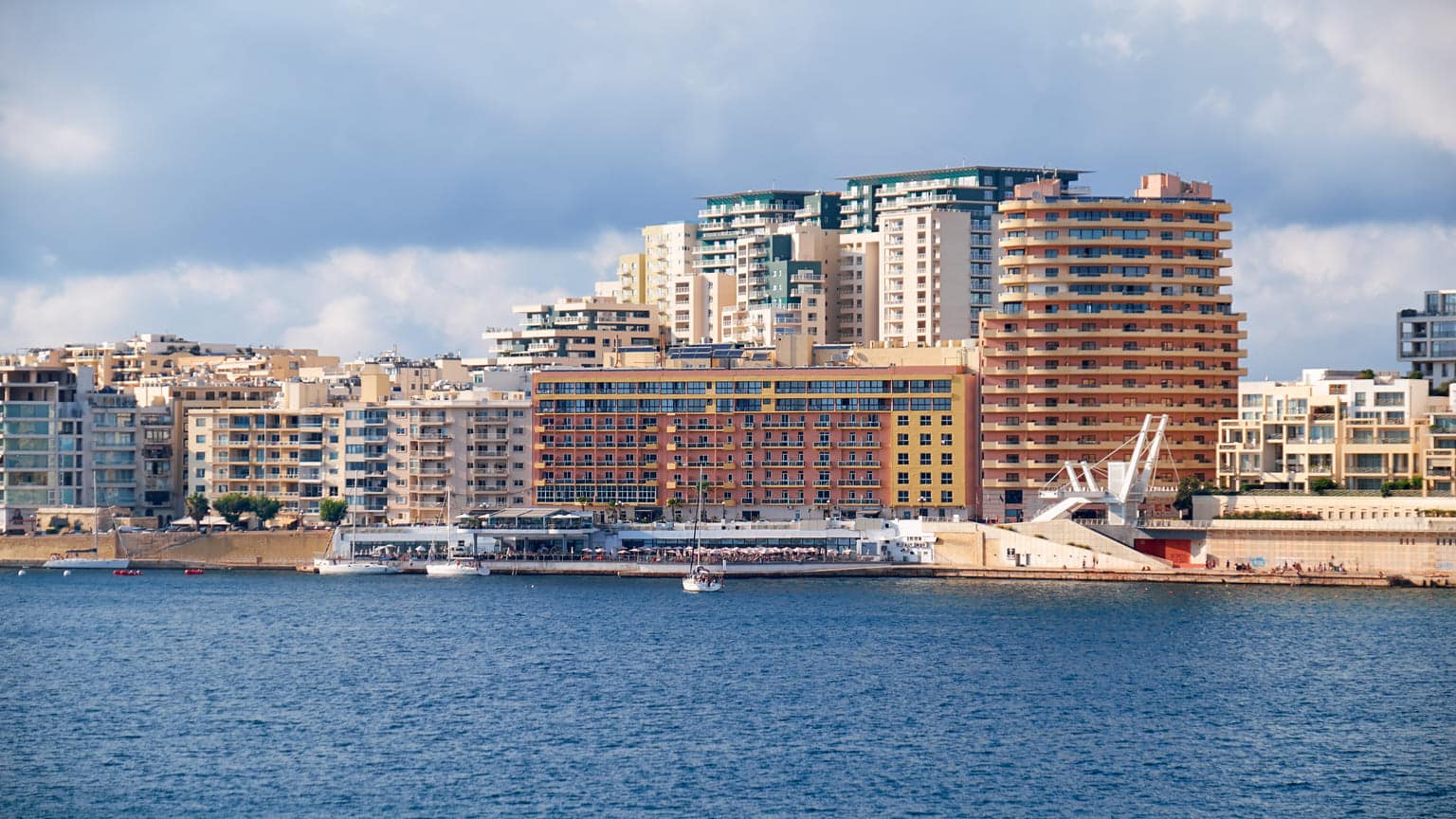
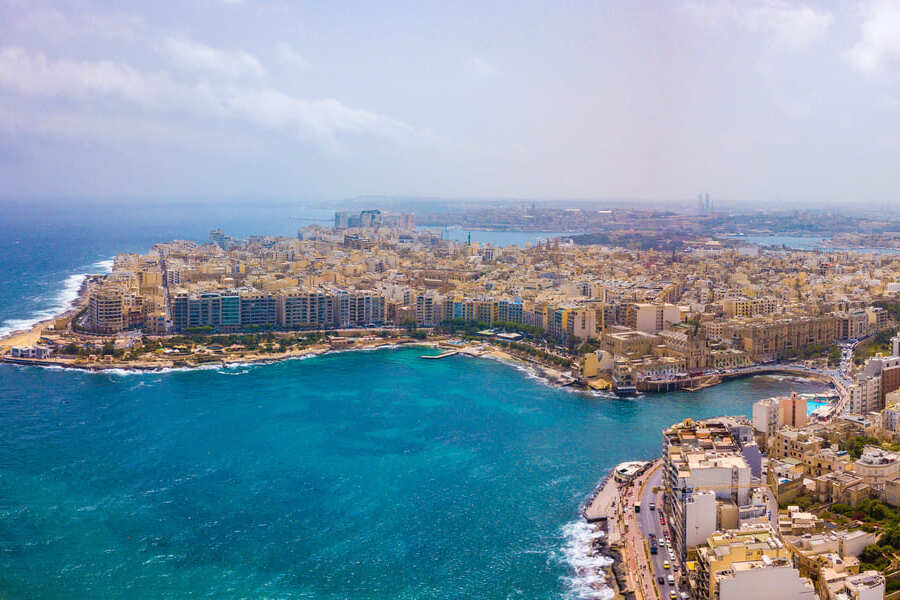
Sliema. The coastal town of Sliema is the most densely populated area in the country. It has a significant expat community, so you can freely speak English. Modern apartment blocks, shopping outlets, restaurants, cafes and international schools make Sliema a very attractive place to live, but the property prices are well above average in the country.
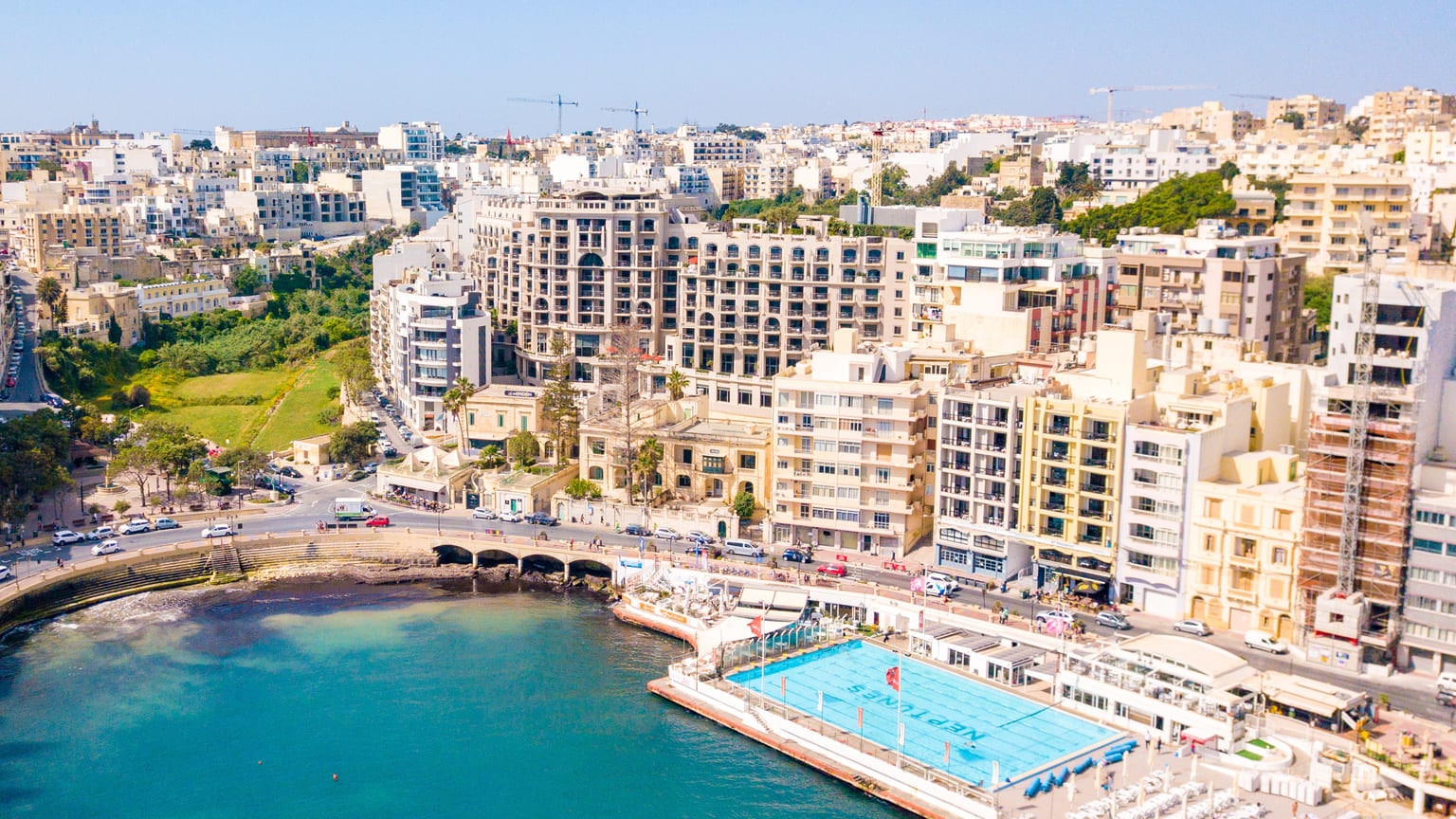
St Julian’s. The vibrant town of St Julian's is located just across the harbour from Sliema. It is most known among locals for its nightlife, hotels, restaurants, and the largest cinema complex on the island. It is a popular destination for expats as well, meaning the real estate prices are high.
Valletta. Despite being the European Union's smallest capital, Malta's historic significance spans nearly five centuries, offering a rich tapestry of culture and heritage that distinguishes it from other regions of the country.
Mellieha. For those looking for something different, there is the picturesque village of Mellieha in northern Malta. It attracts expats in search of a quieter and more relaxed lifestyle without a significant drop in quality of life compared to larger towns. Mellieha stands on a group of hills and boasts beautiful golden sandy beaches so that locals can rest both actively and passively outdoors.
Special Designated Areas, SDAs. These are zones with luxury real estate projects available for sale without restrictions that investors may face in other areas. The range of real estate options is diverse, including apartments, penthouses, duplexes, and villas.
Here are some of the SDAs in Malta:
Purchasing real estate in Malta can take between 2 and 6 months, depending on the area. It is faster to buy property in the Special Designated Areas.
1. Choosing a property. Immigrant Invest real estate experts can help the investor pick the property that suits their objective and contact the seller to discuss the details.
2. Hiring a notary. The notary will represent the investor in Malta and is responsible for certifying transactions and eventually completing the deal.
3. Concluding a preliminary agreement with the seller. The document should include the cost of the property, details on its condition, the amount of deposit, and other details.
4. Getting a permit for the acquisition of immovable property, AIP. The notary obtains the permit, which can take between 6 and 12 weeks. It is not required if the investor purchases real estate in an SDA.
5. Signing a sales and purchase agreement. The notary prepares the document. The property tax is paid at this stage. Afterwards, Immigrant Invest lawyers help the client obtain a certificate of ownership.


Based on Immigrant Invest experience, getting a Malta GRP card for purchasing property can take at least 3 months.
Immigrant Invest lawyers check potential clients against international databases to establish whether the applicants match all the requirements. The procedure is mandatory, confidential, and takes only one day, reducing the chance of rejection to 1 %.
Immigrant Invest lawyers guide the applicant through collecting and certifying documents and arranging translations, which are typically done in Malta to ensure compliance with regulatory standards.
If the investor prefers to translate documents in their country of residence, the translated documents must be apostilled or legalised.
The application is submitted to the tax office of Malta or the Inland Revenue Department.
The Inland Revenue Department conducts Due Diligence.
If additional questions arise, lawyers prepare answers and additional documents if necessary.
If the application is approved, the investor goes to Malta to pass an interview with the Commissioner for Revenue, in which they need to explain in English why they have chosen Malta. The interview is held online.
In case of the application approval, the Director issues a Letter of Intent confirming the investor’s participation in the programme. The investor pays the minimum tax and prepares accommodation documentation.
Special tax status is granted once the applicant meets all investment requirements, including providing proof of accommodation. Tax clearance is typically issued within 2 to 4 weeks.
The residence application is prepared remotely and submitted via the government’s online system.
Provided no additional documentation is required, the Agency generally issues an invitation to submit biometrics within 2 to 4 weeks of application submission. If additional requests are made, this timeline may be extended.
Once the invitation is received, the investor may schedule their biometrics appointment in Malta at their earliest convenience.
Upon successful verification of the documents, the Agency issues a notice confirming that the residence permit cards are ready. This notification is sent by mail to the investor’s address in Malta.
The investor and their family must travel to Malta in person to collect their residence permit cards.
After the applicants are notified of approval, they must collect their residence permit cards in person.
The full list of required documents is tailored to each investor, depending on their individual background. However, the basic list includes the following:
Copies must be notarised and either apostilled or legalised. If the copies are certified by a notary in Malta, an apostille or legalisation is not required. In such cases, the original documents must be sent to Malta for authentication, after which they will be returned.
Any documents not in English must be translated into English in Malta by a translator accredited by the Ministry of Foreign Affairs and certified under the law.
The initial residence permit is valid for 1 year. It can then be renewed for 2-year periods indefinitely. To qualify for renewal, the investor must pay the annual tax and maintain the investment.
Proof of tax payment is typically provided by submitting a copy of your annual tax return.
The tax return is submitted by the investor’s authorised agent to the Malta Revenue Service by June 30th, each year. The payment covers the entire previous fiscal year. The date of the GRP application is irrelevant, as the tax always applies to the full calendar year, regardless of when the application was submitted.
The investor must inform the Maltese authorities of any significant changes that may affect their special tax status.

Approximately 2 weeks after submitting the tax return, the investor receives confirmation that their special tax status remains valid. Once confirmed, the investor submits the necessary documents online to Identità to renew the residence permit card. Biometric data must also be retaken.
Residence permit cards are issued within 2 to 6 weeks. The investor must collect the new residence card in person from Identità.
The Malta Permanent Residence Programme is another option for obtaining residency through real estate investment. While it requires higher financial commitments compared to the MGRP, it grants permanent resident status for life.
Eligibility criteria. To be eligible, applicants must meet the following requirements:
Investors may include their family members in the application, including a spouse or partner, children under 29, as well as parents and grandparents.
Obtaining process. The process takes at least 6 months and includes the following steps:
Investment requirements. Investors must purchase or rent real estate, pay government fees, and make a charitable donation to a non-governmental organisation. If the investor opts to rent property, the lease must be for a minimum of five years.
In addition to the real estate investment, the applicant must meet one of the following asset requirements:
| Expenses | Real estate purchase | Real estate rent |
| Real estate | €375,000+ | €14,000+ per year |
| Contribution fee | €37,000 + €5,000 for the spouse and per family member under 18, €7,500 per person for other dependant | €37,000 + €5,000 for the spouse and per family member under 18, €7,500 per person for other dependant |
| Administrative fee | €60,000 + €5,000 for the spouse and per family member under 18, €7,500 per person for other dependant | €60,000 + €5,000 for the spouse and per family member under 18, €7,500 per person for other dependant |
| Charitable donation | €2,000 | €2,000 |
| Total | €474,000+ | €169,000+ |
There is no annual property tax in Malta. However, some taxes apply when you buy, sell, or rent real estate out.
Taxes on purchasing a property in Malta include a stamp duty levied at 5%.
There are also the following additional costs:
Taxes when owning property may be levied on the land under the building if it is rented. The annual tax is €40 to 250. If you rent a property out, the tax rate on the rent income is up to 15%, depending on its amount.
Taxes on selling a property in Malta. The seller must pay a transfer tax. Its rate depends on the period of ownership and the purpose of use of the property:
A tax on capital gains is levied at 15% if an investor is not an owner yet but has already committed to reselling the property at a higher price.
Buying property in Malta can open a pathway to several residency options, including the Malta Global Residence Programme. However, purchasing real estate alone is not sufficient — applicants must also meet other requirements.
To participate in the Malta Global Residence Programme, the investor needs to purchase real estate for at least €220,000 or rent it for at least €8,750 per year. Other expenses include an administrative fee of €6,000 and an annual tax of at least €15,000.
No, you cannot. There is no investment-based path to get Malta citizenship.
It is possible to get Malta citizenship by naturalisation after 5 years of living in the country. There’s also naturalisation granted for exceptional contributions to Malta or humanity. It is called Citizenship by Merit.
Eligibility fields include entrepreneurship, investment projects, job creation, innovation, science, education, culture, philanthropy, security, and social impact.
The Malta Permanent Residence Programme allows investors to become permanent residents of Malta. Alternatively, a foreigner may apply for permanent residence after living in Malta for five years.
Holders of a Malta residence permit can reside indefinitely in Malta, enjoying its warm Mediterranean climate. Additionally, Malta residents can travel visa-free across the Schengen Area.
Foreigners can buy real estate in Malta under certain conditions. Most importantly, they need to apply for an Acquisition of Immovable Property, AIP, permit unless the property is located in a Special Designated Area.
If you rent a qualifying property under the MGRP, the one‑off and annual costs look like this:
Therefore, the total up‑front non-recoverable cost on application is approximately €10,000.
If your application for the Malta residence permit under the Global Residence Programme is rejected, most of the fees you have paid will not be refunded. This includes the application fee and agent or legal fees. These are considered payment for services already rendered, such as document processing, background checks, and advisory support.
Hidden or additional costs beyond the main Malta Global Residence Programme fees include the following:
To prove your source of funds, you must provide the following documents:
The documents must be supported with official translations and may require legalisation.
The minimum obtaining period is 3 months. However, in practice, the process usually takes between four and seven months, broken down as follows:
Delays may occur due to incomplete documentation or complex financial verification.
No, you cannot include your adult children if they are financially independent. They must file their own application.
Yes, you can include your spouse’s parents or grandparents, provided they are financially dependent on you or your spouse.
You can buy only a residential property costing:
There are no more specific requirements for the purchased property.
Typical annual costs for owned property include:
No, you do not need to physically reside in Malta year-round, but there are conditions:
If you’ve purchased real estate under the Malta Global Residence Programme, you must retain ownership of the property for as long as you wish to maintain your residency. If you cease to own or rent a qualifying property, your residence permit will be revoked.