Foreign nationals from outside the EU and EEA can obtain permanent residence in Malta through the Malta Permanent Residence Programme. The programme is family-friendly: investors can include up to four generations in one application, from children to grandparents.
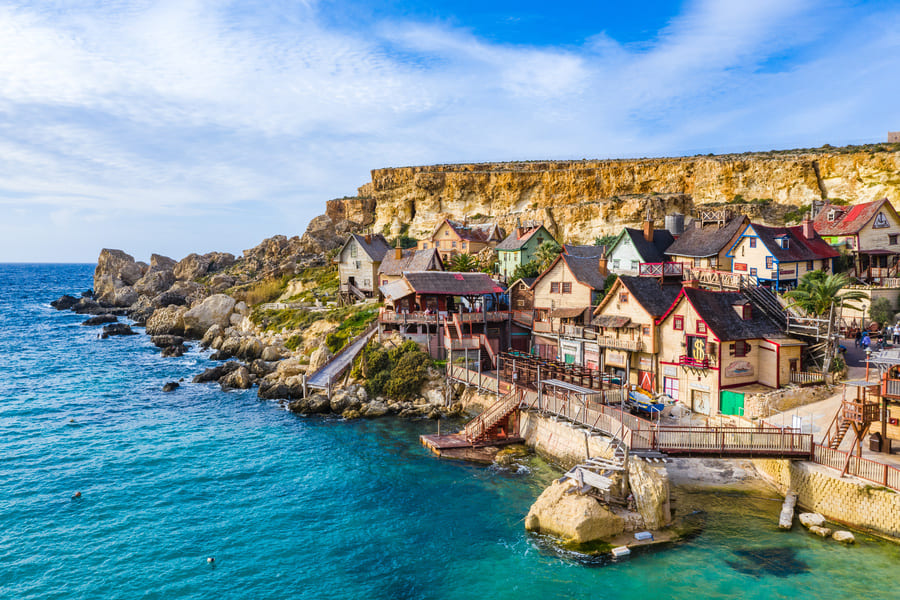
Malta suits families who want a secure European base, wider travel freedom, and the option to enjoy life in an English-speaking Mediterranean country.
To qualify, applicants rent or buy a home in Malta, pay the required government and administrative fees, make a charitable donation, and pass financial and Due Diligence checks.




The Malta Permanent Residence Programme, MPRP, allows non-EU nationals to obtain permanent residence in Malta through investment. It is governed by the Malta Permanent Residence Programme Regulations, S.L. 217.26, and is the only Maltese route that grants direct access to permanent status without years of prior stay in the country[1].
The minimum investment is €169,000, depending on the chosen investment option: renting or purchasing property. The amount includes the mandatory government contribution, administrative fee, and charitable donation.
Investors can include family members up to the fourth generation, making it one of Europe's most inclusive family residency programmes.
Residence cards are issued within about 6 months. The timeline covers document preparation, application review, approval, and card issuance.
Applications must be submitted through a licensed agent approved by the Residency Malta Agency. Immigrant Invest is an authorised licensed agent and assists investors throughout the entire application process.
Permanent resident status is granted for life, so applicants do not need to renew their residence rights. Only the residence cards must be renewed every 5 years, provided the programme conditions are met. There are no minimum stay requirements, language tests, education exams, or interviews.
The MPRP is open to third-country nationals, meaning citizens of countries outside the EU, EEA and Switzerland. Applicants from the US, UK, Canada, Australia, Japan, South Korea, Singapore and other eligible non-EU countries may qualify if they meet the personal, financial, and Due Diligence requirements.
The main applicant must:
The health insurance policy must provide at least €100,000 in medical coverage and remain valid throughout the period of residence.
Under the MPRP, up to four generations of the investor's family may obtain permanent residence together with the main applicant. Except for the spouse or partner, all adult family members must be principally dependent on the investor and receive financial support from the main applicant[2].
The investor may include a legally married spouse or a partner in a stable, durable relationship. The programme also covers same-sex couples where the relationship is legally recognised.
If the relationship ends after the Certificate of Residence is issued, the former spouse or partner loses their permanent residence status. Children who were included in the application solely through that spouse or partner also lose their status in such circumstances.
Minor children of the investor or of the spouse may be included. This applies to biological children, adopted children, and children from previous relationships of either the investor or the spouse.
Adult children aged 18 to 29 may be added, provided they are unmarried, principally dependent on the investor or the spouse, and are not engaged in full-time employment. This rule applies to adult children of the investor as well as adult children of the spouse.
An additional administration fee of €7,500 applies for each adult child added to the application.
Parents and grandparents of the investor or of the spouse may be added at any age, provided they are principally dependent on the investor and receive financial support from the main applicant.
An additional administration fee of €7,500 applies for each parent or grandparent included in the application.
Family sponsorship can be a practical way to structure an MPRP application when the main applicant cannot meet the financial requirements on their own. The programme allows an eligible family member to act as a sponsor in defined cases.
This may apply, for example, when an EU-citizen spouse wants to support a non-EU partner, or when a parent sponsors an adult child who has not yet accumulated the required assets. In our experience, this approach often helps families avoid delays and prepare the application correctly from the start.
If several spouses are legally recognised in the main applicant’s country of origin, separate applications with individual sponsors may be needed.
The sponsor must pass the same Due Diligence checks as the main applicant. This helps ensure transparency and keeps the application compliant with MPRP standards.

After the Certificate of Residence is issued, the main applicant can add eligible family members through a separate post-approval process. Each new dependant must meet the MPRP requirements, and a separate set of documents must be submitted[3].
Family members who can be added after approval include:
The cost of adding a dependant post-approval is €7,500 per person. Adult children with a certified disability under the Equal Opportunities Act may be added free of charge.
The MPRP requires applicants to rent or purchase residential property in Malta. In addition to meeting this property requirement, applicants must make several mandatory payments:
An additional administrative fee of €7,500 applies to each adult family member, except the spouse.
Applicants may meet the property requirement by renting residential property in Malta or Gozo. The minimum annual rent is €14,000.
The lease agreement must remain valid during the first 5 years of permanent residence. Over this period, the minimum total rental cost is €70,000.
After 5 years, investors may continue renting or move to another property with no minimum value requirement. However, they must keep a valid registered residential address in Malta to preserve their permanent resident status.
| Payment | Single applicant | Couple | Family of 4, including investor, spouse, minor and adult child | Family of 6, including investor, spouse, minor and adult child, two parents |
|---|---|---|---|---|
| 5-year rental | €70,000+ | €70,000+ | €70,000+ | €70,000+ |
| Government contribution | €37,000 | €37,000 | €37,000 | €37,000 |
| Administrative fee | €60,000 | €60,000 | €67,500 | €82,500 |
| Charitable donation | €2,000 | €2,000 | €2,000 | €2,000 |
| Total | €169,000+ | €169,000+ | €176,500+ | €191,500+ |
Alternatively, applicants may meet the property requirement by purchasing residential property in Malta or Gozo for at least €375,000.
The property must be kept for at least 5 years after the Certificate of Residence is issued. After this period, investors may sell it and recover the invested capital. They must still maintain a registered residential address in Malta for compliance purposes.
| Payment | Single applicant | Couple | Family of 4, including investor, spouse, minor and adult child | Family of 6, including investor, spouse, minor and adult child, two parents |
|---|---|---|---|---|
| Property purchase | €375,000+ | €375,000+ | €375,000+ | €375,000+ |
| Government contribution | €37,000 | €37,000 | €37,000 | €37,000 |
| Administrative fee | €60,000 | €60,000 | €67,500 | €82,500 |
| Charitable donation | €2,000 | €2,000 | €2,000 | €2,000 |
| Minimum total | €474,000+ | €474,000+ | €481,500+ | €496,500+ |
Applicants must also prove they meet one of two qualifying asset thresholds:
In both cases, the assets must be legally sourced. Option A suits investors with more wealth held in bank deposits, securities, or similar instruments. Option B may suit applicants whose wealth is mainly held in real estate or business assets.
Beyond the mandatory MPRP payments, applicants should also budget for related costs:
Additional costs are not set by the Residency Malta Agency and differ across providers.


Document preparation is one of the most time-intensive elements of the MPRP process. All documents must be submitted in English or with an official translation. Documents issued in countries that are part of the Hague Apostille Convention must be apostilled. Documents from other countries must be fully legalised.
All MPRP applicants need to prepare:
Police certificates must come from the applicant’s country of origin and any country where they have lived for more than 6 months in the past 10 years. They must be issued by the national or federal police authority and be no more than 6 months old at the time of submission.
Some applicants need extra documents depending on their family situation and source of wealth.
The licensed agent prepares a personalised document checklist after the preliminary Due Diligence check.
The MPRP process moves through 8 stages, starting with preliminary checks and ending with the issuance of permanent residence cards. The longest step is the formal Due Diligence review by the Residency Malta Agency, which usually takes 4 to 6 months.
Based on Immigrant Invest’s experience, the shortest realistic timeline from the first consultation to receiving the cards is around 6 months in straightforward cases. This is possible when documents are prepared quickly and the property requirement is completed without delays.
When the investor turns to Immigrant Invest to apply for Malta permanent residency, the first thing that we do is the preliminary Due Diligence. Certified Anti Money Laundering Officers check the investor’s and their family members’ documents and biographies against international databases.
This procedure helps us to find possible issues and decrease the risk of refusal to our clients to 1%.
The Immigrant Invest lawyers prepare the list of documents that an investor has to provide. They also take care of all the translations, notarisation, and filling in government forms.
When everything is done, the application is submitted to the Residency Malta Agency, and the investor pays the first €15,000 of the administration fee.
Before submitting the complete MPRP application, the main applicant and their dependents may choose to apply for a 1-year temporary residence permit. This permit allows them to stay in Malta while completing the full application process for the permanent residence certificate.
The Residency Malta Agency conducts Due Diligence. The applicants’ biographies are checked against international databases. The process usually takes around 4—6 months, and if some additional requests appear, it might extend.
If the application is approved, the Residency Malta Agency sends a notification to Immigrant Invest. After that, the investor needs to fulfil investment conditions: buy or rent housing, pay the government and administrative fees, and contribute to the charity. It must be completed within 8 months.
Within 2 months of approval, the investor pays the remaining €45,000 of the administration fee.
All who were included in the application come to Malta and submit their biometrics. They can do it before or after the fulfilment of the investment conditions. Infants up to the age of 2 are exempt from biometrics.
When the applicant has made all the investments in Malta’s economy, Immigrant Invest lawyers send additional documents to the Residency Malta Agency. The agency checks them and gives final approval.
To collect the documents for permanent residency, the investor doesn’t need to come to Malta again. The Certificate of Residence and permanent residence cards are sent to the Immigrant Invest lawyers in Malta and then to the applicants.
Permanent residence under the MPRP is granted for life: the status does not expire, but the physical residence cards must be renewed. During the first 5 years, investors must also pass annual compliance checks.
For adults, residence cards are valid for 5 years. At the end of each period, card holders renew the card, not their permanent resident status.
For children, card validity depends on age. A child’s card expires one month after they turn 14 and again one month after they turn 18. At each stage, a new card is issued to reflect the updated age category.
For the first 5 years after permanent residence is granted, the Residency Malta Agency carries out annual compliance checks. The main applicant must submit a Compliance Form on each anniversary of the Certificate of Residence.
During this period, the Agency checks that:
Once the first 5 years have passed, annual compliance checks no longer apply. Future card renewals mainly require a valid registered residential address in Malta. The applicant no longer needs to prove the full asset threshold every year.
Failure to meet the property, asset, or insurance requirements during the first 5 years may lead to the loss of permanent resident status.
Explore the benefits and requirements of the Maltese investment programme in a couple of minutes
Investors who purchase property under the MPRP may sell it after the mandatory 5-year holding period without losing their permanent residence status. After the sale, they must continue to maintain a registered residential address in Malta. This can be a rented property, and there is no minimum rental value requirement once the initial 5-year period has ended.
The same flexibility applies to investors who chose the rental route. After 5 years, they may move to another property without having to meet the programme's minimum rent threshold.
The sale of property in Malta may be subject to Property Transfer Tax, which is generally charged at 8% of the transfer value. Reduced rates and exemptions may apply in certain circumstances, so investors should obtain independent tax advice before selling their property.
MPRP investors are not required to become Maltese tax residents, but they may choose to do so if relocation or regular residence in Malta fits their personal tax strategy.
Investors who become Maltese tax residents but remain non-domiciled in Malta may be taxed mainly on income brought into the country, while certain foreign income and capital gains can remain outside the Maltese tax net.
Obtaining permanent residence under the MPRP does not, by itself, make the investor a tax resident of Malta. Tax residency in Malta is determined separately and primarily by physical presence[4].
Since the MPRP imposes no minimum stay requirement, investors who do not spend significant time in Malta each year are unlikely to become Maltese tax residents by default. An investor who maintains their primary home and centre of economic interests abroad will remain tax resident in their home country, even while holding Maltese permanent residence.
Maltese tax residents who are not domiciled in Malta may benefit from the non-dom remittance basis. Under this system:
The regime can be useful for investors whose income and assets are mainly outside Malta. However, tax residency and remittance planning should be assessed before relocation, especially where the applicant remains subject to tax rules in another country[5].
Many investors confuse tax residence with domicile, but they are different concepts under Maltese law. Tax residence is linked to where a person lives, while domicile can be thought of as a person’s permanent home in the eyes of the law. It is the country to which they ultimately belong and where they intend to settle indefinitely, even if they currently live elsewhere.
For example, a British investor may move to Malta, buy a home there, spend more than 183 days a year in the country, and become a Maltese tax resident. However, if the investor’s long-term intention is to remain British and they have not taken legal steps to establish Malta as their permanent home, they will usually remain domiciled in the UK.
This is why many foreign residents in Malta can qualify for the non-dom regime even after living in the country for many years.
For individuals who become Maltese tax residents, income is taxed at progressive rates. In 2026, the rates for single taxpayers are:
Married taxpayers and parents may benefit from wider tax-free bands[6].
Property-related taxes are also important for MPRP investors:
Malta does not impose an annual property tax and a wealth tax on worldwide assets or net worth.
Broad family inclusion, no stay or relocation requirement, and no exams or language tests are just some of the benefits of the Malta Permanent Residence Programme. Investors and their families also gain more freedom to travel, manage capital, do business, and enjoy a Mediterranean lifestyle in an English-speaking country.
Most residence-by-investment programmes require applicants to wait for approval before they can move to the country. Under the MPRP, investors may choose to apply for a temporary residence card, allowing them and their family members to live in Malta for a year while the application is being processed.
Malta is part of the Schengen Area, which currently includes 29 countries. A Maltese permanent residence card allows holders to travel across the Schengen Area without a visa and stay there for up to 90 days in any 180-day period.
Malta’s size adds another practical advantage: the international airport is easy to reach from most residential areas, and it offers regular flights to major European cities.
When investors choose the property purchase option, they keep the property for 5 years and may then sell it to recover part of their investment. After this period, they are free to buy or rent another property in Malta with no minimum price requirement.
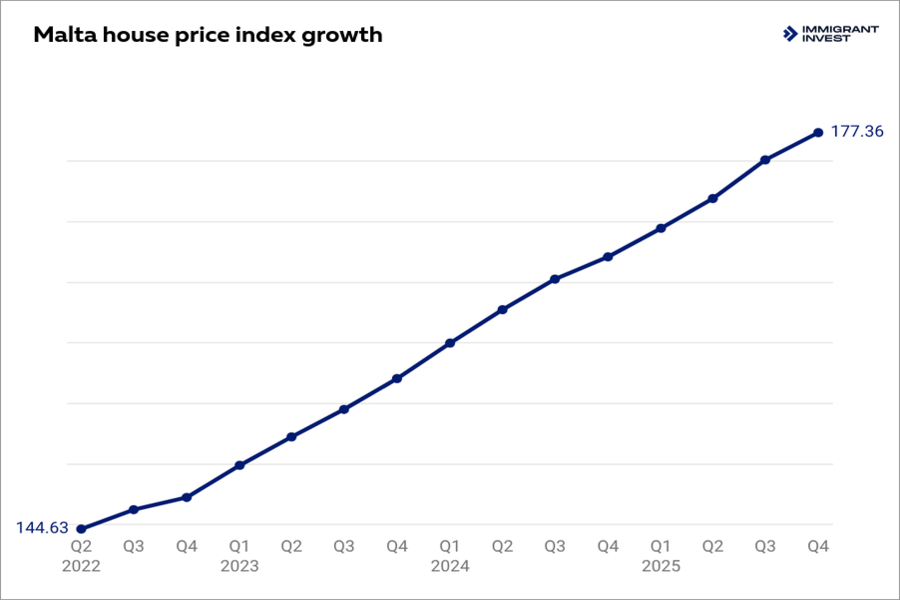
The purchase route can offer greater flexibility in the long term. Malta’s property market has shown steady growth: residential prices rose by 5.8% in 2025 and by almost 7% in 2024[10]. Consistent growth in property values helps MPRP investors preserve capital while benefiting from Malta permanent residence.
The MPRP is designed to be practical for international families. Immigrant Invest manages communication with the Residency Malta Agency on the investor’s behalf, which makes the process clearer and reduces the administrative burden.
MPRP holders can manage business interests from a stable EU jurisdiction. Malta is attractive for entrepreneurs because of its English-speaking environment, EU market access, strong banking and legal infrastructure, and business-friendly tax system.
Malta’s standard corporate tax rate is 35%. However, under the shareholder refund system, shareholders may claim a refund of up to 6/7 of the tax paid after dividends are distributed. For trading income, the effective tax rate can fall to around 5%, depending on the company structure and source of income[11].
The MPRP gives investors flexibility in how they structure their tax affairs. Permanent residence does not automatically make a person a Maltese tax resident, so investors can decide whether local tax residency suits their plans.
Those who become Maltese tax residents may benefit from the non-dom regime: foreign income is taxed only if brought into Malta. Malta also has no wealth tax, inheritance tax, or annual property tax.
Malta’s official languages are Maltese and English, and English is widely used in schools, universities, business and daily life. Families from the US, UK, Australia, and other anglophone countries can adapt faster because the language barrier is much lower. Settlement also feels easier because around 30% of Malta’s population is foreign-born.
Malta has around 300 sunny days a year, which makes outdoor life possible almost all year round. Families can swim, sail, hike, dive, explore historical sites, and take short trips across Malta and Gozo.
Among European investment-based residence routes, the MPRP is unusual because it grants permanent status from the start. Cyprus also offers permanent residence by investment, but its route has a higher entry threshold, narrower family inclusion, no current Schengen access, and a less convenient timeline.
Temporary residence permits require regular renewals, often every 2 or 5 years. Each renewal can involve another review of the applicant’s circumstances, documents, property arrangements, and investment structure, which adds cost and administrative work.
Permanent status under the MPRP removes much of this recurring re-approval risk. Once granted, the status is secure for life, provided the investor meets the annual compliance requirements during the first 5 years. After that, obligations reduce significantly.
| Country | Minimum investment | Processing time | Schengen access | Status from day one | Family coverage |
|---|---|---|---|---|---|
| Malta | €169,000 | 6+ months | Yes | Permanent | Spouse, children under 29, parents, grandparents |
| Cyprus | €300,000 | 9+ months | No | Permanent | Spouse, children under 25 |
| Greece | €250,000 | 4+ months | Yes | Temporary, 5-year renewable | Spouse, children under 21, parents |
| Portugal | €250,000 | 12+ months | Yes | Temporary, 2-year renewable | Spouse, children under 25, parents |
| Hungary | €250,000 | 5+ months | Yes | Temporary, 10-year renewable | Spouse, children under 18, parents |
| Italy | €250,000 | 4+ months | Yes | Temporary, 2-year renewable | Spouse, children under 18, parents |
| Latvia | €50,000 | 3+ months | Yes | Temporary, 5-year renewable | Spouse, children under 18 |
The MPRP is a well-regulated programme, but applicants still need to prepare carefully. Most risks do not come from the programme itself, but from incomplete documents, unclear asset ownership, past immigration issues, or incorrect expectations about the rights granted by permanent residence.
Applicants may believe they meet the financial requirements because their overall net worth is high. In practice, not every asset may count in the same way.
Mortgaged property, illiquid assets, company-owned holdings, and assets held through complex structures may require additional proof or may not fully satisfy the requirement. The key issue is not only how much the applicant owns, but whether the Residency Malta Agency accepts those assets as qualifying wealth.
A preliminary eligibility review helps identify such gaps early. It should cover asset type, ownership structure, liquidity, and source of funds before the applicant commits to the process.
The MPRP includes both non-refundable payments and recoverable capital commitments. The administrative fee, government contribution, and charitable donation are non-refundable. Property, by contrast, remains an asset, although it must be kept for the required period.
The payment structure helps reduce risk because the larger payments are made only after approval in principle. Payment stages should be separated clearly: the first instalment is paid at submission, the remaining fees become due after approval in principle, and non-refundable amounts cannot be recovered.
Every main applicant, sponsor, and adult dependant must pass Due Diligence checks by the Residency Malta Agency. Cases may take longer when the profile includes prior visa refusals, several business affiliations, political exposure, cryptocurrency holdings, cash-intensive income, or assets spread across multiple jurisdictions.
A preliminary compliance check against international databases helps identify sensitive issues before submission. Supporting documents can then be prepared in advance, reducing the risk of delays during the formal review.
MPRP status gives the right to live in Malta and run business, but it does not automatically grant the right to work there. Employment in Malta requires a separate work authorisation, which involves an additional application process.
The MPRP should not be viewed as a fast route to a Maltese passport. Permanent residence does not automatically convert into citizenship after a set number of years.
Naturalisation requires substantial physical presence in Malta, including 4 years of residence within a 6-year period and 12 continuous months immediately before the application. For many MPRP investors, such residence requirements do not match the main purpose of the programme: secure permanent status without a relocation obligation.
Applicants whose main goal is citizenship may need to consider other routes with different residence and eligibility rules.
The property requirement must be managed correctly. If the applicant rents property for MPRP purposes, the property cannot be sublet and must be used for personal residence. The lease must also be registered with the Maltese Housing Authority.
After the first 5 years, investors no longer need to keep property at the original minimum value or rent level. However, they must still maintain a registered residential address in Malta. Changing property informally without updating the registered address can create compliance problems.
Ongoing address registration, Housing Authority notifications, and property-status monitoring should remain part of post-approval management.
Banking and fund transfers can take longer than expected, especially for applicants from jurisdictions with strict currency controls, transaction limits, or enhanced bank monitoring. Applicants from countries such as the US, Australia, India, Lebanon, and Pakistan may need extra time to plan transfers and prepare the required paper trail.
Opening a Maltese bank account from abroad may also be difficult, depending on the bank and the applicant’s profile. Cryptocurrency holdings are not accepted as qualifying financial assets under the MPRP.
Fund-transfer planning should start before the application timeline begins, covering the account used, transfer route, and documents proving the legal origin and movement of money.
Immigrant Invest is a licensed investment migration company with more than 20 years of experience in residence and citizenship programmes. Since the foundation, we have helped more than 10,000 investors and their family members obtain second residences and citizenships in Europe, the Caribbean, and other jurisdictions.
Immigrant Invest is accredited by the Residency Malta Agency to submit MPRP applications on behalf of investors. We also hold membership in the Investment Migration Council and operate an in-house Compliance Department that supports clients throughout the application process.
We assist investors at every stage of obtaining Malta permanent residence:
A dedicated team of compliance specialists, lawyers, case managers, and investment migration advisers works on each application, providing a single point of contact throughout the process.
The Malta Permanent Residence Programme is open to nationals of non-EU, non-EEA and non-Swiss countries who:
To qualify for the Malta Permanent Residence Programme, the minimum mandatory outlay under the rental route is €169,000 for a single applicant, covering:
Adding parents or grandparents costs an additional €7,500 per person.
The MPRP grants permanent residence from the point the Certificate of Residence is issued — there is no temporary permit stage required as a precondition. An optional 1-year temporary residence card may be applied for at the time of submission, allowing applicants to live in Malta during processing, but this is supplementary rather than a mandatory precursor to permanent status.
Family members that can be included in the MPRP application are:
All adult dependants except the spouse must be principally dependent on the main applicant.
No, the MPRP confers permanent residence only and has no direct link to citizenship. Citizenship may be sought separately through ordinary naturalisation under the Maltese Citizenship Act, which requires lawful physical residence in Malta for a qualifying period and is subject to ministerial discretion.
The MPRP application process usually takes at least 6 months from start to finish in straightforward cases.
The formal Due Diligence stage conducted by the Residency Malta Agency takes 4 to 6 months. After Approval in Principle, investors have up to 8 months to fulfil the investment conditions. The final timeline depends on how quickly documents are prepared, biometrics are submitted, and the property requirement is completed.
No minimum number of days per year must be spent in Malta to maintain MPRP status. Investors must, however, maintain a valid registered residential address in Malta, and comply with property and asset requirements during the first 5 years.
No, holding permanent residence under the MPRP does not make the investor a Maltese tax resident. Tax residency in Malta is determined separately, primarily by physical presence exceeding 183 days per year and the location of the individual’s centre of economic interests. Investors who do not spend substantial time in Malta remain tax resident in their home country.
MPRP investors purchase or rent property after approval in principle, not before. Once the Residency Malta Agency issues the Letter of Approval in Principle, investors have 8 months to complete the property requirement by either purchasing residential property or signing a rental agreement.
Under the MPRP, the required property must be maintained for the first 5 years. If the lease expires without renewal or the property is sold before this period ends, it may breach the programme rules and lead to revocation of permanent residence for the investor and included family members.
After 5 years, investors may sell the property or let the lease expire, provided they maintain a registered residential address in Malta.
During the first 5 years, MPRP investors must submit a Compliance Form to the Residency Malta Agency on each anniversary of the Certificate of Residence. The Agency verifies that the property is maintained, that total assets remain at the required threshold, and that valid health insurance is in place for all family members.
Yes, citizens of the United States, the United Kingdom and other non-EU, non-EEA, and non-Swiss countries may apply for the MPRP on identical terms, provided they meet all personal eligibility and financial requirements. There is no nationality preference or premium within the programme — the process is the same regardless of passport.
An additional administration fee of €7,500 applies for each adult applicant who is added to the MPRP application, except the spouse.
Yes, under the MPRP, eligible family members may be added after approval through a separate application process. The administrative fee is €7,500 per additional dependant. Adult children with a certified disability under Malta’s Equal Opportunities Act are the only exception: they may be added free of charge.
The most frequent grounds for the MPRP application refusal are:
Thorough preliminary Due Diligence by the licensed agent before submission is the most effective way to identify and address these issues. Immigrant Invest is licensed by the Residency Malta Agency to submit MPRP applications on behalf of investors.