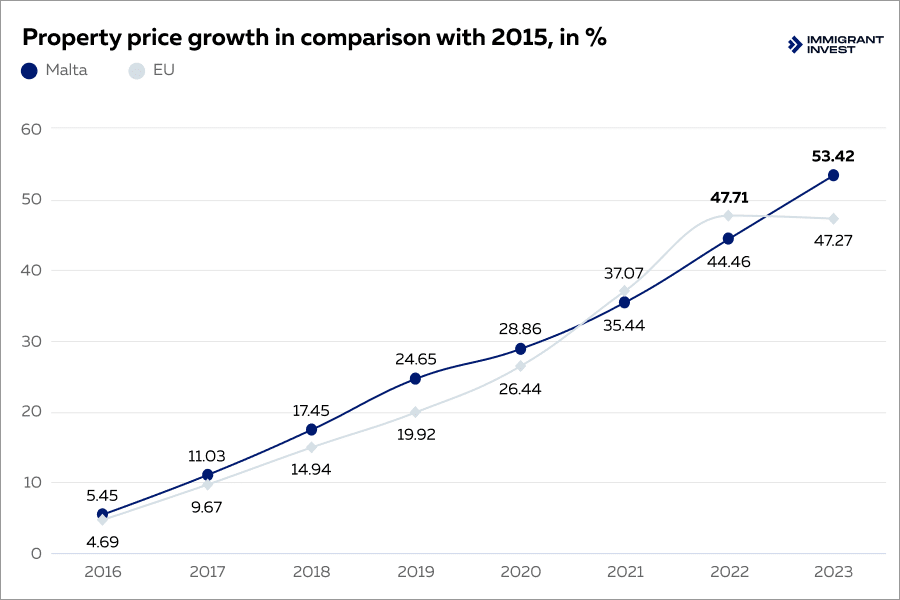
Maltese property prices have increased by 53% since 2015. Apartment and house prices in the country grow by an average of 5% per year, which is a similar pace to the European Union average.
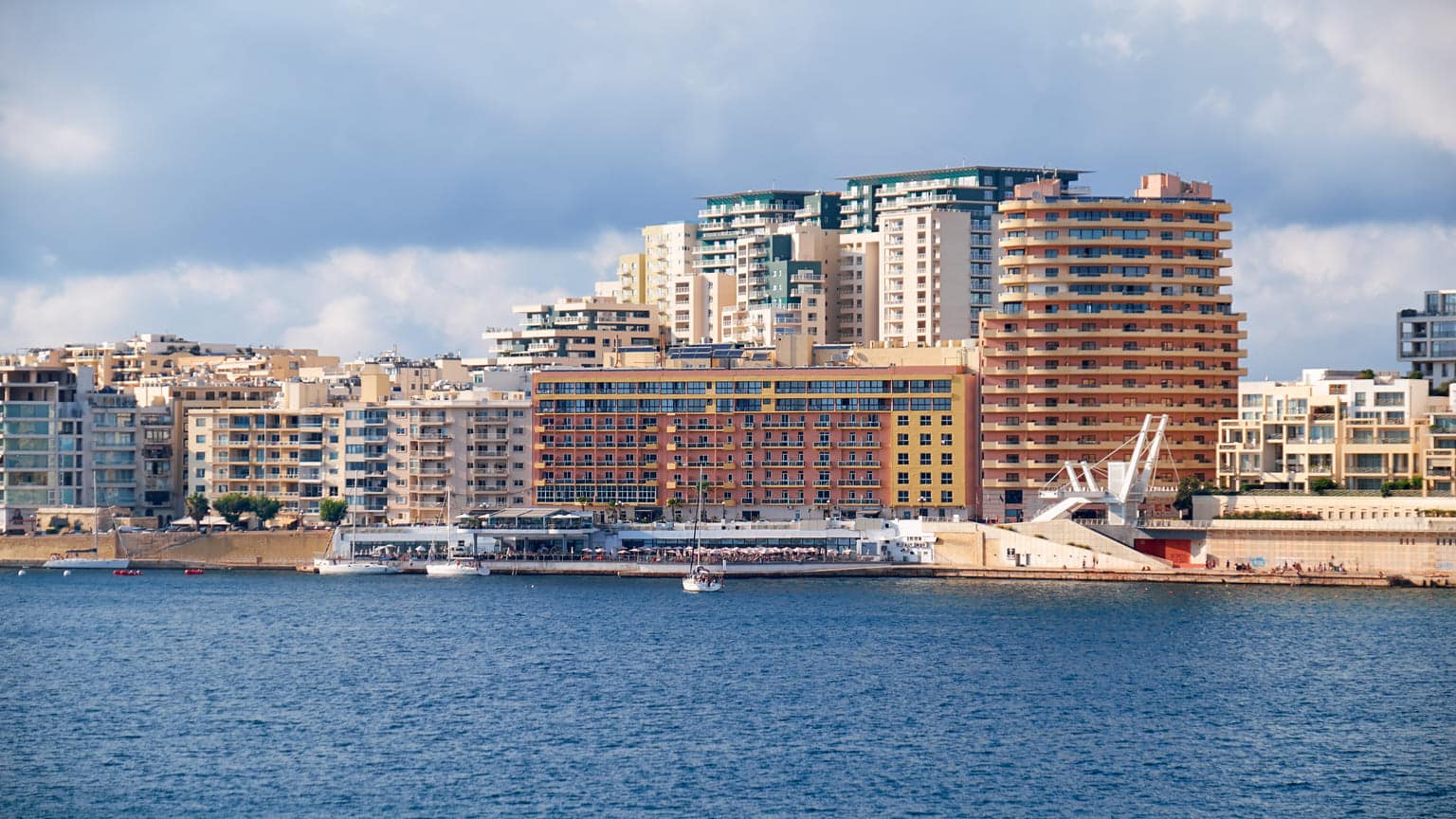
The most expensive real estate is located in areas near the capital of Malta. For example, a coastal apartment sized 176 m² in the northern harbour of Valletta costs a minimum of €740,000.




Foreigners buy real estate in Malta to have a place to live in the country, get a profitable asset, and acquire an official status, such as permanent residence by investment.
The average price per square metre of residential property in Malta is €3,300. Prices vary depending on the area and type of property, ranging from approximately €1,500 to 5,500. In Rabat, the most populated town in Gozo, the cost per square metre is between €3,000 and 4,000. In Valletta, the price can reach €7,500 per square metre.
During the first six months of 2024, a total of 6,353 properties were bought in Malta. The average price of an apartment was €374,000, while houses cost around €680,000. Individual buyers accounted for nine out of ten purchases, with companies buying the remaining properties.
Four out of five people in Malta live on a property they own: 57% live in apartments, and 43% — in houses or villas.
Foreigners have restrictions on purchasing property in Malta. In most cases, third-country investors will need an AIP permit to buy an apartment or a house.
With the permit, foreigners can only buy one property and use it solely for their residence; they can’t rent it out. The term for purchasing a property with an AIP permit is usually 4—6 months.
Without an AIP permit, foreigners can buy real estate in Special Designated Areas (SDA). Other restrictions do not apply in these areas: for example, an investor can purchase several apartments or houses in an SDA and rent them out.
Buying real estate in SDA complexes is twice as fast as in other areas. The country has organised 16 Special Designated Areas on the islands of Malta and Gozo.
Buying property in Malta for foreigners in SDAs:
Buying property outside of Special Designated Areas:
In 2021, demand for properties grew steadily, rebounding to pre-pandemic levels. However, in 2023 and 2024, there was a slight decline. In June 2024, the number of sale deeds decreased by 2.9% compared to June 2023.
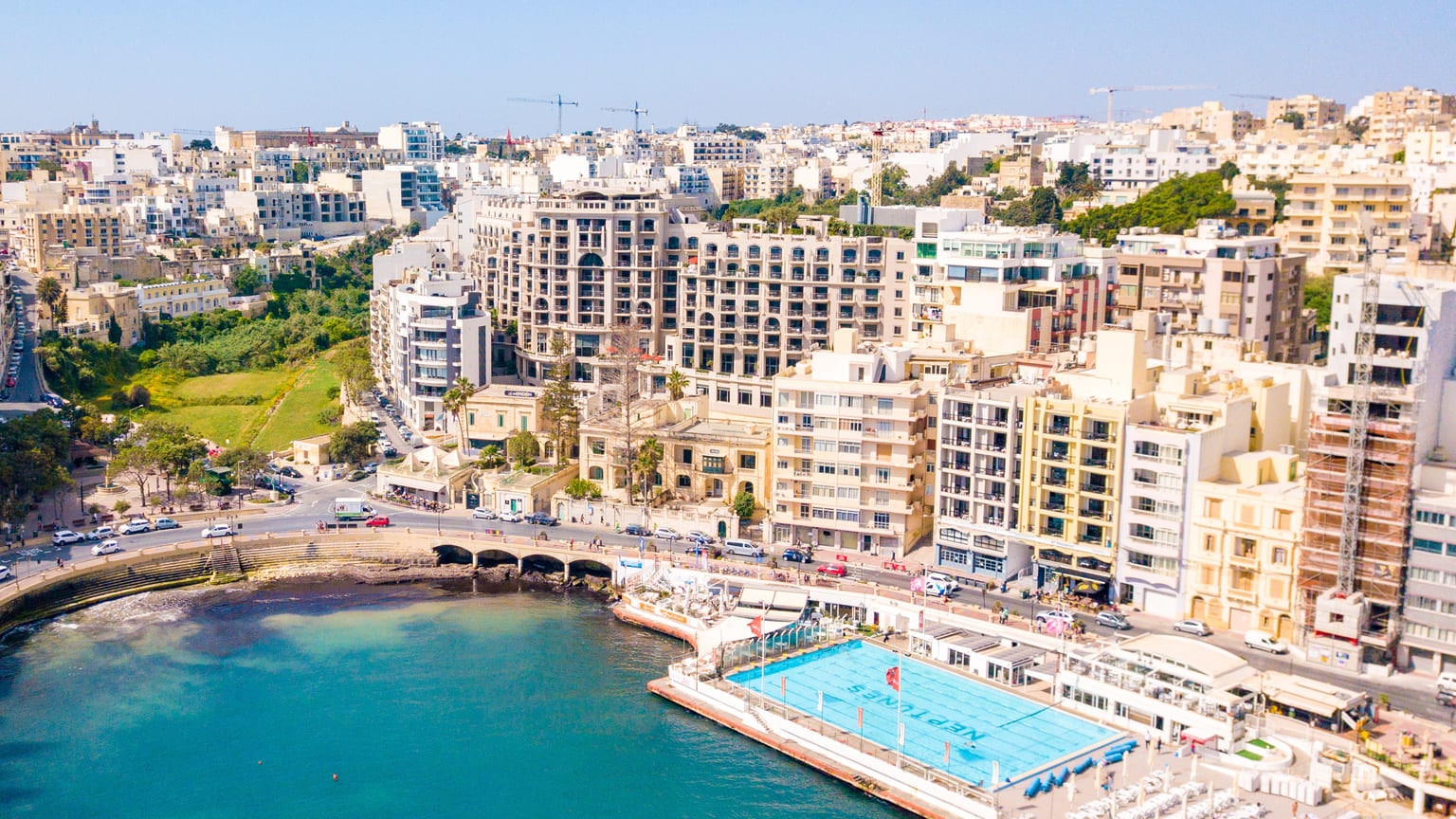
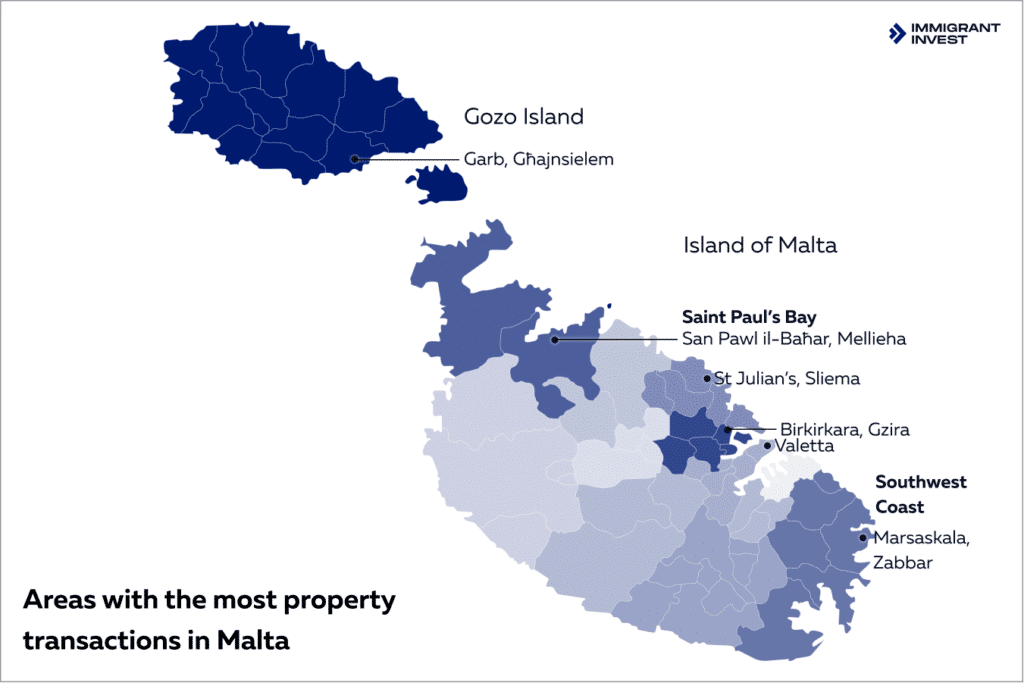
Demand varies across different areas. For instance, at the beginning of 2024, most properties were purchased in the Northern Harbour, which includes towns such as Birkirkara, Gżira, Sliema, and St. Julian’s.
Apartments, penthouses, and maisonettes in SDAs are the most popular choice. Outside of SDAs, investors can buy villas, terraced houses, or even historic buildings.
The Malta Statistics Authority has identified property trends and determined 13 districts according to real estate prices. The district borders are different from the administrative borders of municipalities.
Real estate is most often bought in five particular districts. These areas are usually chosen for living by foreigners:
The most expensive properties are located near the capital city, Valletta: in Birkirkara, Gzira, St Julian’s and Sliema. The southwest coast and the island of Gozo are the most affordable regions. For example, a 100 m² apartment in Gozo may cost €74,000, while a similar apartment in Sliema can cost more than three times as much.
Property prices in Malta are increasing annually, with apartment prices rising the most. In the second quarter of 2024, apartment prices were 8.8% higher than during the same period in 2023. Prices for terraced houses rose by 3.2%, while maisonette prices increased by 1.6%.
Buyers in Malta pay taxes and fees ranging from 8% to 15% of the contract purchase price. For example, purchasing an apartment for €375,000 requires additional costs of €30,000 to 56,250.
There is no annual property tax in Malta. Apartment maintenance requires an average of €3,400 per year. Investors pay income tax on rental income on a progressive scale from 0 to 35% or at a fixed rate of 15%.
As the European Central Bank states, mortgage interest rates in the country remain low and stable. Since 2013, it was around 2.5—3%, then during the pandemic, it spiked to 7%, and by 2022, it returned to normal.
Two domestic banks — Bank of Valletta and HSBC Bank Malta — provide most mortgage loans, accounting for 66% of the country’s retail market.

Buying property in Malta offers investors both financial and practical benefits. Real estate serves as a stable asset with steady value growth and rental potential. A property purchase also helps qualify for a residence permit.
The value of Malta residential property grows by 5% per year approximately. Investors can rent out properties either on their own or under a real estate management agreement. The annual rental yield of apartments, villas, and other properties in Malta is approximately 5.4%.
Buying a property is one of the conditions for obtaining a residence permit or permanent residence in Malta for investment.
Investors with a residence permit can travel to Malta at any time, open an international bank account, and visit other Schengen states without a visa, staying there for 90 days out of 180.
Families of investors are also granted residence permits, including the investor’s spouse, children, parents, and grandparents.
Citizenship by naturalisation for exceptional services by direct investment. Malta citizenship can be granted to foreigners who buy or rent real estate. They fulfil several investment conditions, get a residence permit, and can then apply for citizenship by naturalisation in one or three years.
Family members can also be added to the application for Malta citizenship by naturalisation for exceptional services by direct investment. This includes the investor’s spouse or partner and principally dependent children and parents.
Malta passport allows visiting 169 countries without a visa, including the US, Canada, and the UK. Maltese citizens have the right to live, work, study, and conduct business in Malta.
There is no investment-based path to Malta citizenship. Maltese nationality legislation provides for the possibility of naturalisation in cases of exceptional merit.
The statutory framework recognises exceptional contributions across various areas, such as entrepreneurship, job creation, innovation, science, education, culture, or philanthropy.
Malta Global Residence Programme is a way to obtain a residence permit by purchasing real estate in the country. Investors buy properties for at least €220,000 in the south of Malta and Gozo or at least €275,000 in other regions. An alternative option is to rent a property for €8,750 per year in the south of Malta and Gozo or for €9,600 per year in other regions.
In addition to buying or renting real estate, investors pay an administrative fee of €5,500 when buying a property in the south of Malta or Gozo, or of €6,000 in other cases.
Investors must meet the following criteria to retain a residence permit:
Investors’ families can also obtain residence permits. Qualified members include spouses and children under 18 years. Principally dependent relatives — children under 25, parents, grandparents, and siblings — can also get residence permits.
Malta Permanent Residence Programme allows getting a permanent residence for buying property in the country. Investors who want to partake in the program purchase property for at least €375,000. Instead of buying, they can rent an apartment or house for at least €14,000.
In addition to real estate investment, applicants pay:
Investors also confirm owning assets worth at least €500,000. Of these, at least €150,000 should be in liquid financial assets. Alternatively, they can have a capital of €650,000, where 75,000 are liquid financial assets.
Real estate that was bought to obtain Malta permanent residence by investment can be rented out and sold after five years. The residency status remains. Minimum rent requirements must also be followed for at least five years.
Investors must also retain a registered address in Malta, even after the five-year period ends. There will no longer be minimum value requirements. After five years, investors can buy or rent residential properties for any price.
An investor can live in Malta or in another country — there are no restrictions for staying abroad, unlike with the temporary residence permit.
Malta citizenship can be acquired by naturalisation for exceptional services by direct investment. Applicants receive the status after either 1 or 3 years of residency.
To participate, investors fulfil three mandatory conditions:
When applying, investors can add their family members. Eligible members are spouses, partners, and principal dependents: children under 29 and parents over 55.
The Community Malta Agency subjects all applicants over 12 to the thorough Eligibility Test. It takes several months and consists of four tiers, including international security and anti-money laundering clearance.
An apartment or house in Malta costs an average of €374,000 and €680,000, respectively.
The average property price per square metre in Malta is €3,300. Prices vary depending on the area and usually range between €1,500 and €5,500. The most expensive residential properties are located in the northern neighbouring Valletta regions.
A foreigner must obtain an AIP permit before purchasing real estate in Malta. An investor can buy one property and use it strictly as their personal residence. It is prohibited to rent out residential properties purchased with an AIP permit.
No restrictions apply to properties in the special SDA zones. Foreigners can buy any number of properties there and are allowed to rent them out. Buying an SDA property takes an average of 2 to 3 months — twice as fast as in other areas.
As of 2024, the average house cost in Malta is €680,000, and the average property cost, in general, is €3,300 per 1 m². Prices in the country usually range between €1,500 and €5,500.
Per Malta’s latest property price dynamics, apartments grew the most — by 8.8%.
No, real estate prices in Malta have been growing. They increase on average 5% annually. The average residential real estate value in the country grows at a similar rate as the EU average.
Yes. Real estate in Malta grows by 5% per year, similar to the EU average.
Mortgage interest rates in Malta are low and stable. Additionally, property investment makes you eligible to participate in Malta Global Residence Programme or Malta Permanent Residence Programme.
Yes. An investor can get a Malta residence permit by purchasing a real estate property for at least €220,000. The lower investment threshold applies to properties in the south of Malta or Gozo. The higher investment threshold applies to other Malta areas.
Investors can obtain Malta permanent residence by investing at least €375,000.
Malta’s real estate prices have risen an average of 5% per year. Residential property prices in Malta grow at about the same rate as the EU average.
The average cost per square metre of Malta real estate is €3,300. Prices usually range between €1,500 and €5,500, depending on the area and property features.
An investor can obtain Malta citizenship by naturalisation for exceptional services by direct investment, but purchasing a property is not enough to obtain a passport.
The minimum investment threshold is €690,000; however, it increases to €1,310,000 if you choose to buy a property. Applicants must remain Malta residents for 1 or 3 years before applying for citizenship. They can also add their spouse.