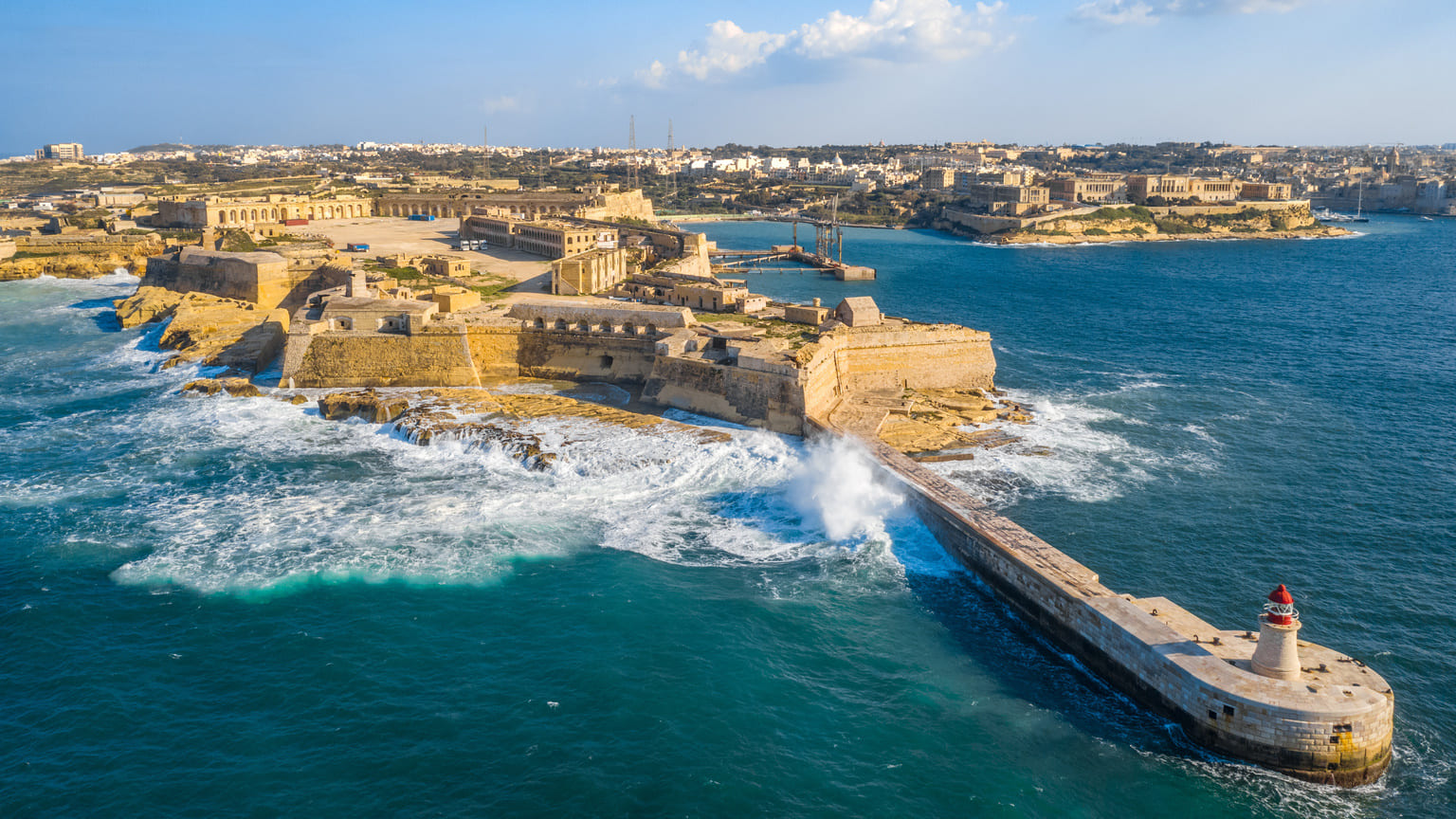
Malta stands out as an attractive option for US citizens thanks to English as an official language, a strategic location, an expat population approaching 30% on a small island, strong business niches, a Mediterranean lifestyle, and a slower pace of life.
This guide outlines the routes to Malta citizenship for Americans, as well as how to apply, what risks to consider, and where to settle.




Officially, about 5.5 million Americans live abroad based on the latest data for 2023, with the real number potentially being almost twice as high[1]. For US high-net-worth individuals, Malta offers a secure base for the family, strong international connectivity, business-friendly conditions, and an easy Mediterranean lifestyle.
Malta can serve as a second home and as a ready place to land when life in the US suddenly becomes less predictable. It gives Americans a practical fallback in situations such as political tension, a fast change in tax planning needs, family security concerns, business restructuring, or a wish to move children into a calmer environment.
Malta’s strategic location makes it convenient for Americans who need to stay connected globally. The country is far enough east to support business across Europe.
There are no direct flights to the US, but one-stop connections via major hubs such as London, Frankfurt, and Istanbul usually keep total travel time within a practical range. Malta also offers easy access across the Schengen Area, with many European capitals reachable in around 2—3 hours.
Direct links also extend beyond Europe: for example, Malta has non-stop flights to Dubai, with a scheduled flight time of about 5 hours. Regular regional connections to the Middle East and North Africa add to that flexibility.
Malta’s economy is driven by such sectors as iGaming, financial services, tourism, real estate, healthcare, logistics, aviation, pharmaceuticals, and education.
Malta’s tax system is also a key feature. Although the standard corporate income tax rate is 35%, shareholders in many trading structures can claim a 6/7 refund of the tax paid at the company level, which may reduce the effective rate to about 5%[2].
A company that is tax resident in Malta but not domiciled there pays tax only on Malta‑source income and on foreign income remitted to Malta. Foreign capital gains remain tax-free, even when brought into the country[3].
Dual citizenship with Malta is possible for US citizens. Malta allows multiple citizenship, and the US does not require Americans to give up US nationality when they acquire another passport[4].
Americans who settle in Malta gain the right to work, study, and access healthcare in a comfortable environment. English is an official language used across schools, universities, public services, and most healthcare providers.
Public schooling in Malta is free, and higher education can be very affordable: at the University of Malta, full-time undergraduate degrees are free for Maltese citizens, while some programmes with fees include doctoral studies at around €600 per year[5].
Malta is home to around 170,000 foreign citizens, accounting for almost 30% of the total population[6]. The largest communities include Italians, British, Indians, Filipinos, and Serbians[7]. This international mix on a relatively compact island creates a more open and adaptable environment, where newcomers can integrate more easily into everyday life.
The Mediterranean lifestyle in Malta offers a slower, more relaxed pace that Americans might find appealing. The island is compact, and most places can be reached by car within about 1 hour, which simplifies daily life and reduces time spent commuting.
With over 300 days of sunshine a year, outdoor activities are part of everyday routine — from swimming and sailing to coastal walks, café terraces, and weekend beach trips.
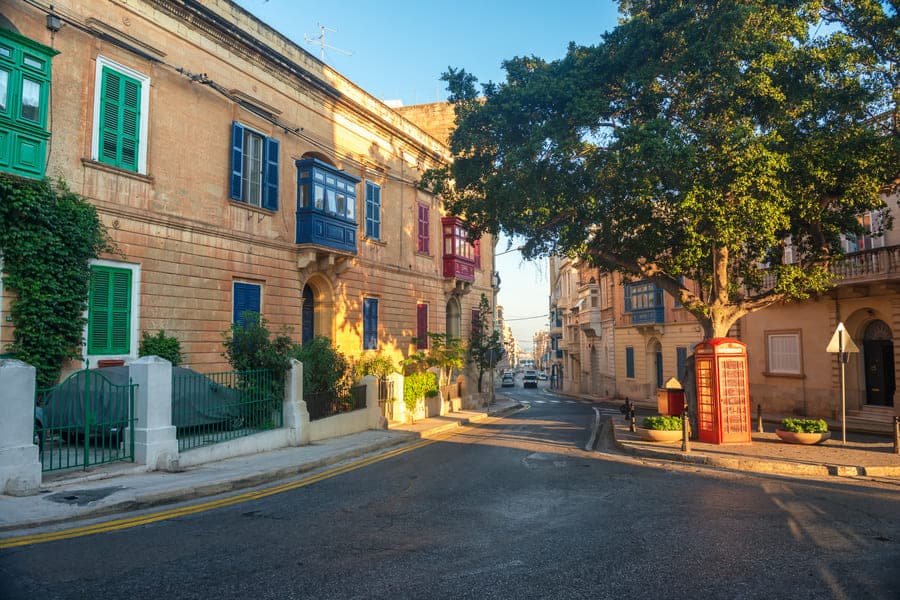
Maltese law provides four routes to citizenship. Three of them — birth or descent, registration, and standard naturalisation — are general legal routes[8]. For American applicants without Maltese ancestry, citizenship by merit is the pathway most likely to be relevant.
The rules for citizenship by descent depend on the applicant’s date of birth.
For people born before September 21st, 1964, citizenship usually requires birth in Malta to a Maltese parent. If the person was born abroad, they may qualify only if their Maltese father’s own father was born in Malta.
For those born between September 21st, 1964, and August 1st, 1989, the rules differ depending on place of birth. A person born in Malta usually acquires citizenship automatically, regardless of the parents’ nationality, subject to limited exceptions.
A person born abroad could acquire citizenship only through the father if he was a Maltese citizen at the time of birth. Mothers could pass on citizenship only through registration.
For people born on or after August 1st, 1989, the rules are broader. Citizenship is acquired if either parent was a Maltese citizen at the time of birth, regardless of whether the child was born in Malta or abroad.
Several categories of applicants may qualify for Maltese citizenship by registration.
Spouses and widows or widowers of Maltese citizens may apply after 5 years of marriage, provided the relationship meets the legal conditions.
Former Maltese citizens who lost their nationality before Malta recognised dual citizenship in 2000 may also be eligible to apply for re-registration.
Another category includes people with a Maltese mother. This applies to individuals whose mother was, or could have become, a Maltese citizen by birth under the law.
Standard naturalisation requires US applicants to live in Malta:
Applicants must also show sufficient knowledge of Maltese or English and prove good character. This route requires a long-term physical presence in the country, which is why it is rarely the main option for US high-net-worth applicants.
Malta citizenship by merit is a discretionary naturalisation route for foreign nationals who can show an exceptional contribution to Malta, to humanity, or whose naturalisation is considered to be in Malta’s exceptional national interest. It is governed by Subsidiary Legislation 188.06[9].
For US citizens, Malta citizenship by merit remains a discretionary route assessed on a case-by-case basis. Each application is judged on the value of the proposed contribution and how closely it aligns with Malta’s national priorities, as set out in Malta Vision 2050, the country’s long-term strategy for economic, social, and environmental development.
To be considered for Malta citizenship by merit, the main applicant is generally expected to meet the following criteria:
A central part of the Malta merit assessment is whether the applicant’s proposed contribution fits Malta Vision 2050, the country’s long-term development strategy. This framework does not set strict eligibility rules. Instead, it helps determine whether a contribution can genuinely be considered in the national interest.
In practice, contributions are expected to support Malta’s broader priorities, including sustainable economic development, urban planning and cultural preservation, public health and quality of life, digital innovation, and social inclusion.

Citizenship by merit may also cover certain close family members included in the main application:
In all cases, family inclusion is not automatic. Each relative is assessed individually, together with the main applicant’s case.
The document package for Malta citizenship is structured but extensive, combining standard identification and financial records with additional evidence required for a merit-based application.
US citizens applying for Malta citizenship need to prepare:
Applicants are also usually asked to provide documents confirming their financial position and legal standing:
For citizenship by naturalisation on the basis of merit, US applicants must also show the strength of their profile and the value of their proposed contribution to Malta.
This part of the file may include:
US-issued documents, such as birth certificates, marriage certificates, and FBI police clearance records, usually need an apostille from the relevant US authority before they can be used in a Maltese application. Any document issued in a language other than English or Maltese must also be accompanied by a certified translation.
The citizenship by merit process follows several distinct stages, each with its own review and indicative timeframe. The exact timeline depends on the US applicant’s case and the requirements of the Community Malta Agency.
Because the decision is discretionary and there is no formal appeal after a refusal, the application must be prepared with particular care. The process usually unfolds in the following steps.
The first stage is an internal screening by Immigrant Invest. A certified Anti‑Money Laundering Officer reviews the applicant’s file using international compliance and intelligence sources, including sanctions registers and business‑risk databases.
The purpose of this check is to spot any concerns before the case moves further. If potential issues are found, the team may recommend how to reduce them, for example, by strengthening the evidence or adjusting the overall approach.
Residence in Malta must be secured before the citizenship track can continue. At this point, the applicant arranges residential accommodation in Malta, either by renting or buying property, and puts valid health insurance in place.
Immigrant Invest lawyers then assemble the residence file. This usually includes police clearance certificates, the applicant’s financial documents, supporting records, and the official application forms. These documents also help establish genuine ties to Malta at a later stage.
The next stage centres on the Proposal Letter drafted by Immigrant Invest lawyers. It presents the applicant’s background, highlights their main achievements, and explains the contribution they plan to make in Malta’s national interest.
Where needed, relevant Maltese institutions may also be approached to test whether the proposal is realistic and to reinforce its credibility.
Once the Proposal Letter and supporting file are ready, they are submitted for formal review. The Evaluation Board studies the case and decides whether it should move forward.
At the end of the review, the applicant receives either a refusal or conditional approval. Conditional approval is not the same as citizenship. It allows the applicant to remain in Malta and begin delivering the contribution described in the Proposal Letter.
During this period, the Community Malta Agency may also monitor whether the applicant is acting in line with the expected commitments.
The last stage is a further review of the case. The Evaluation Board looks at the application again, while the Community Malta Agency checks that the applicant has kept a good reputation and carried out the promised contribution.
A positive result at this stage allows the applicant to proceed to the citizenship application.
Living in Malta as an American combines ease of adaptation with a distinct Mediterranean lifestyle, shaped by language accessibility, climate, and low cost of living.
English is one of Malta’s two official languages and is widely used in government, courts, business, education, and daily life, which makes settling on the island far easier for Americans than in many other European countries.
The climate adds to that comfort. Malta has a typical Mediterranean pattern, with long, hot, dry summers and short, mild winters. Average temperatures reach about +27°C in summer and +13°C in winter, while spring and autumn stay warm and pleasant. Seasonality is present, but it is soft, with winters cool and wet.
Malta’s overall price level stands at 90 on the Eurostat index, where the EU average equals 100[10]. By comparison, the US registers about 118 against the OECD average of 100, which suggests that everyday goods and services are generally cheaper in Malta than in most major US cities[11].
Overall, the cost of living in the US is around 20—40% higher, depending on the city and on whether a person rents or owns property[12].
| Item | Malta | US |
|---|---|---|
| 1-bedroom flat, city centre, per month | $1,200 | $1,660 |
| Basic utilities, 85 m² flat, per month | $109 | $213 |
| Kindergarten, 1 child, per month | $420 | $1,460 |
| Monthly internet plan | $36 | $73 |
| Inexpensive restaurant meal | $17 | $20 |
| Cappuccino | $2.9 | $5.4 |
| Still water, 1.5 l bottle | $1 | $2.2 |
| Milk, 1 litre | $1.3 | $1 |
| Loaf of bread | $1.3 | $3.6 |
| Dozen eggs | $3.9 | $4.3 |
| Chicken fillets, 1 kg | $10 | $12.3 |
| Apples, 1 kg | $3.3 | $5.2 |
American residents in Malta usually cluster in a few very different areas, depending on the lifestyle they want.
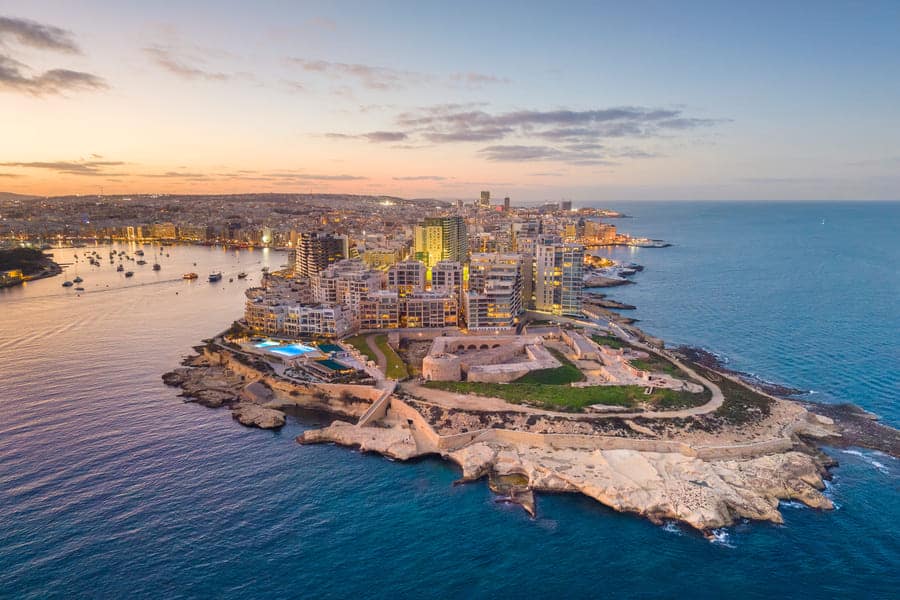
St Julian’s and Sliema suit those who want convenience, energy, and an international feel. This is the part of Malta where daily life feels the least insular: brunch spots, seafront walks, gyms, private clinics, coworking spaces, and rooftop bars. It appeals to Americans who want to step into a social, connected environment and keep a fast, urban rhythm.
Valletta offers a different kind of appeal. It is more compact, more historic, and far more atmospheric. Life here feels less suburban and more curated: restored townhouses, sea views, galleries, boutique hotels, and evenings built around wine bars and cultural events rather than beach clubs or large expat circles.
Gozo, Malta’s second island, is reached by ferry in about 25 minutes and suits Americans who want a quieter, greener, more residential setting. Gozo offers privacy, space, and a stronger sense of retreat, with village houses, open views, and a slower daily pace.
Infrastructure is still solid, with schools, hospitals, and 24/7 transfer links to Mater Dei Hospital in the mainland for more complex care.
Obtaining Maltese citizenship does not change a US citizen’s tax position. The US taxes its citizens on worldwide income regardless of where they live or what other citizenship they hold. This means that moving to Malta or holding a Maltese passport does not remove the obligation to report income to the IRS[13].
US citizens must continue to file an annual tax return — Form 1040 — declaring all worldwide income, including salary, dividends, rental income, and capital gains, whether earned in Malta, the US, or elsewhere[14].
There is no automatic exit from US taxation. The only way to end these obligations is to formally renounce US citizenship, which is a separate legal process with significant consequences.
US citizens living in Malta must also comply with foreign account reporting rules. These requirements apply regardless of citizenship status in Malta and regardless of how much time is spent there.
FBAR, FinCEN Form 114, is required if the total value of foreign financial accounts exceeds $10,000 at any point during the year. It is filed separately from the tax return and is due on April 15th, with an automatic extension to October 15th[15].
FATCA reporting, Form 8938, applies when foreign financial assets exceed certain thresholds. For example, thresholds start at $50,000 for single taxpayers in the US and can go up to $600,000 for married couples living abroad. Form 8938 is submitted together with the annual tax return[16].
Some relief is available to reduce the overall tax burden. Under the Foreign Earned Income Exclusion, eligible US citizens may exclude up to $132,900 of foreign earned income for the 2026 tax year, provided they meet either the physical presence test or the bona fide residence test. This exclusion is claimed using Form 2555[17].
The relief applies only to earned income, such as salary or self-employment income. It does not apply to passive income, including dividends, rental income, or capital gains.
Malta citizenship for Americans through the merit route carries several distinct risks that applicants must understand before committing to the process.
Malta applies a multi-layered Due Diligence process that reviews criminal and civil history, source of wealth, business activities, and reputational background across multiple jurisdictions.
For US applicants, particular sensitivity arises around complex corporate structures, past litigation, involvement in high-risk sectors such as crypto or gaming, and negative media coverage. Any inconsistency, lack of transparency, or unresolved concern may lead to a refusal at an early stage.
Any link to international sanctions regimes or serious criminal activity is treated as a decisive negative factor. This includes EU, UN, US, or UK sanctions, as well as indirect exposure through business partners or beneficial ownership structures.
Serious criminal convictions, especially those related to financial crime, fraud, corruption, or violence, are also likely to result in rejection. Authorities assess both formal records and broader risk indicators.
Applicants with nationality or close ties to certain jurisdictions may face restrictions or ineligibility. These lists are subject to change and are reviewed by the authorities based on geopolitical and compliance considerations.
At present, nationals of — or individuals with close ties to — the following countries are not eligible to apply:
Even indirect links, such as business activity or residency history, may also trigger additional scrutiny.
Citizenship by merit requires clear, verifiable proof of exceptional contribution or value. Applications that rely on general claims, weak documentation, or unsubstantiated achievements are unlikely to meet the required standard.
The assessment focuses on measurable impact, credibility, and alignment with Malta’s national priorities.
Any false statement, omission, or inconsistency in the application can lead to immediate rejection. This includes inaccuracies in financial disclosures, business interests, personal history, or supporting documents.
Malta’s framework places strong emphasis on transparency, and even minor discrepancies may undermine the overall credibility of the application.
Obtaining Malta citizenship by naturalisation on the basis of merit is a complex, multi‑stage process in which the quality of preparation directly affects the outcome. Immigrant Invest supports applicants throughout the entire process.
The main services provided by our team include:
Each case is handled by a dedicated adviser with support from compliance, legal, and client strategy specialists, which helps maintain continuity throughout the process.
Yes, Malta has permitted dual and multiple citizenship since 2000 under Section 7 of the Maltese Citizenship Act (Cap. 188), and the US does not require its nationals to renounce their citizenship upon acquiring a foreign nationality. An American who acquires Maltese citizenship retains their US passport in full.
The citizenship by merit framework does not specify mandatory financial investment thresholds. Costs include residence establishment — property rental or purchase — health insurance, Due Diligence fees payable to the Community Malta Agency, and professional fees for a licensed agent.
No, acquiring Maltese citizenship does not alter a US citizen’s tax status. The US taxes its citizens on worldwide income regardless of residence or dual citizenship.
Key ongoing obligations include:
Foreign Earned Income Exclusion may be available: eligible US citizens may exclude up to $132,900 of foreign earned income for the 2026 tax year.
Yes, Malta citizenship by merit framework is in force in 2026 and is governed by Subsidiary Legislation 188.06. It is discretionary naturalisation, with each case assessed individually and no guarantee of approval.
Applicants must demonstrate genuine links to Malta, meet residence requirements, and present a credible, documented proposal showing an exceptional contribution to the country. Applications are reviewed and decided by the Community Malta Agency.
US citizens can include the following family members in their Malta citizenship by merit application:
Potentially, a US citizen can get Maltese citizenship by descent, but only for those with the right ancestry. The rules depend on the applicant’s date of birth and the citizenship status of their Maltese parent or grandparent.
For those born on or after August 1st, 1989, having at least one Maltese parent at the time of birth is sufficient. For earlier birth dates, the rules are more restrictive, particularly regarding paternal or maternal lineage and the birthplace of ancestors.
No, once Maltese citizenship has been obtained and the passport issued, Malta does not impose a mandatory ongoing residency requirement. The holder may travel and live wherever they choose. During the application process, however, genuine physical presence and the building of connecting factors in Malta are required and must be evidenced.
The Malta citizenship by merit process is fully discretionary. If the Community Malta Agency issues a negative recommendation or the Minister declines the application, there is no formal right to appeal the decision on its merits. For this reason, applicants are expected to invest significant time and resources into preparing a strong, well-supported case before submission, ideally with the guidance of a licensed agent experienced in the process.
Yes, US citizens may retire to Malta under the Malta Retirement Programme or through other residency permit pathways that do not require citizenship. Under standard tourist entry rules, US nationals may stay up to 90 out of every 180 days in Malta without a permit; for longer stays, a residence permit is required. Obtaining citizenship eliminates residency restrictions entirely.
The Community Malta Agency treats the following as automatic disqualifiers for the Malta citizenship by merit application:
Misrepresentation or concealment of material facts also constitutes automatic disqualification.
Yes, after obtaining Maltese passport, US citizens are required to file:
These obligations apply from the moment a foreign account is opened and are entirely independent of citizenship status.
Yes, an American can become a citizen of Malta. The main legal pathways are citizenship by birth, registration, naturalisation, and merit. For most US citizens, the relevant options are standard naturalisation and citizenship by merit.
Standard naturalisation is based on long-term residence in Malta, requiring at least 5 years of residence and proof of genuine links to the country.
Citizenship by merit is a discretionary naturalisation route for foreign nationals who can demonstrate an exceptional contribution to Malta, to humanity, or whose naturalisation is considered to be in Malta’s exceptional national interest.
Moving to Malta is possible for Americans, but it requires a legal basis to stay long term, such as obtaining a residence permit or citizenship. One option is citizenship by merit, a discretionary route granted to individuals who can demonstrate an exceptional contribution to Malta or whose naturalisation is considered to be in the country’s national interest.
Immigrant Invest assists foreign applicants, including US citizens, throughout the citizenship by merit process. The support covers pre-application Due Diligence review, source-of-funds and source-of-wealth preparation, merit case strategy, Proposal Letter preparation, residency set-up in Malta, property search and paperwork, and communication with the authorities.
At the same time, Malta is relatively easy to adapt to once relocation is secured. English is an official language, and around 30% of the population are expatriates. Combined with the country’s small size, this creates an environment that is generally accessible for newcomers.