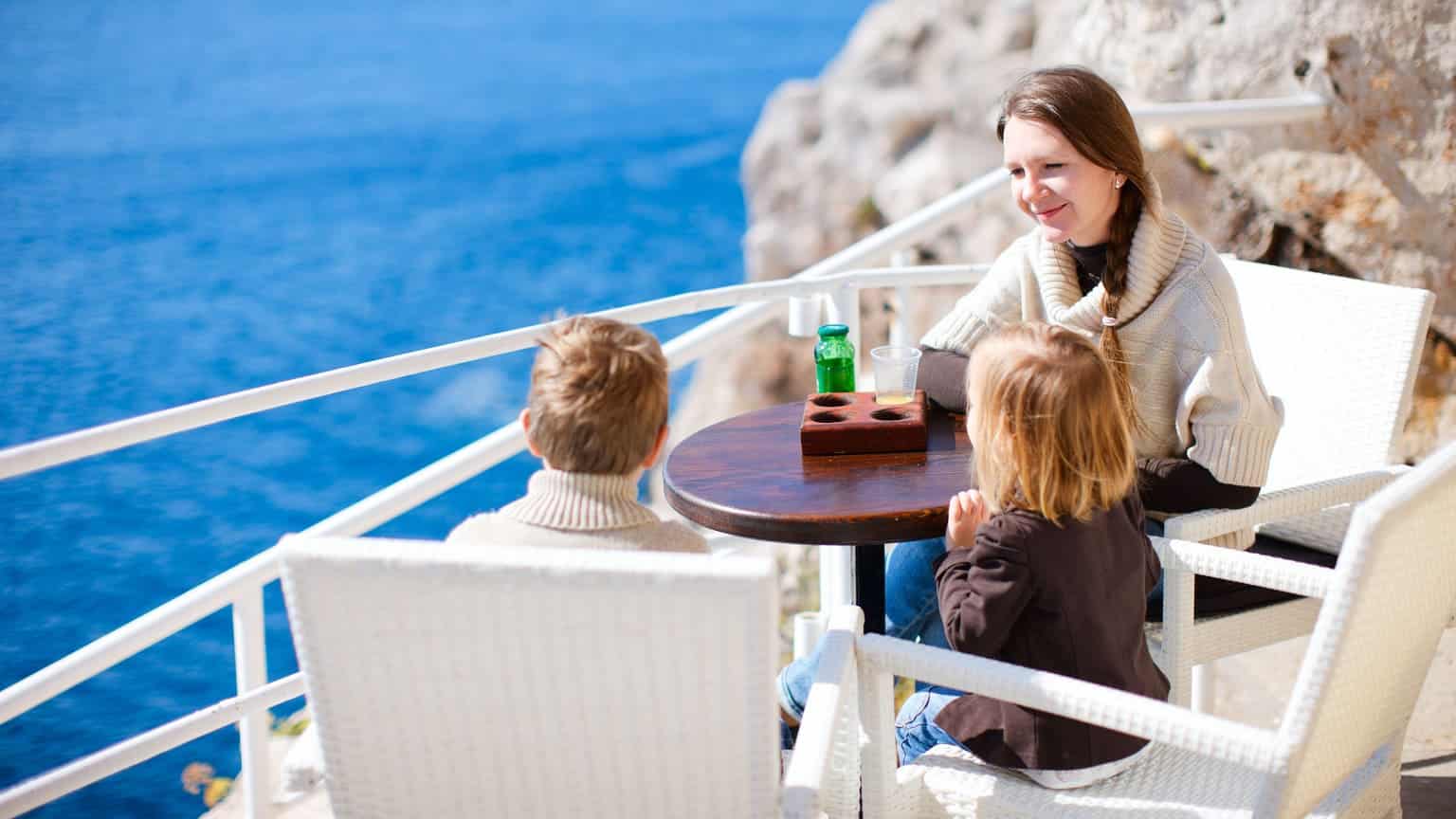
Malta offers a Mediterranean charm, 300 sunny days, a safe environment, English-speaking locals, a rich culture, and comfortable infrastructure. This makes it appealing for retirees to settle.
To make the most of retirement, it’s essential to explore the available residency options, each with unique benefits and requirements.
Malta provides a pathway to a fulfilling and comfortable retirement by property investment.




The Malta Global Residence Programme is a way for retirees to obtain temporary residence permits in Malta by investment.
With Malta residence permits, retirees can travel across the Schengen Area without visas and receive medical treatment there, but they cannot spend more than 183 days a year in another country.
To obtain residency, investors rent or buy real estate and pay an administration fee. In the south of Malta or on the island of Gozo, the minimum annual rental price is €8,750, while in the north and central regions, it is €9,600. An additional administration fee of €6,000 applies for renting, bringing the total starting cost for the residency option by renting housing to at least €34,150.
For those purchasing property, the minimum value is €220,000 in the south of Malta or Gozo and €275,000 in the north or central areas. The administration fee for buying property is €5,500 in the south and Gozo and €6,000 elsewhere. Investors can sell the property and recover their funds if they choose to relinquish their Malta residence permit. Expenses in case of purchasing property — at least €270,200.
Spouses, children under 25, and siblings can become Maltese residents with the investor.
Families also enjoy a special tax regime:
The minimum tax payment for a family is €15,000 per annum. There are no additional taxes for the investor’s family members and inheritance.
The Malta Permanent Residence Programme grants retirees permanent residency for life, allowing them to live in Malta indefinitely without the need for renewal. A spouse and children under 29 can join the main investor and become Maltese permanent residents.
Malta permanent residency also allows retirees to travel to the Schengen countries without visas and receive medical treatment there.
To obtain residency, you must buy or rent a residential property for 5 years, pay administrative and state fees, and donate to a Maltese non-governmental organisation. However, you are not required to reside in Malta before or after obtaining the status.
| Expenses | Renting property | |
| Rental or property price | €70,000+ | |
| €60,000 | €60,000 | |
| €37,000 | €37,000 | |
| Charitable donation | €2,000 | €2,000 |
| Translation and apostille of | €4,000 | €4,000 |
| Medical insurance | €500 | €500 |
| Total | €173,500 | €478,500 |
It is also required to pay an administrative fee of €7,500 for each dependent over 18, except for the spouse.
The investor must own the property for at least five years after obtaining permanent residence. After five years, they can sell it and return a part of the invested money.
Besides, the main applicant must have at least €500,000 in available assets, including at least €150,000 of liquid financial assets, such as deposits, stocks, or bonds. The investor needs to confirm ownership of these assets every year during the first five years after getting permanent residence. Another option is to have at least €650,000 in available assets, including €75,000 of liquid financial assets.
Malta citizenship for exceptional services by direct investment is granted to retirees through naturalisation. First, investors keep Malta residency for 1 or 3 years, and only then may they apply for a passport. It’s a more convenient pathway to Maltese citizenship, whereas other residence permits require 5 to 7 years of continuous residence before citizenship can be obtained.
A spouse and children under 29 can join the main applicant and receive passports.
Investors need to fulfil three obligatory investment conditions:
Investors who contribute €600,000 to the NDSF can apply for citizenship after 3 years of residency, while a contribution of €750,000 reduces the residency requirement to 1 year. For each additional family member included in the application, an extra €50,000 is required, regardless of the residency duration selected.
A charitable donation of €10,000 is also required.
In the case of renting property, the lease agreement term must be at least 5 years for at least €16,000 per year. In the case of buying real estate, it must be worth at least €700,000. The property must be owned for a minimum of 5 years from the date citizenship is granted. After this period, it can be sold, allowing the investor to recover their funds.
There is no investment-based path to Malta citizenship. Maltese nationality legislation provides for the possibility of naturalisation in cases of exceptional merit.
The statutory framework recognises exceptional contributions across various areas, such as entrepreneurship, job creation, innovation, science, education, culture, or philanthropy.
Malta enjoys over 300 sunny days a year, with mild winters and warm summers. Temperatures in winter rarely dip below +10 °C, and in summer, they average around +30 °C. The sunny weather positively affects mental health, reducing stress and increasing happiness.
Under Malta’s remittance-based taxation system, foreign income and capital gains are not taxed in Malta if they are not remitted into the country. This means retirees can earn income abroad and keep it outside Malta without incurring Maltese tax. The condition is to be a Maltese resident, but not a domiciled one.
Foreign capital, such as savings, inheritances, or capital gains, realised abroad before becoming a Maltese resident, is not taxable, even if remitted to Malta.
Besides, individuals contributing to a private pension plan in Malta are eligible for a tax credit of 25% on contributions, up to a maximum of €750 annually. This incentive encourages saving for retirement within Malta's financial system.
Malta Permanent Residence Programme doesn’t offer its beneficiaries any tax benefits.
Malta boasts a life expectancy of 83.2 years, partially thanks to its world-class healthcare system, offering both public and private healthcare options. According to the Statista healthcare index, Malta is ranked 19th globally, ahead of countries like Portugal, South Korea, the UAE, and Costa Rica.
Public healthcare in Malta is available for all employed residents paying social security contributions. Foreign retirees usually opt for private health insurance, costing from €700 to 1,500 per year for basic coverage, and can exceed €1,500 for a comprehensive one.
English is one of Malta's official languages, making communication and integration seamless for English-speaking retirees. Most locals are bilingual, speaking both Maltese and English fluently. Younger generations often use English as their primary language.
While Malta offers a high quality of life, the cost of living remains reasonable compared to some European countries. For example, monthly costs for one individual in Malta are around €770 without rent, while in Italy, they rise up to €900, in Germany — €1,000, and in Switzerland — €1,600.
Malta ranks 12th among 180 countries as one of the safest places, according to the Insurly company. The island has a low incidence of violent crimes, a reliable and secure transportation system, with minimal road accidents and no airlines on international blacklists. Besides, there are no natural disasters on the island, and most insects pose no threat.
Malta has a population of 519,000, with around 22% of the population being made up by expatriates. It provides retirees with an opportunity to socialise with like-minded individuals and build a community. The expat presence has also contributed to a variety of international clubs, cultural associations, and social groups across the islands.
Malta is a small island nation, and its compact size makes travel between cities and towns very convenient. It takes around 15—25 minutes by car and 20—40 minutes by bus to reach most destinations from Valletta, Malta’s capital. The most attractive benefit is free public bus transportation for all residents holding a personalised Tallinja Card.
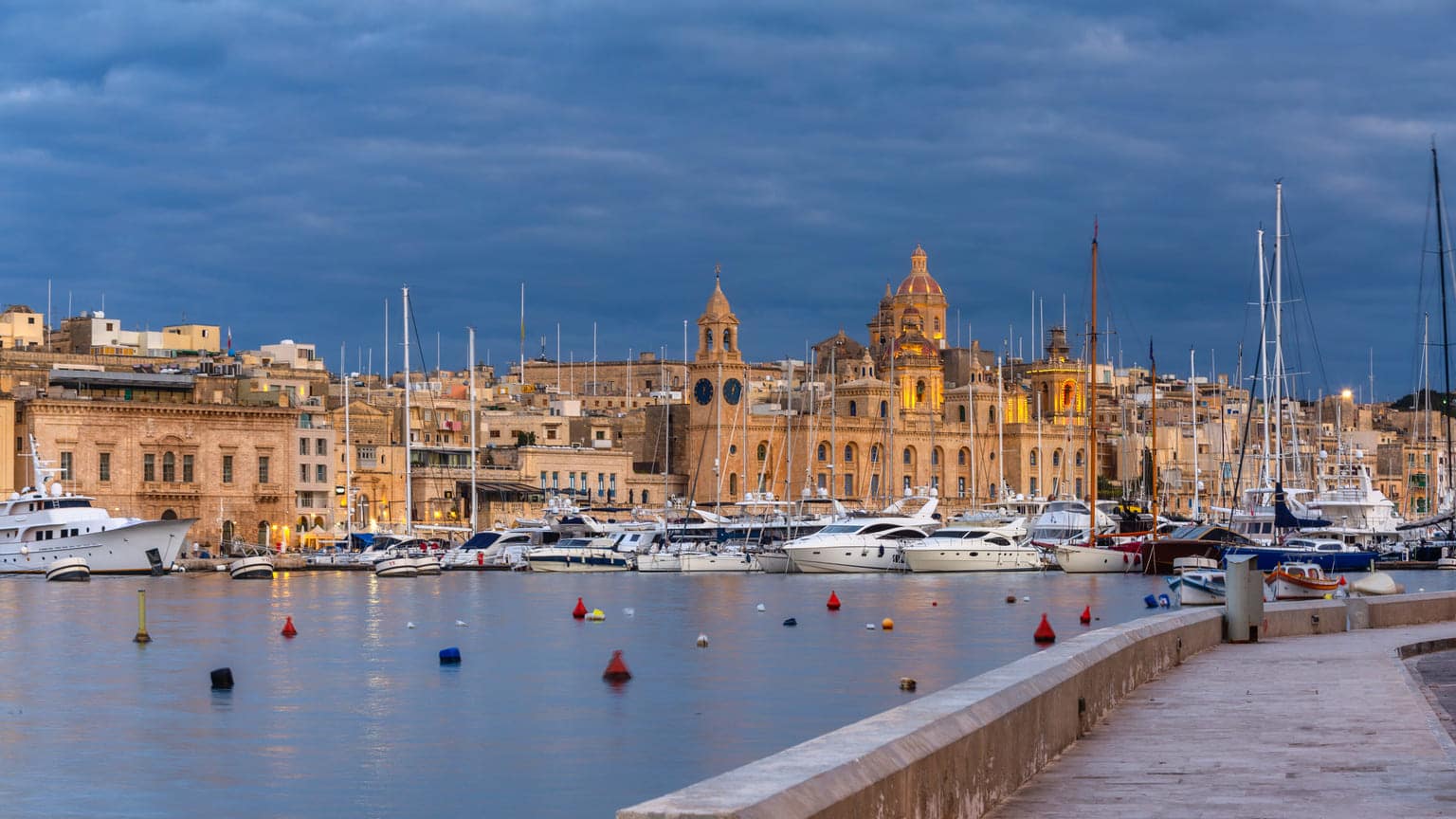
Ferries connect Valletta to Sliema and the Three Cities — Birgu, Senglea, and Cospicua. Besides, retirees can reach Gozo island via a 30-minute ferry ride from Ċirkewwa, which is around 45 minutes from Valletta.
Malta offers a vibrant cultural scene, from historical landmarks like ancient temples and fortresses to numerous festivals, museums, and theatres. For example, the Malta International Arts Festival in July features performances in music, theatre, and dance, blending Maltese and international talent.
Thanks to its Mediterranean climate, Malta offers various opportunities for activities like sailing, hiking, swimming, and exploring scenic landscapes. Retirees can enjoy golf in the Royal Malta Golf Club, located in Marsa, or go fishing in St Paul’s Bay or Marsaxlokk. Gardening is also a popular activity in Malta.
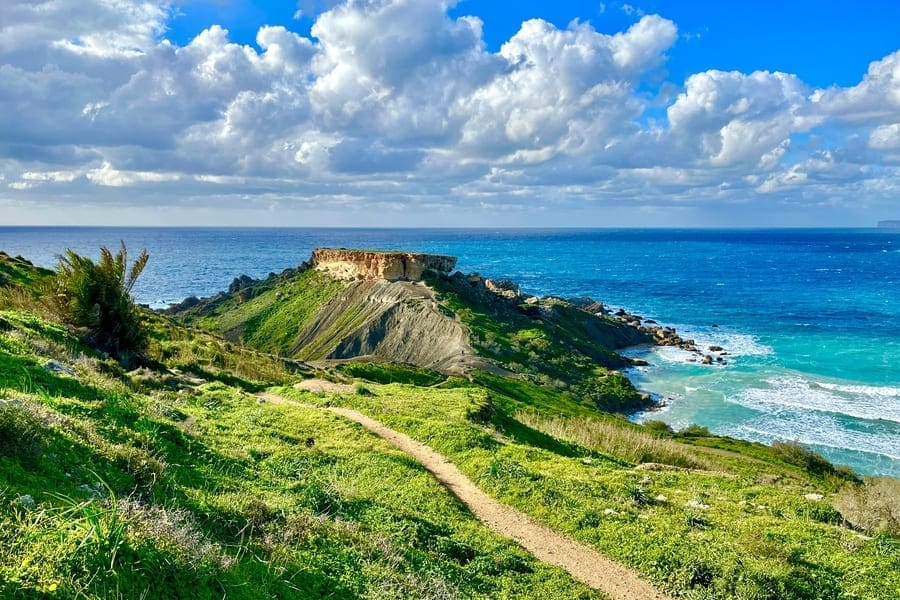
Visa requirements. EU, EEA citizens, and Swiss nationals benefit from the EU’s freedom of movement policies and can live and work in Malta without requiring a visa or residence permit. Those staying for more than 3 months only need to apply for an eResidence Card to formalise their residency.
EU nationals can access Malta’s public healthcare system if they are employed or have private health insurance. The European Health Insurance Card, EHIC, covers temporary healthcare needs.
Taxes. Malta’s taxation policies for EU citizens depend on their residency status and whether income is earned locally or abroad.
The Malta Residence Programme for EU, EEA, and Swiss citizens grants applicants special tax status by setting the personal tax rate to 15% on external sources of income remitted to Malta. Requirements for the programme are the same as for the Malta Global Residence Programme.
Visa requirements. Non-EU nationals who need a visa to travel to Malta are those from countries not included in the Schengen Area visa waiver list. Among them are Afghanistan, Congo, Egypt, Philippines, India, Sri Lanka, and others.
Non-EU nationals from several countries do not need a visa to travel to Malta and can spend 90 days there within a 180-day period. These countries include Australia, New Zealand, the UAE, Singapore, Brazil, Mexico, Georgia, and others.
For long-term purposes, such as work, study, or retirement, all non-EU nationals need a residence permit.
Taxes. Non-EU retirees enjoy Malta's remittance-based tax system, where foreign income is taxed only if brought into the country.
Visa requirements. US citizens can stay in Malta for up to 90 days without a visa. For long-term stays, they need a residence permit.
Taxes. The US-Malta tax treaty prevents double taxation on income, simplifying financial planning for US citizens. Businesses operating in both countries can benefit from reduced withholding taxes and clear guidelines on the taxation of profits, royalties, and service fees.
Visa. Canadians can also stay visa-free in Malta for up to 90 days within a 180-day period without a visa. For long-term residency, they need to apply for a residence permit.
Taxes. There is no tax treaty between Malta and Canada, so careful financial planning is required to manage potential tax liabilities. However, as non-EU citizens, Canadians can benefit from Malta's remittance-based tax system.
The cost of living in Malta is lower than in the UK, Canada, and the US. For instance, it is approximately 17.7% lower than in the UK.
In Canada, the cost of living is around 36% higher than in Malta, while in the US, it is about 44.5% higher, including rent. However, exact differences for Canada and the US may vary depending on specific cities and lifestyles.
| Item | Malta | USA | UK | Canada |
| Apartment price, per square | €2,800+ | €2,600+ | €4,600+ | €4,700+ |
| Rental price | €800+ | €1,400+ | €1,000+ | €1,100+ |
| Utilities | €91 | €200 | €290 | €139 |
| Mobile phone monthly plan | €24 | €50 | €85 | €43 |
| Tennis court rent, 1 hour | €22 | €20 | €13.80 | €16 |
| Three-course meal for 2 people | €70 | €70 | €78 | €68 |
| Cappuccino | €2.40 | €5 | €4 | €3.50 |
| Bottle of wine | €6.50 | €14.40 | €9.60 | €12 |
| Beef, 1kg | €14.50 | €15.30 | €12.60 | €13.80 |
| Local cheese, 1kg | €8.80 | €12.40 | €8.50 | €10.70 |
| Tomato, apples, oranges | €2.50 | €4.80 | €2.70 | €3.70 |
| Banana, potato | €1.60 | €2 | €1.40 | €2 |
| Milk, bread | €1.15 | €1—3.5 | €1.50 | €2.20 |
Valletta is Malta’s capital and a UNESCO World Heritage Site, often referred to as an "open-air museum," with over 320 historic monuments packed into its compact 0.8 square kilometres. Frequent live music performances, festivals, and open-air concerts ensure retirees always have something to look forward to.
Manoel Theatre is one of the oldest working theatres in Europe, offering a range of performances from classical music to contemporary plays. Pjazza Teatru Rjal is an open-air theatre in Valletta that hosts concerts and performances. The Museum of Fine Arts, MUŻA, hosts rotating exhibitions featuring both Maltese and international artists.
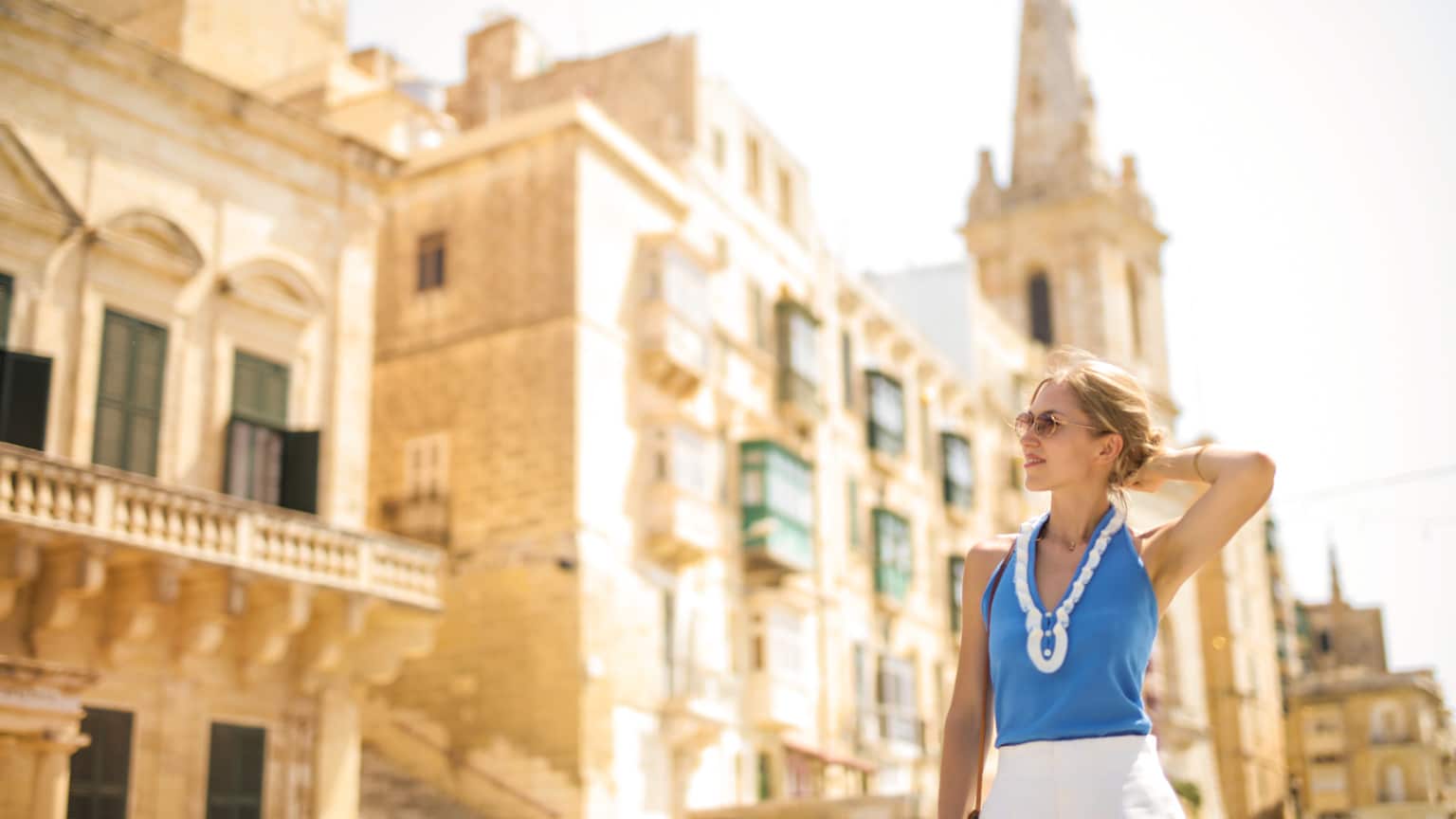
Valletta sits on a peninsula with spectacular views of the Grand and Marsamxett Harbours. The city is also renowned for its honey-coloured limestone buildings, wooden balconies, and historic streetscapes.
Valletta is incredibly walkable, with all major landmarks, cafes, and shops within a short distance. It’s also close to Malta’s top healthcare facilities, including clinics and hospitals such as Mater Dei Hospital, which is about a 15-minute drive away.
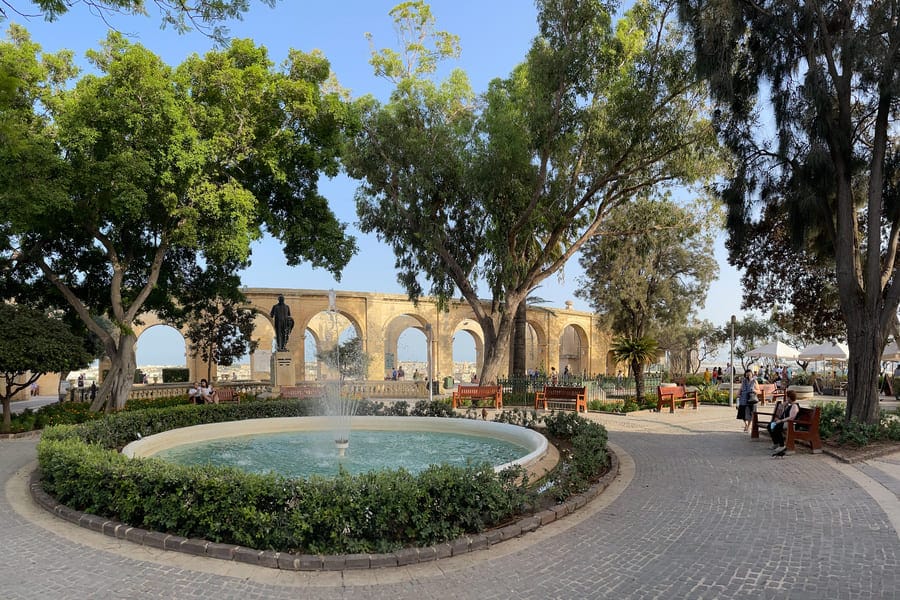
Sliema is an ideal destination for retirees who enjoy an urban lifestyle with easy access to modern conveniences. It’s a bustling town with shopping, dining, and healthcare options. Sliema offers well-connected public transport to Valletta and other parts of Malta.
Retirees can attend live music performances, exhibitions, and cultural events in Sliema or nearby Valletta. For example, Black Gold Saloon is a popular venue, known for hosting live music events, featuring local bands and artists. Retirees can also join clubs or groups, such as book clubs, outdoor yoga classes, or language exchange groups.
Adjacent cities of Sliema, like Gżira, Ta' Xbiex, and San Ġwann, only 1—3 km away, are residential places with local shops, cafes, and a quieter pace of life. There are several bus routes connecting Sliema with its neighbouring towns, making it comfortable for retirees to live in a more tranquil place and visit Sliema for necessary services.
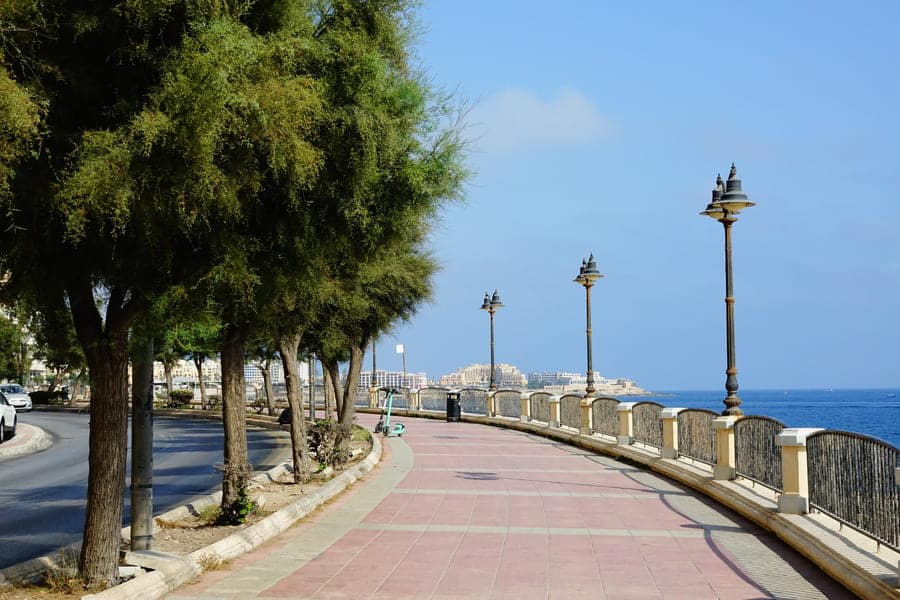
Mellieha offers a more relaxed and rural lifestyle, being a great option for nature lovers and those looking for a peaceful environment. It is close to Għadira Bay, Malta’s largest sandy beach, to Simar Nature Reserve, which is a haven for birdwatchers and nature enthusiasts, and to Foresta 2000, a peaceful area for walking and enjoying Malta’s flora and fauna.
Mellieha is located in the northern area which experiences slightly cooler sea breezes than in other parts of the country, making the heat more bearable. Summer temperatures there range between +27…31 °C, while in southern regions, they reach +34 °C. In winter, average temperatures are +10…15 °C, dipping lower in the evenings. Transition months are comfortable, averaging +20…25 °C.
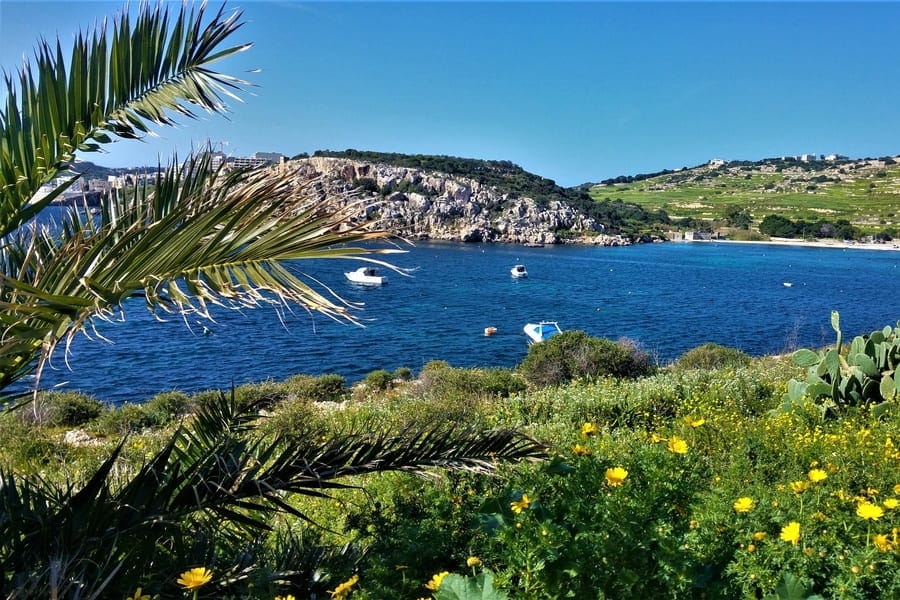
St Julians is ideal for retirees who want a mix of tranquillity and a lively social scene. The town is known for its entertainment but also has quieter residential areas like Spinola Bay and Balluta Bay. The nearby Paceville district is known for its nightlife, while the tranquil beaches of St. George’s Bay and the historic St Julian’s Parish Church offer peaceful escapes.
Retirees can enjoy leisurely strolls along the promenade that stretches from St Julians to Sliema. For those who enjoy the arts and culture, theatres, live performances, and exhibitions are held in various venues throughout the year.
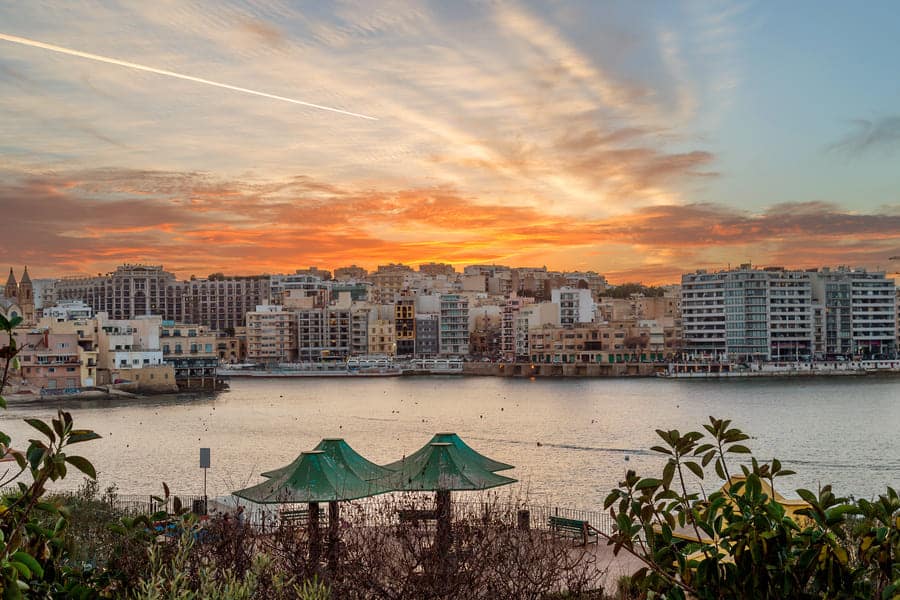
Naxxar is a beautiful blend of old-world charm and modern living, offering a tranquil and welcoming environment for residents. It is believed to be one of Malta’s oldest towns, with roots tracing back to the Bronze Age. Naxxar is known for its peaceful and residential neighbourhoods and offers a mix of traditional Maltese townhouses and modern villas.
Positioned in the heart of Malta, Naxxar is well-connected to major cities like Valletta, Sliema, and St Julian’s, all within a 15—20 minute drive. Close to historic sites such as the Mosta Dome and Mdina, Naxxar has easy access to cultural and historical experiences.
The town has a strong community spirit, with local festivals and events that bring residents together. The Feast of Our Lady of Victories, celebrated annually in September, features processions, fireworks, and traditional celebrations.
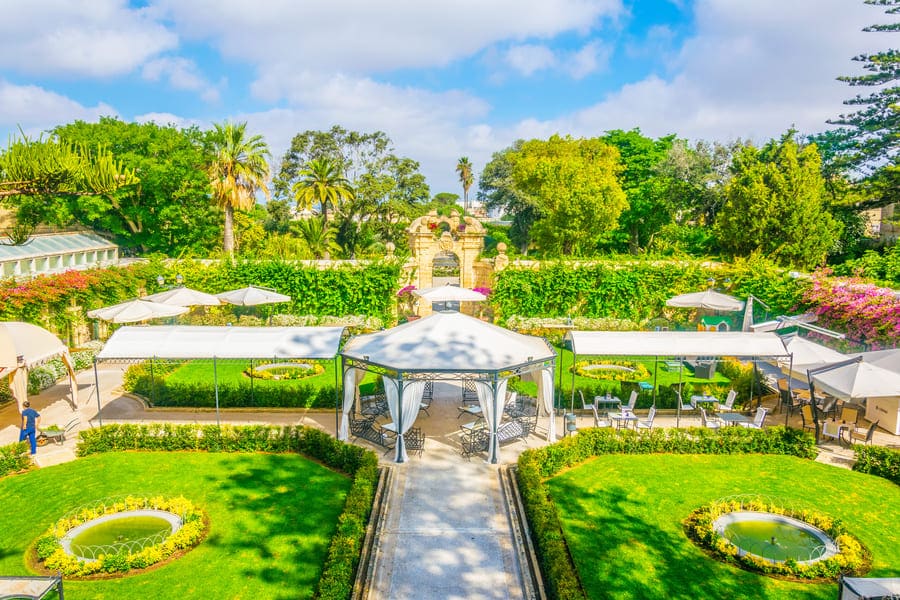
Marsaxlokk is a wonderful place for retirees who enjoy coastal living and a small-town mood with a peaceful, community-oriented atmosphere. The welcoming nature of the villagers makes it easy for newcomers to integrate into the community.
It’s a picturesque fishing village famous for its colourful boats called luzzus. The famous Marsaxlokk Market provides access to fresh, locally caught seafood and produce. Nearby attractions like St. Peter’s Pool, a natural swimming spot, and Delimara Point offer retirees opportunities for hiking, swimming, and enjoying nature.
Malta International Airport is just a 15-minute drive away from Marsaxlokk, making it easy for retirees to travel or host visiting family and friends.
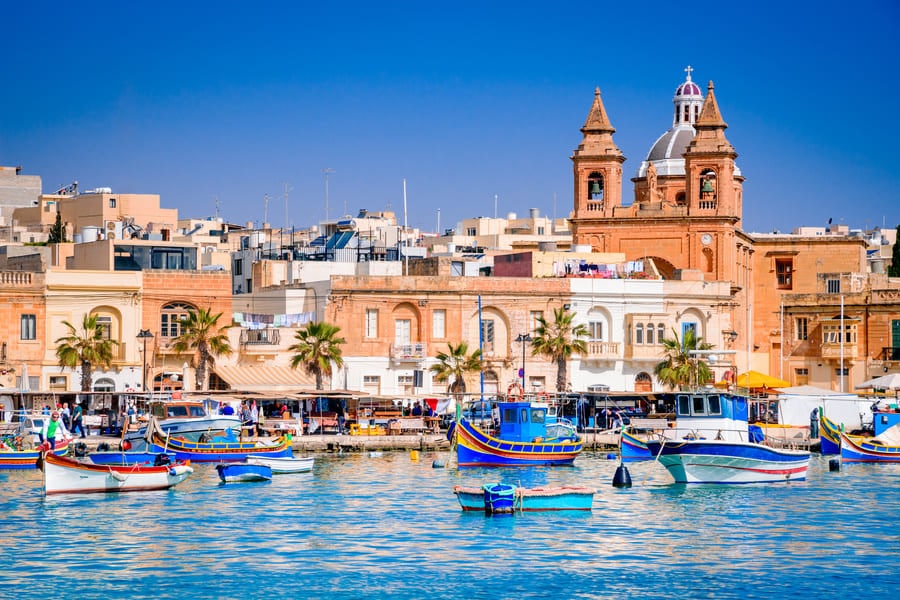
Floriana, a small town adjacent to Valletta, can be a fantastic choice for retirees looking for a quieter alternative to Malta’s bustling capital while still enjoying its conveniences. It's just a 10-minute walk or a short bus ride to Valletta.
Floriana was originally built as a suburb to protect Valletta, giving it a fortified and historic character. So, the town is steeped in history, with landmarks like the Church of St. Publius, the Portes des Bombes, and various bastions reflecting its 17th-century heritage.
Floriana is home to Argotti Botanical Gardens and Sa Maison Garden. The sprawling Granaries Square is an open space where events and festivals occasionally take place, but it is mostly serene on regular days.
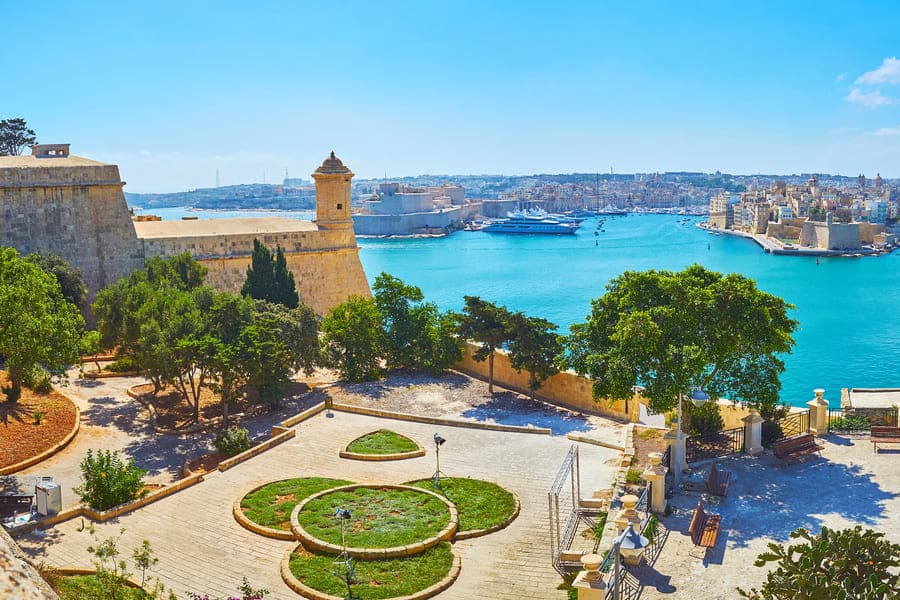
Gozo, Malta's smaller sister island, is significantly quieter than mainland Malta. The island features breathtaking cliffs, crystal-clear waters, and picturesque bays, including Ramla Bay, known for its red sand. The rolling hills, fertile valleys, and terraced fields provide a scenic backdrop for outdoor activities like walking and cycling.
Gozo’s capital is home to the Cittadella, a fortified city with stunning views and historical landmarks. The Ġgantija Temples, a UNESCO World Heritage Site, are among the oldest freestanding structures in the world. Retirees can enjoy local feasts and cultural events that celebrate Gozitan traditions, music, and cuisine.
Each village in Gozo has its unique charm, with quaint squares, traditional bakeries, and quiet streets. The island maintains its distinct identity, with dialects, traditions, and cuisine that set it apart from Malta.
Gozo is easily accessible from Malta via a 25-minute ferry ride from Ċirkewwa to Mġarr costing €4.65 for a return ticket. Prices for another route, connecting Valletta and Gozo and lasting 45 minutes, start at €7.50 per passenger.
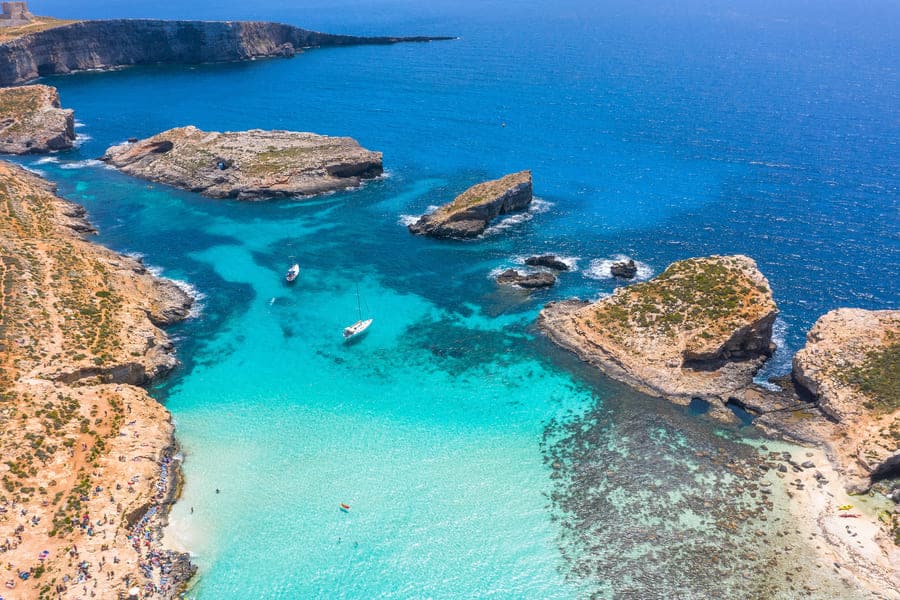
Yes, Malta is an excellent country to retire to, offering a warm climate, a high standard of healthcare, an English-speaking population, a favourable tax regime for foreign retirees, and a relaxed Mediterranean lifestyle. Its central location and safe, welcoming environment further enhance its appeal.
Malta offers a high quality of life combined with a low cost of living. For example, monthly costs for one individual in Malta are around €770 without rent.
With the Malta Permanent Residence Programme, retirees can obtain residency for life. To obtain residency, it is required to buy or rent a residential property, pay administrative and state fees, and donate to a Maltese organisation. Besides, the main applicant must have at least €500,000 in available assets, including at least €150,000 of liquid financial assets, such as deposits, stocks or bonds.
Malta taxes retirement income only if the retiree is domiciled in Malta or if the income is remitted to Malta by non-domiciled residents.
Malta offers a favourable tax system for foreigners, especially for non-domiciled residents. Foreign income is taxed only if remitted to Malta, and foreign capital gains are entirely tax-exempt, making it an attractive jurisdiction for international investors and retirees.
Under the Malta Global Residence Programme, foreigners have a special tax regime:
The minimum tax payment for a family is €15,000 per annum. There are no additional taxes for the investor’s family members and inheritance.
Malta is home to a population of approximately 519,000, with expatriates comprising about 22%. These expatriates come from various countries, including the UK, Italy, Germany, France, and increasingly the US and Canada.
Living in Malta means experiencing a mix of urban and village life across its diverse cities. Valletta offers rich history and culture, Sliema and St Julians are bustling with modern amenities, while towns like Mellieħa and Marsaxlokk provide a quieter, more traditional Maltese atmosphere. Each city has its unique charm, catering to different lifestyles.