

+356-2033-01-78
Worldwide Offices
January 13, 2026
Reading time: 8 min

Securing Malta nationality: Updated guide 2026

Acquiring Malta nationality isn’t just about gaining a powerful passport. It’s an invitation to embrace a new lifestyle with visa-free access to 186 countries, top healthcare, and immersion in rich cultural traditions amidst stunning Mediterranean landscapes.

The investment requirement for the primary applicant ranges from €600,000 or €750,000. The sum depends on how long the applicant maintains their residency status — 1 or 3 years.

Explore how to get Malta nationality with our guide. Uncover investment options, residency rules, and perks of a Maltese passport.

Frederick Ellul
Lawyer and Immigrant Invest’s partner in  Malta
Fact checked by Elena RudaElena Ruda
Elena Ruda
Fact checked by Elena Ruda
Elena helped over 500 investors’ families to choose and obtain second citizenship or residency. She knows the pros and cons of each investment option and improves the industry expertise at the company.
Reviewed by Vladlena BaranovaVladlena Baranova
Vladlena Baranova
Reviewed by Vladlena Baranova
Vladlena leads preparation to Due Diligence and application for citizenship or residency by investment. She performs independent and in-depth analysis of investors’ situations and indicates possible risks. Vladlena helped to get second passports and residence permits to over 300 investors from all over the world.
Malta nationality in 2023

7 Benefits of acquiring Malta nationality

1. Visa-free travel to over 180 countries worldwide, including all EU member states and other popular destinations like Canada, Australia, the USA, the UK, Japan, Singapore, and Hong Kong.

This advantage extends beyond leisurely travel — it also provides visa-free travel for business purposes.

Malta Citizenship by Merit

There is no investment-based path to Malta citizenship. Maltese nationality legislation provides for the possibility of naturalisation in cases of exceptional merit.

The statutory framework recognises exceptional contributions across various areas, such as entrepreneurship, job creation, innovation, science, education, culture, or philanthropy.

Learn more →

2. Access to quality healthcare services and education. Malta passport holders have access to high-quality healthcare treatment. The country ranks among the top 30 countries worldwide for quality healthcare, surpassing rates found in the USA and Israel.

Maltese citizens benefit from more affordable education at schools and universities. In addition, they enjoy the privilege of studying in any EU country without a student residence permit.

3. Dual Citizenship from acquiring a Malta passport grants you social security benefits available within the EU. It also allows you to live freely in the EU, work, and establish businesses without getting additional permits or visas.

Furthermore, investors and their families do not need to give up their original passports to obtain Maltese ones.

4. Passports for all family members, including parents, grandparents, and children under 29 years old. This benefit appeals to families seeking the security and prosperity of residing in Malta for both present and future generations.

Explore the benefits and requirements of Malta nationality for investors

5. Favourable tax system. Tax rates in Malta are lower than in most other EU countries. For example, VAT in Malta is usually paid at 18%, while the EU average rate is 23%. In addition, companies’ shareholders may return up to 100% of the corporate tax.

In Malta, significant business taxes, such as those on royalties, interest, and dividends, are absent. Individuals do not pay taxes on inheritance, gifts, property, or capital.

6. Cultural Richness & Quality Lifestyle. The Mediterranean island nation boasts stunning landscapes, crystal clear waters, sandy beaches, and blue skies. Malta’s government strives to respect the planet and protect the environment, so its seashore is considered one of the best in Europe.

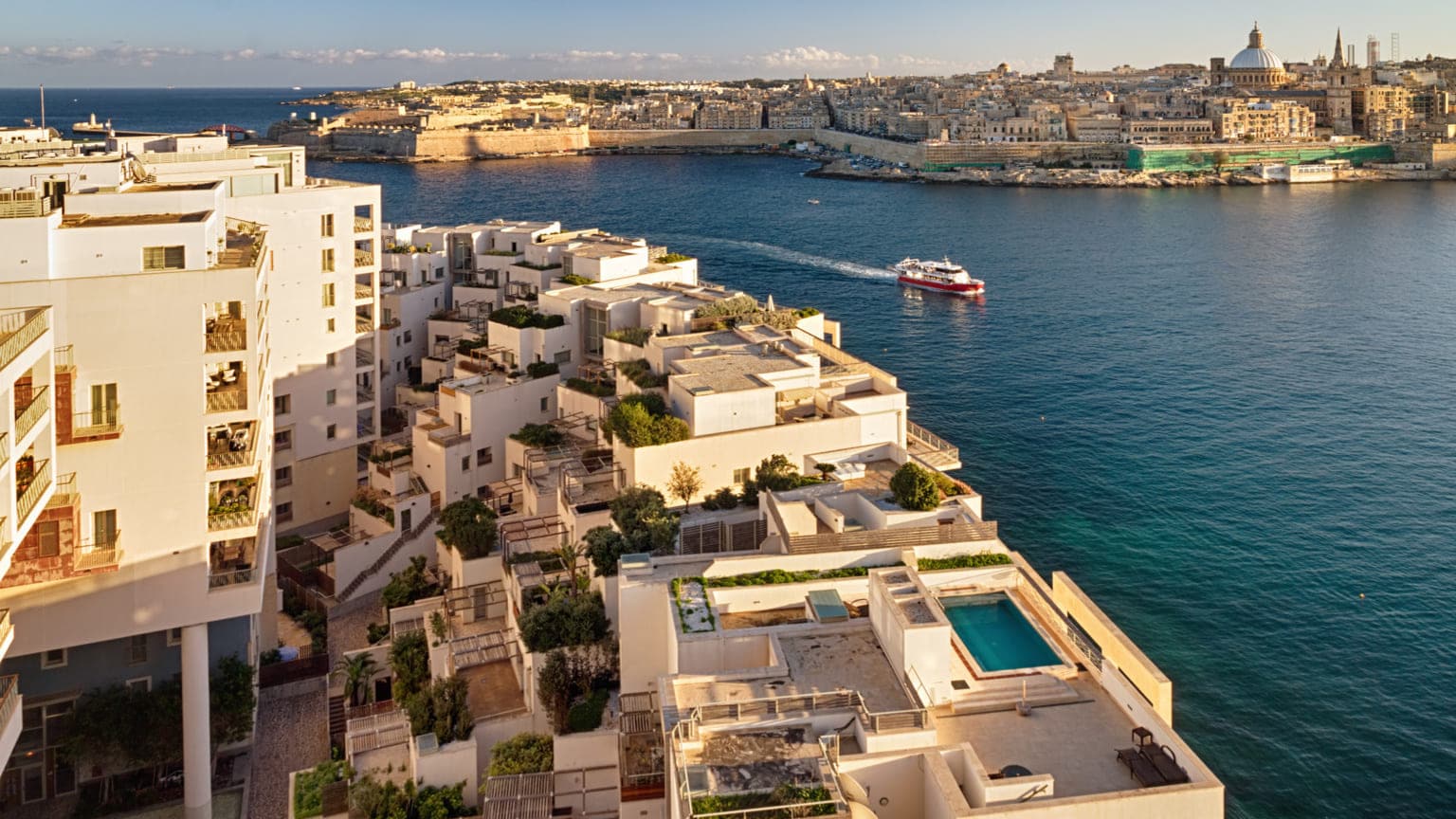
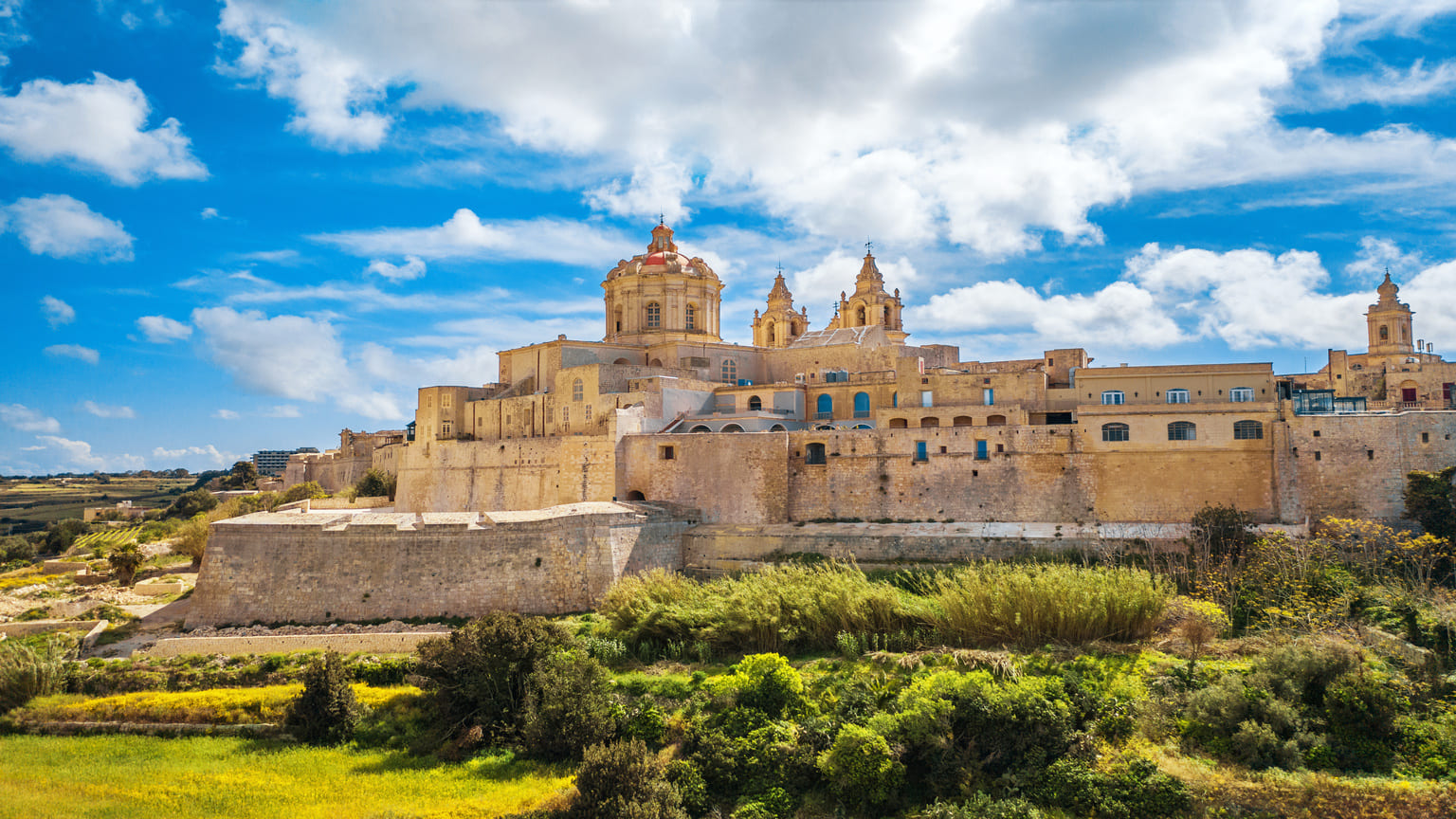
Malta is dotted with prehistoric temples, mediaeval towns, and historic structures, among which are the elegant buildings of Valletta, a UNESCO World Heritage Site.

The locals are known for their friendliness and hospitality, making newcomers feel welcome instantly upon arrival.

7. High level of security. Malta is ranked among the top 20 safest countries in the world, according to research by the insurance company “Insurly”. Regarding crime rates, Malta is safer than Denmark, the Netherlands, and Ireland. It’s a safe place to live and raise children.

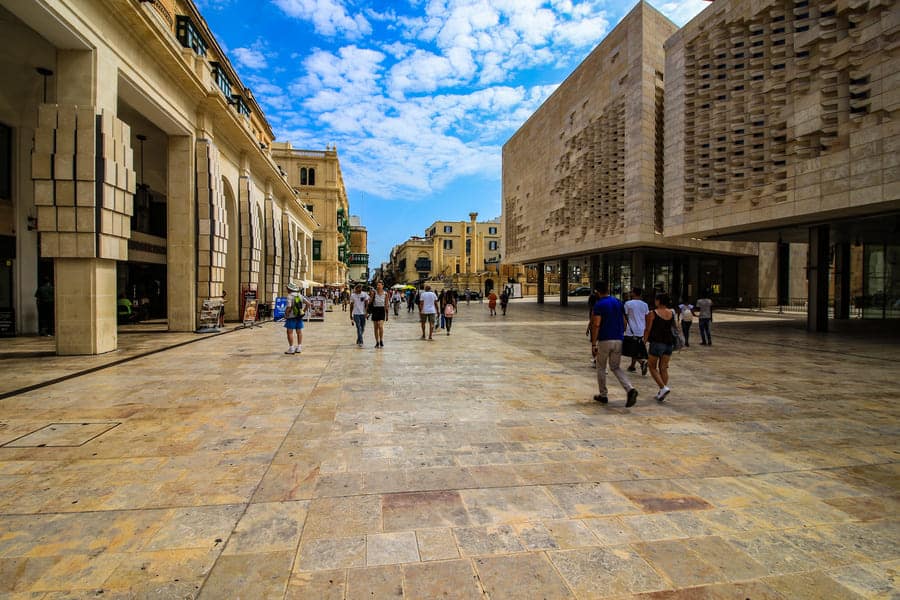
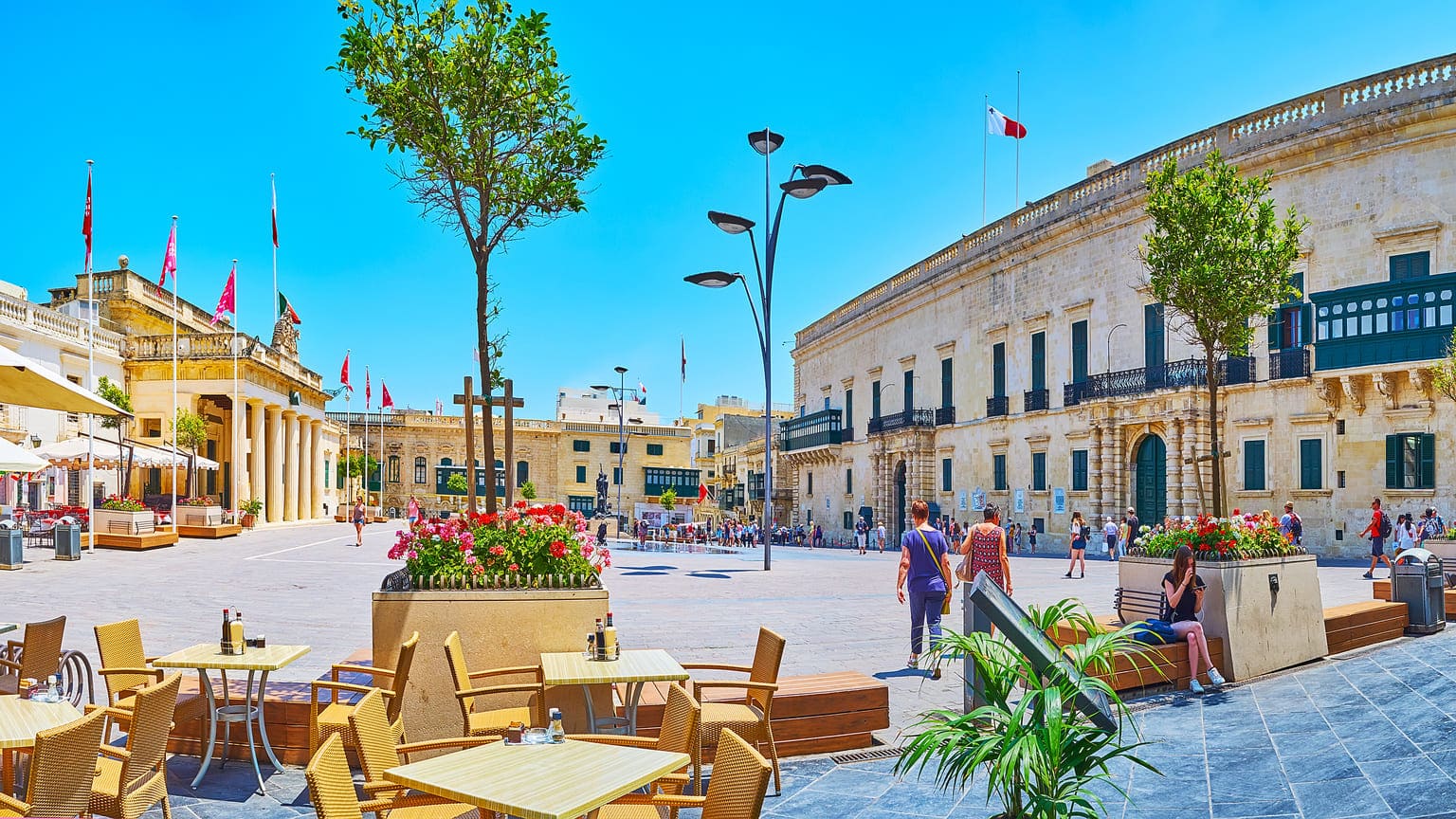
Malta nationality for exceptional services by direct investment | Republic street in Valletta
A 1km Republic street in Valletta divides the town precisely in half along its length. It connects two famous sites — City Gate and Fort St. Elmo — and is known for its crowded shops, state buildings, and museums

4 ways to get Malta nationality

Malta nationality can be acquired by birth, registration, ordinary naturalisation, and naturalisation for exceptional services by direct investment.

By birth. Starting August 1st, 1989, every person born in Malta to a Maltese parent automatically becomes a citizen of Malta. Those born abroad must have both a Maltese father and a Maltese paternal grandparent born in Malta to qualify for Malta nationality.

If a person was born in Malta before September 21st, 1964, they qualify for Malta citizenship if one of their parents held Malta nationality. If a person was born after September 21st, 1964, and before August 1st, 1989, they need to have a Maltese father or be born in Malta.

The list of necessary documents includes:

  • a birth certificate;
  • a father’s birth certificate;
  • a parents’ marriage certificate;
  • an ID;
  • an international passport;
  • a marriage certificate if a spouse or a widower of a Maltese citizen applies.

Also, a filled-out Form A, Form B, or Form D is required to apply, depending on the applicant’s date of birth.

By registration. This way to get Malta nationality refers to marriage, widowhood, children of Maltese females, and former citizens.

Who is eligible to apply:

  1. A person married to a Maltese citizen for a minimum of 5 years.
  2. Widows or widowers if a marriage lasted at least 5 years. If the spouse died before the marriage reached 5 years, the total period from the date of marriage to the application date should be 5 years.
  3. Children born before September 21st, 1964, to a Maltese-born mother, and those born between September 21st, 1964, and August 1st, 1989, to a Maltese mother born outside Malta.
  4. Previous Maltese citizens who acquired their citizenship through registration or naturalisation. 
  5. Direct descendants (second or subsequent generations) born abroad to Maltese-born parents.

The documents required for a Malta nationality application depend on the case. Typically, an applicant should provide a birth certificate with parents’ names, a recent passport-size photo, an ID, passport or residence card, and a marriage certificate registered in Malta if applicable.

Applicants submit their documents to the Community Malta Agency. The application fee is €150, and an extra €50 is paid if the application is approved.

By naturalisation. A person needs to meet the following criteria to obtain Malta nationality:

  • be over 18 years old — parents can apply on behalf of minors;
  • be a foreign national or a person without citizenship;
  • have resided in Malta permanently for a minimum of 1 year and additionally for 4 out of the 6 years preceding the application;
  • be of good character, which is proved by sponsors;
  • have knowledge of Maltese or English good enough for communicating with the locals and the authorities.

Before applying for a Malta nationality by naturalisation, applicants need to get a residence certificate from the Community Malta Agency. Two sponsors, unrelated to the applicant, are required to vouch for the applicant. They must be Maltese citizens not through naturalisation and at least 18 years old.

The primary sponsor should be of one of the following professions: 

  • member of the Maltese Parliament;
  • judge;
  • magistrate;
  • advocate;
  • notary public;
  • legal procurator;
  • medical practitioner;
  • public officer not below the rank of principal;
  • police officer not below the rank of inspector;
  • officer of the Armed Forces of Malta not below the rank of captain;
  • parish priest.

The application fee is €450, and an extra €50 is paid if the application is approved.

By investment. To get Malta nationality by naturalisation for exceptional services by direct investment, applicants pass a strict Due Diligence check and fulfil several investment conditions.

The minimum investment sum is €690,000 for those who have been Maltese residents for 3 years before the application and €840,000 — for those who have been residents for 1 year.

Malta nationality by naturalisation for exceptional services by direct investment

Investors can obtain Malta nationality by naturalisation for exceptional services by direct investment

First, applicants receive a residence card and must hold it for 1 or 3 years. After that, they become eligible to apply for citizenship and make an investment.

The main applicant needs to meet the following criteria:

  • be over 18;
  • have legal income;
  • have no criminal record;
  • not be under sanctions;
  • have no visa denials in the countries with which Malta has visa-free agreements.

Investors meet three investment conditions: contribute to the National Development and Social Fund (NDSF), make a charitable contribution to a non-governmental organisation, and buy or rent residential real estate. All the conditions are mandatory.

Non-refundable contribution. The sum of the contribution to the NDSF determines the duration of residency status required. A €600,000 contribution allows investors to apply for citizenship after maintaining a residence permit for 3 years. With a €750,000 contribution, this period shortens to 1 year.

A non-refundable donation of €10,000 must be made to any charitable, cultural, sports, or scientific non-governmental organisation.

Renting or purchasing housing are two investment options. 

If purchasing a property, it must be worth €700,000 or more. The requirement applies to one object only. The property must be held for 5 years from the date of obtaining nationality. After that, it can be sold, and the money returned.

Examples of residential property in Malta for purchase

Ways to get Malta nationality
Malta, Mellieha
from €310,000
Apartments in a new residential project with panoramic views of the coast of Malta
from 123 m²
1–3
2–3
Benefits of acquiring Malta nationality
Malta, St Julian's
€740,000
Turnkey apartment with pool and sea view
222 m²
3
2
How to Get Malta Nationality
Malta, Sliema
from €740,000
Apartments in a new residential high-rise project near the sea
from 176 m²
2–3
2

If renting, investors should lease a property for a minimum annual rent of €12,000 during residency. To qualify for citizenship, they need to secure a new lease with a minimum annual rent of €16,000, with a commitment of 5 years.

The minimum expense for acquiring Malta nationality is €690,000, which includes an investment of €600,000, a donation of €10,000, and cumulative property rental of €16,000 per annum for 5 years.

Investors are not permitted to apply directly. Only official representatives, licensed by the Malta government, carry out all the applications on a power of attorney. Immigrant Invest has a licence numbered ESP-IMIN.

Requirements of obtaining Malta nationality for applicants

Investors can include their spouse, children up to 29, parents and grandparents in the application. All family members, except the spouse, must principally depend on the investor.

Spouses, including same-sex, in official marriages can participate in the program. Partners in recognized civil unions, domestic partnerships, and common-law marriages are also eligible, provided these statuses are acknowledged.

Children under 18 years old, unmarried children under 29 years old who are principally dependent on the main applicant, and children of any age with disabilities can apply for Malta nationality. Children from previous marriages and adopted children are also eligible.

Parents, grandparents, and in-laws over 55 can participate if they are principally dependent on the investor.

An investor needs to make a non-refundable contribution of €50,000 to the NDSF for each family member.

The following requirements are mandatory for all applicants:

  • no criminal records that have led to imprisonment for more than 1 year, excluding crimes of negligence;
  • no international sanctions;
  • no persecutions before the International Criminal Court, regardless of the verdict;
  • no visa denials from countries with a visa waiver agreement with Malta.

An investor may have a sponsor — a business partner or a family member. For example, a spouse who is ineligible for the program due to holding a European passport can financially support their family. Similarly, a parent can cover the expenses of a child over 29 who cannot be included in the application with their parent.

Applicants will obtain Malta citizenship if they fulfil all the requirements and pass a strict Due Diligence check — the Eligibility Test.

Process of obtaining Malta nationality as an investor and necessary documents

Investors and their family members can apply for Malta nationality after 1 or 3 years of residence, depending on the investment amount. The procedure is similar in both cases, but additional documents are required for submission after three years.


PT43M
Up to 2 weeks
Police Clearance
Police Clearance

Maltese police check the data about all applicants over 12 years in Europol and Interpol databases. The procedure is free.

An applicant provides copies of international passports for applicants over 12 and Form K.

1 week
Collecting documents for residence permits

Essential documents are:

  • international passports and residence permits of all applicants;
  • a submission letter;
  • a power of attorney;
  • an application form;
  • a rental declaration form;
  • a marriage certificate or other proof of status and children’s birth certificates, if applicable;
  • a Level 1 Due Diligence from a licensed agent;
  • a CV of the main applicant;
  • bank statements for the last 6 months.

Translation of documents for a family of four will cost around €200.

From 1 week to 4 months
Purchasing or renting residential property

To confirm an address in Malta, an investor provides a real estate lease or a purchase agreement. It can be a temporary lease to confirm an address or a permanent option. Besides, an applicant needs a landlord’s declaration.

In the case of renting a property, it amounts to 36,000 for 3 years, and a deposit worth 1 month of rent is required. If you buy a property, it should cost at least €700,000.

Several days
Medical insurance
Medical insurance

The applicant might need to fill in a questionnaire from an insurance company. Medical insurance should be global and with a minimum cover of €50,000 per applicant.

A basic insurance policy costs around €2,000 for a family of 4.

About 2 weeks
Getting residence permit

The application should be submitted within 6 months after the Police Clearance. Biometrics is required for each applicant over 6.

Expenses include the ones for a trip to Malta and the following fees:

  • €5,000 for the main applicant’s permit;
  • €1,000 per dependant’s permit;
  • €1,500 per applicant as the administrative fee;
  • €27.50 for permit printing;
  • €10,000 to the NDSF.
4—5 months
Eligibility Test
Eligibility Test

Each applicant over 12 years old passes the Eligibility test. The agent must apply for the check within 12 months since the family acquired Malta residency.

The following documents are needed:

  • the agent’s cover letter;
  • power of attorney;
  • a motivational letter with a decision to pick either 1 or 3 years of residing in Malta;
  • international passports and foreign residence permits;
  • IDs;
  • bank statements for 6 months;
  • application forms;
  • birth certificates;
  • proof of sources of income;
  • marriage and divorce certificates;
  • confirmation of address in Malta;
  • a certificate of good conduct;
  • confirmation of providing for each dependant;
  • tax residency declarations;
  • a military ID if applicable.

Expenses include around €200 for notarised copies per family and around €8,000 for document translation for a family of 4. The Due Diligence fee is €15,000 for the main applicant and €10,000 for each dependent. And an administrative fee is €1,000 per person.

1 or 3 years after getting residency
Applying for Malta nationality

To submit the application for Malta nationality, the following documents are needed:

  • the agent’s cover letter;
  • an affidavit about changes in the status of applicants or no changes;
  • application forms.

For application after 3 years of residence, an investor provides extra documents. For example, recent bank statements, confirmation of address in Malta, new certificates of good conduct, new medical certificates, and any other documents that were renewed in the last 3 years.

2—4 weeks
Final approval by the Minister

The letter of approval gives the investor the right to obtain Malta nationality. If the application is approved, an administrative fee of 500 per applicant is needed.

Up to 4 months
Fulfilment of the investment conditions

The investor submits documents confirming their residence in Malta and meets all the investment requirements within 4 months after the Minister’s approval. The conditions include the following:

  • contribution to the NDSF of 600,000 or 750,000;
  • a charitable donation of 10,000;
  • state and administrative fees;
  • an investment in real estate for 5 years — at least 700,000 if purchasing and 16,000 per year if renting.
Up to 2 months
Getting a Malta passport

Investors and all their family members over six years old have two months to undergo fingerprinting in Malta. All applicants over 18 must take the oath of allegiance.

Four working days later, the passports are ready and can be received at the Malta Passport Office.

How to renew a Maltese passport

A Malta passport of a person over 18 is valid for 10 years. Passports of children under 10 must be renewed every 2 years and then at 15 years.

Usually, applications for passport renewal are processed within 4 working days and are collected from the Passport Office. If the application is not correctly completed, the applicant is notified, and the procedure is prolonged. 

Immigrant Invest helps their clients renew Maltese passports, including collecting all the necessary documents, making arrangements at the Passport Office, and filling out the forms.

Applicants over 18 need to fill in Form A and hand it at the Passport Office along with their ID Card and current passport. A facial biometric image, signature and fingerprints will be taken. 

Section 7 needs to be filled in by a recommender. The recommender can be someone who holds a University Degree and has known the applicant for at least 2 years. The recommender must use a rubber stamp or write the warrant number in Section 7. The recommender can neither be a parent nor a close relative of the applicant.

Children under 18 and those applying on behalf of a minor need to fill in Form A, paying particular attention to the dates of birth requested and to Sections 6, 7 and 8, which must be completed and signed by a recommender.

After, they hand in the form at the Passport Office, along with both parents’ ID Cards, two recent identical and coloured photos, one of which should be signed by the recommender, and the previous passport, if any. Children over 12 undergo fingerprinting.

If a child is over 14 years and holds a valid ID Card, you do not need to produce any signed photos. A facial biometric image will be taken at the Passport Office.

Applicants pay the relevant fee by cheque, cash or card in the amount of:

  • €70 — for adults over 16 applying between September and March;
  • €80 — for adults over 16 applying between April and August;
  • €40 — for minors aged between 10 and 15;
  • €16 — for minors under 10.

All applicants over 12 collect their passports in person. Children aged 12—18 must do it accompanied by at least one of their parents.

Key takeaways on acquiring Malta nationality

  1. Individuals can acquire Malta nationality by birth, registration, or naturalisation. As an investor, it is possible to apply for Malta nationality for exceptional services by direct investment — the minimum investment is €690,000.
  2. Investors first get a residence permit, maintain residency for either 1 or 3 years, pass a Due Diligence and police clearance check, and then they can apply for Malta nationality.
  3. Three investment conditions must be fulfilled: a contribution to the NDSF of €600,000 or €750,000, a charitable donation of €10,000, and renting or buying housing of €80,000+.
  4. Family members can be included in the application if they are principally dependent on the investor. These are spouses, unmarried children under 29, parents and grandparents over 55. The investor pays an additional €50,000 to the NDSF for each applicant.
  5. Acquiring Malta nationality offers multiple benefits. Maltese citizens can work and study in any EU member state, travel visa-free to over 180 countries, get access to high-quality healthcare, and all of this without renouncing their original passports.

Frequently Asked Questions

How do I get Malta nationality?

You can acquire Malta nationality by naturalisation for exceptions services by direct investment, which requires investment and holding Maltese residency for 1 or 3 years.

How easy is it to get Malta citizenship?

The process for obtaining Malta citizenship isn’t easy. It involves a substantial financial commitment, fulfilling residency requirements, and passing a strict Due Diligence check. Immigrant Invest lawyers work on the application and help to reduce the risk of refusal.

How do you qualify for Malta nationality?

To qualify for Malta nationality, one needs to hold a Maltese residence permit for 1 to 3 years, fulfil investment conditions and pass a strict Due Diligence check.

Is it allowed to have dual citizenship with Malta?

[wpdiscuz_comments]
Securing Malta nationality: Updated guide 2026
Share:
Home Blog
Securing Malta nationality: Updated guide 2026