

+356-2033-01-78
Worldwide Offices
February 12, 2026
Reading time: 7 min

Malta citizenship: 13 Key benefits & disadvantages

A Maltese passport offers many benefits to its holder, including the right to live in Malta for an unlimited time, travel to 169 countries visa-free, and settle in other Schengen countries under a simplified procedure.

Malta’s strategic location, English-speaking environment, diverse community, and low cost of living make it appealing for foreigners to move to this sunny Mediterranean country.

Elena Ruda
Lawyer and Immigrant Invest’s partner in Malta
Fact checked by Albert IoffeAlbert Ioffe
Albert Ioffe
Fact checked by Albert Ioffe
Albert helps investors choose the best-suited investment program, prepare for Due Diligence and apply for second citizenship or residency. About 100 families have already obtained the desired status with Albert’s legal assistance.
Reviewed by Vladlena BaranovaVladlena Baranova
Vladlena Baranova
Reviewed by Vladlena Baranova
Vladlena leads preparation to Due Diligence and application for citizenship or residency by investment. She performs independent and in-depth analysis of investors’ situations and indicates possible risks. Vladlena helped to get second passports and residence permits to over 300 investors from all over the world.
Pros & cons of Malta passport

Pros & cons of Malta citizenship in brief

Malta has officially discontinued granting citizenship for exceptional services

A new path has been launched, Citizenship by Merit, granted for exceptional contributions to Malta or humanity, replacing investment-based routes and aligning with EU principles and Vision 2050.

Permanent residency in Malta is still available, with approval taking 4 weeks or more.

Get updates about new path 

Malta citizenship has many advantages. Among them are the following:

  1. The right to move to Malta.
  2. The opportunity to live in any EU or Schengen country.
  3. The right to run a business or work in the EU.
  4. Visa-free travelling to 169 countries.
  5. The chance to get Maltese tax residency.
  6. Profit from owning real estate.
  7. Access to high-quality healthcare.
  8. High-level education for children.
  9. Secure environment.
  10. Citizenship for life.
  11. The possibility of dual citizenship.
  12. A chance to pass on Malta citizenship to future generations.
  13. Legal status in Malta for the investors and their families.

However, there are some disadvantages as well. They include:

  1. An extended period of obtainment.
  2. Relatively high expenses.
  3. Strict Due Diligence.

13 benefits of Malta citizenship

1. Moving to Malta anytime. Maltese citizens can reside in Malta indefinitely and are entitled to return even if borders are closed, providing reassurance in cases of emergencies in their country of residence.

Malta has a warm climate with about 300 sunny days a year and great opportunities for diving, fishing, and surfing. With English as one of its official languages, it’s easy to communicate with locals without needing to learn another language.

Learn the benefits and obtaining terms of Maltese citizenship for investors

2. Settling in the EU or Schengen countries under a simplified procedure. As EU citizens, Maltese passport holders can enter and live in other EU and Schengen countries without visas and stay for more than 90 days.

In general, EU and Schengen states require foreigners to register in a police station or an immigration office if they plan to live there for more than 90 days. However, each state has specific rules.

3. Running a business in the EU. Malta passport holders can get a job in any other EU state without needing a work permit and enjoy the same social security and tax rights as nationals of the host country.

Maltese citizens can also open companies in this country or other EU states, which is especially beneficial for those looking to expand their business into the international market.

4. Visa-free travelling to 169 countries. Besides the EU and the Schengen states, Maltese citizens can enter the US, the UK, Canada, Australia, Singapore and many other countries without visas.

5. An opportunity to get Maltese tax residency. The Maltese tax system can be more beneficial than the one of a person’s country of origin. For example, there are no taxes on wealth and no annual real estate tax. Inheritance tax may not apply in some cases, like if a child inherits their parent’s residence. Also, shareholders of Maltese companies can return up to 100% of the corporate tax.

6. Profit from purchasing real estate. The cost of real estate in Malta is constantly increasing. According to the National Statistics Office of Malta, the nationwide property price index rose by 8.3% in 2023. Apartment prices rose by 9.3%, maisonette prices increased by 13.5%. Townhouses and villas experienced an average price increase of 5.6%.

If you buy a property in Malta to obtain citizenship by naturalisation for exceptional services by direct investment, you are allowed to rent it out. The annual yield is 5—10%.

Examples of real estate in Malta

Malta citizenship: benefits & disadvantages
Malta, Valletta
€1,510,000 — €3,370,000
Modern apartments not far from sea in Valetta
123 m²
1—3
1—3
Malta citizenship: benefits & disadvantages
Malta, Sliema
€920,000 — €1,300,000
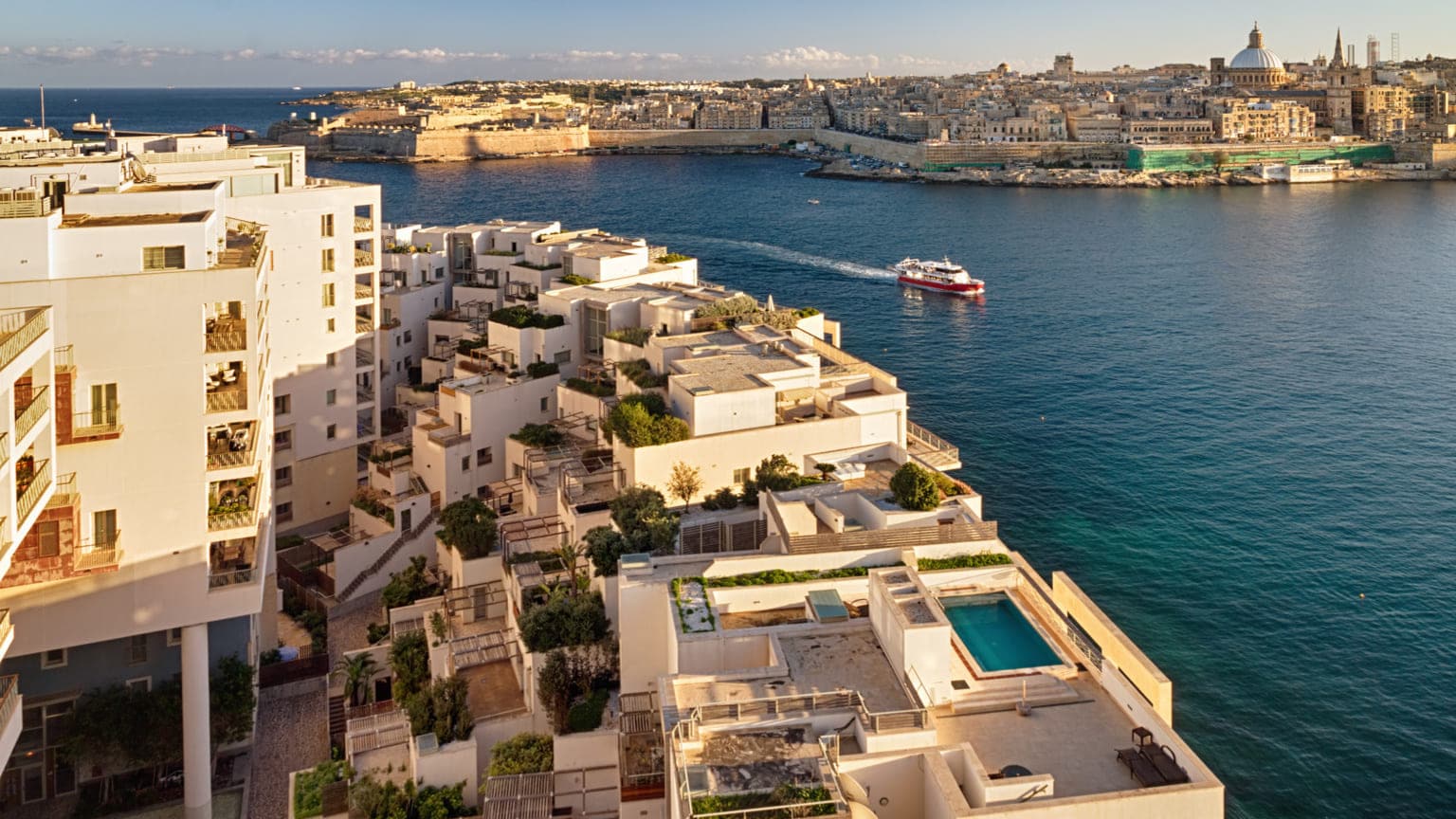
Apartments in a new residential high-rise project near the sea
176 m²
2—3
2

7. Access to high-quality healthcare. Malta citizens possess the European Health Insurance Card, EHIC. It is free and gives access to free medical treatment in the EU countries and Iceland, Liechtenstein, Norway, Switzerland, and the UK under the same conditions as citizens of these countries. EHIC ensures its holders are covered across the EU and EEA regions without additional travel insurance costs for many medical needs.

Malta also has one of the highest life expectancy in the EU, 83.21 years, which reflects the overall quality of its healthcare services and its focus on reducing preventable diseases like cardiovascular issues and cancer through early intervention and high-quality treatment options.

Treatment in Maltese private clinics costs less than in countries like Germany or France. For example, private consultation fees in Malta range from €30 to 50, in Germany €80 to 150, and in France €60 to 120. Minor surgeries in Malta cost between €1,500 and 3,000, in Germany €3,000 to 5,000, and in France €4,000 to 25,000.

8. Access to education for children. Malta’s higher education system is based on the Bologna system, ensuring that degrees from Maltese universities are recognized across Europe and the USA. Malta citizens can study in state education facilities for free.

Malta nationals can also study in other EU countries. The tuition fees in universities for EU nationals are usually lower than those for third-country citizens.

9. Security. In 2023, the insurance company Philtr researched the safest countries and put Malta 12th. They assessed criteria such as the number of crimes and road accidents, risk of natural disasters and terrorism, quality of air, and presence of some severe diseases.

According to Eurostat, police-reported crimes in Malta are almost half the EU average, highlighting not only its safety but also the Maltese citizenship benefits that come with living in such a secure environment.

10. Citizenship for life. Maltese citizenship is permanent. The passport is valid for up to ten years, and upon expiration, it simply needs to be renewed.

11. Dual citizenship. Malta allows its citizens to have dual citizenship. Maltese citizens don’t need to renounce their first citizenship if they obtain a Malta passport, provided their home country also permits dual nationality.

12. Inheritance of citizenship. Maltese citizenship is passed on to the next generations. Children of Maltese citizens can obtain the country’s passport by birth or descent.

13. Citizenship for close family members. If one applies for Malta citizenship by naturalisation for exceptional services by direct investment, they can add their family members to the application. That includes a spouse or a registered partner, children under 29 years old, and parents over 55.

Disadvantages of Malta citizenship

The long period of obtainment. Malta citizenship cannot be obtained by investment through a fast-route procedure. 

It is possible to become a Malta citizen by naturalisation for exceptional services by direct investment after 1 or 3 years of residing in the country. This period depends on the amount of investment.

Ordinary naturalisation requires 5+ years of residence in the country.

High expenses. A family of four would need around €1,000,000 to obtain Maltese citizenship for exceptional services. However, the investment is only required once the citizenship application is approved, so the investor does not risk losing money upfront.

Strict Due Diligence process. Investors and their family members first go through preliminary Due Diligence by a licensed agent. Then, they are required to get a police clearance certificate and pass the Eligibility Test. The latter is obligatory for all family members over 12 years old.

How to obtain Malta citizenship by naturalisation for exceptional services by direct investment

To obtain Malta citizenship by naturalisation for exceptional services by direct investment, investors need to:

  1. Contribute to the National Development and Social Fund, NDSF — €750,000+ to apply for a passport after a year of residence, or €600,000+ to apply in three years.
  2. Rent or buy real estate in Malta for five years — €16,000+ a year or €700,000+, respectively.
  3. Make a charitable donation to a non-government organisation — €10,000.

The investors can add their close family members to the applications: spouses, children under 29, and parents over 55.

If the family members are included in the application, investors must contribute an additional €50,000 per person to the NDSF.

Cost comparison

CostsA single investorA family of four
Real estate€80,000 for renting property for 5 years;

Or €700,000 for property purchase
€80,000 for renting property for 5 years;

Or €700,000 for property purchase
Contribution to the NDSF€600,000 to apply for citizenship after three years;

Or €750,000 to apply for citizenship after one year
€750,000 to apply for citizenship after three years;

Or €900,000 to apply for citizenship after one year
Charitable donation€10,000€10,000
Eligibility test€15,000€15,000;
+ €10,000 for each family member over 12
A fee for residence cards€5,000€8,000
Administrative fees€3,000€12,000
Health insurance€500+€2,000+
Fees, taxes and services when buying real estate8—15% of the property price8—15% of the property price

The investor who wants to obtain Malta citizenship for exceptional services must:

  • be over 18 years old;
  • be able to prove the legality of income and funds;
  • confirm having no criminal records and no sanctions;
  • have no visa denials in countries that apply visa-free regimes with Malta.

Obtaining Malta citizenship for exceptional services by direct investment: a step-by-step procedure

Foreigners can only obtain Malta citizenship by naturalisation. The procedure can take 1 or 3 years, depending on the investment amount.

PT61M
1 day
Preliminary Due Diligence

Immigrant Invest checks the potential investor’s documents through the international databases to establish their success chances. If any issues arise, we will offer another solution to meet the investor’s objective.

2 weeks
Police Clearance Certificate

The Maltese police check the investor and their family members over 12 years old through Europol and Interpol databases.

3 weeks
Malta residence permit

Each applicant over 18 must obtain a residence permit. As a licensed agent, Immigrant Invest prepares a Level 1 Due Diligence report, helps investors find real estate, get health insurance, and prepare all the necessary documents to apply. The investor and their family must visit Malta for fingerprinting and applying for residency. 

Immigrant Invest will collect the residency permit cards and send them to the applicants. The cards are valid for three years.

Within 12 months of getting residency
Eligibility test
Eligibility test

The test must be passed by each applicant over 12. Immigrant Invest lawyers provide the investor with a list of the required documents. The lawyers help translate, apostille and notarise copies, fill out government forms, complete welfare history, and make all the necessary affidavits. Then, Immigrant Invest applies for the test on the client’s behalf.

4—5 months
Application processing

The Minister responsible for the matters relating to Malta citizenship approves or rejects the application.

1 or 3 years after getting a residency
Applying for Malta citizenship

If the investor applies for citizenship after one year of residency, they must also submit an affidavit confirming no change in their personal circumstances. If those changes have occurred, the applicant must submit extra forms to define them.

If the investor applies for citizenship after three years of residency, they must also submit additional forms, an updated police clearance certificate, and a confirmation of a registration address.

2—4 weeks
Final approval
Final approval

The decision is delivered in writing and gives the investor the right to obtain a Malta passport.

4 months
Fulfilment of the investment condition

Apart from completing the investment condition, the applicants also submit proof of their residence in Malta.

Up to 2 months
Getting a Malta passport

The investor and their family have two months to submit fingerprints. Applicants over 18 must take the oath of allegiance. The passports can be received four working days later at the Malta Passport Office.

Benefits of relocation to Malta

1. English as an official language. In Malta, English is one of the two official languages, alongside Maltese, making it widely used in everyday life, business, education, and government services. All official documents, forms, and communications from public institutions are available in both Maltese and English.

2. Strategic location. Situated in the Mediterranean, Malta offers easy access to Europe, North Africa, and the Middle East. By plane, it takes 1 hour to reach Tunisia, 1.5 hours — Rome and Athens, 3 hours — Paris, and around 6 hours — Istanbul.

Malta’s Freeport is the busiest transhipment and logistics hub in the Mediterranean, handling significant cargo flow between Europe, Asia, and Africa. This makes it a valuable location for businesses engaged in import-export, logistics, and international trade.

3. Low cost of living. Malta is considered affordable compared to other Western European countries. A family of four needs around €2,700 per month without rent, while in France, Germany, and the UK they would spend €3,400.

4. Mediterranean lifestyle. The local mentality in Malta reflects a mix of Mediterranean influences, emphasising a laid-back, slower pace of life. People in Malta prioritise family, social gatherings, and enjoying life’s simple pleasures. Traditional dishes often feature fresh, locally sourced ingredients, including seafood, vegetables, and olive oil.

5. Recreational activities. With over 200 kilometres of coastline, Malta is a paradise for water lovers. Malta is known for its world-class dive sites, with underwater caves, shipwrecks, and reefs to explore. Popular dive spots include the Blue Hole in Gozo, the wreck of the MV Rozi, and the HMS Maori. Kayaking, paddleboarding, sailing, and yachting are also popular activities among Maltese citizens.

Benefits of moving to Malta
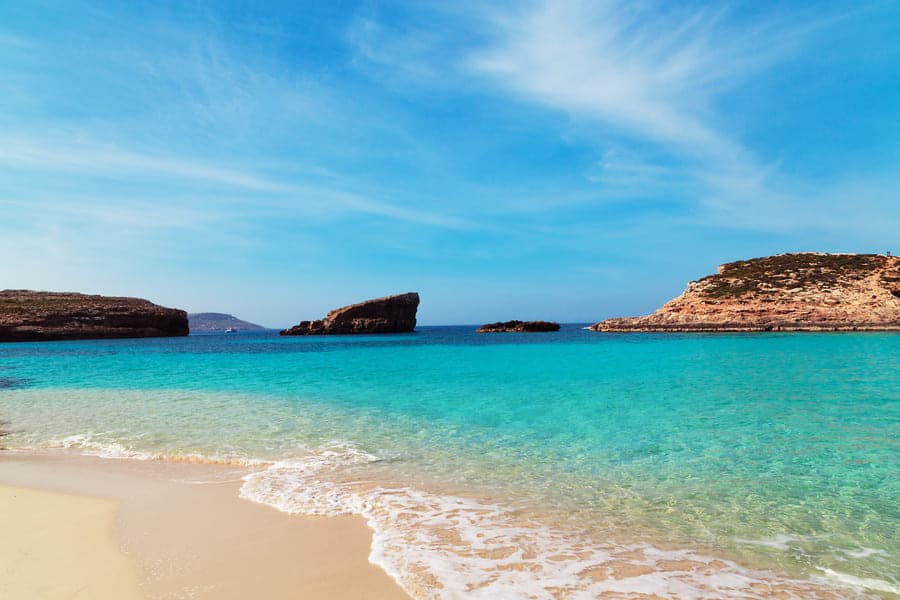
The Blue Lagoon in Comino is renowned for its stunning, crystal-clear turquoise waters and white sandy seabed, being a popular spot for swimming and snorkelling

6. Diverse expat community. Malta is home to over 115,000 non-Maltese nationals, making up more than 22% of the total population. A third of these foreign residents are EU citizens, with Italians being the largest group at 12%, followed by British nationals at just over 9%.

Many expats join social clubs and organisations where they can meet others with similar backgrounds. Groups such as the British Residents’ Association and Scandinavian communities organise social events, dinners, and activities to help people integrate.

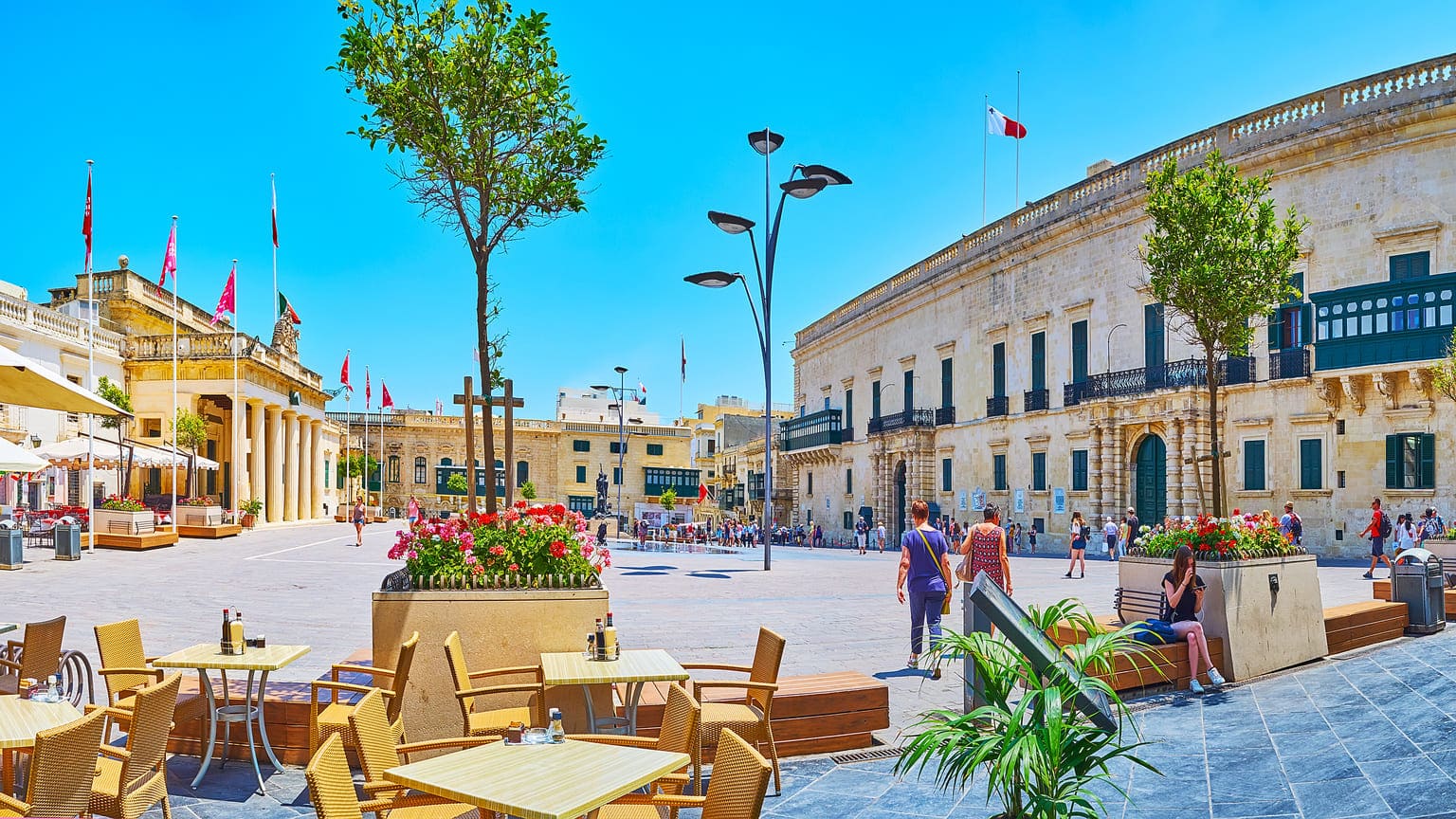
7. Cultural and historical richness. Malta’s history spans over 7,000 years, and its rich cultural heritage offers endless opportunities for exploration. Valletta, Malta’s capital, is a UNESCO World Heritage Site, offering museums, galleries, and historic landmarks like St. John’s Co-Cathedral and the Grand Master’s Palace.

Benefits of relocation to Malta
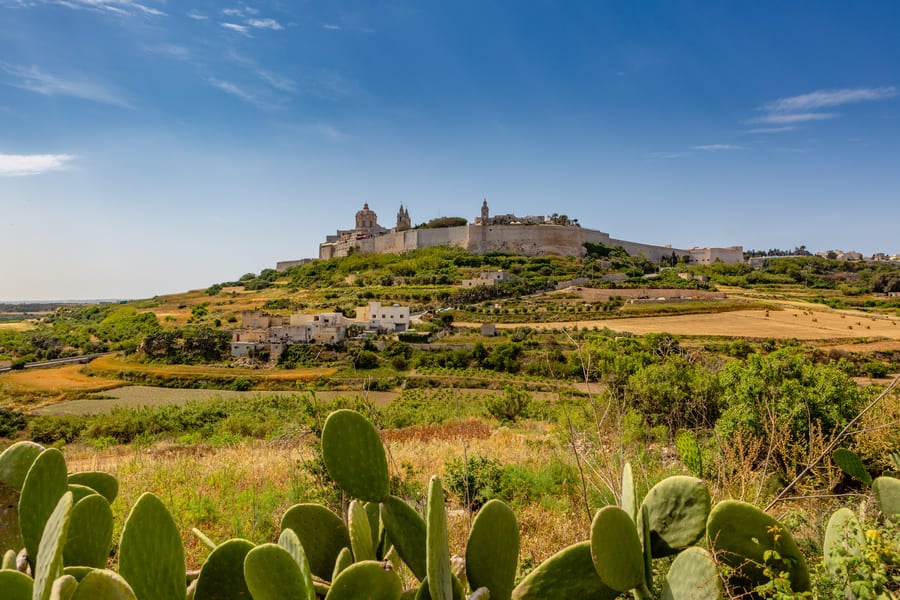
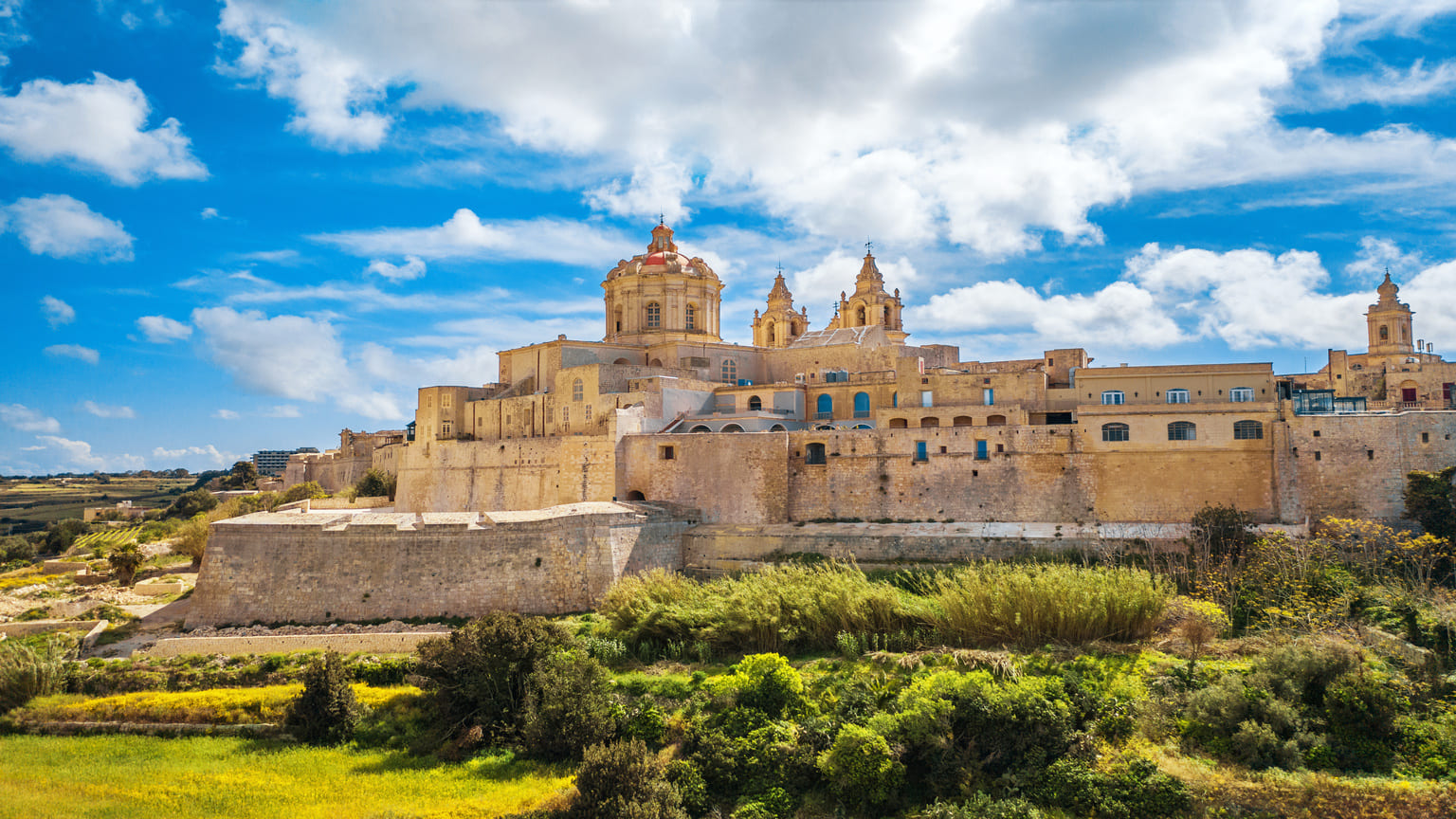
Known as the "Silent City," Mdina is a beautifully preserved mediaeval town. Visitors can explore its narrow streets and visit St. Paul’s Cathedral

Key takeaways about benefits and disadvantages of Malta citizenship

  1. Malta citizenship benefits are not limited to the location of the country and its Mediterranean climate. Malta citizens have a right to live, study, work, and run businesses there.
  2. Other Malta passport benefits include visa-free travel to 169 countries, high-quality healthcare and education, and life in one of the safest countries.
  3. Foreign investors and their families can obtain Malta citizenship by naturalisation for exceptional services by direct investment. First, they need to become residents, and after 1 to 3 years they are eligible for citizenship.
  4. The minimum investment sum is €690,000.
  5. Relocation to Malta is beneficial, thanks to its strategic location, English-speaking environment, diverse community, low cost of living, slow pace of life, and cultural richness.

Frequently Asked Questions

What are the benefits of Maltese citizenship?

Malta citizenship provides its holders with many benefits. Some of them include the following:

  • opportunity to move to Malta or any other EU country;
  • visa-free travelling to 169 countries;
  • access to high-quality healthcare and education; 
  • security;
  • option to have dual citizenship. 

This legal status is given for life and is passed on to future generations.

Is the Malta passport strong?

With a Malta passport, you can visit 169 countries visa-free, including the US, the UK, the Schengen countries, and Singapore.

Is it easy to get Malta citizenship?

Foreign investors can obtain Malta citizenship by naturalisation for exceptional services by direct investment. To do that, a person needs to get a residence permit, maintain the status for 1 or 3 years, fulfil several investment conditions, and pass several checks.

Is Malta good for immigrants?

Yes, Malta is a good place for immigration. Residents can enjoy its warm climate with about 300 sunny days a year and live by the Mediterranean Sea. The country offers high-quality medicine and education.

Malta is also one of the safest countries in the world. According to the Eurostat research, Malta is almost two times safer than the EU in general.

How long does it take to become one of Malta’s citizens?

Foreign investors can apply for Malta citizenship by naturalisation for exceptional services by direct investment. First, they obtain a residence permit, and after 1 or 3 years, they become eligible for citizenship.

The standard naturalisation process for Malta citizenship requires a minimum of 5 years of continuous residence.

Can you live in Europe with a Maltese passport?

Yes, you can live in the EU and the Schengen countries if you have a Maltese passport. However, most countries will require you to register in a police station or an immigration office if you plan to reside there for more than 90 days.

What are the benefits of dual citizenship in Malta?

Malta recognises dual citizenship, meaning that you wouldn’t have to renounce your first nationality to obtain a Maltese passport. Obtaining Malta citizenship by naturalisation would give you the benefits enjoyed by all citizens without the need to give up on the advantages of your other passport.

Is Maltese citizenship good?

The Malta passport is considered a strong one: it provides significant freedom of travel, high quality of life and favourable business conditions.

Can US citizens have dual citizenship with Malta?

Yes, US citizens can hold dual citizenship with Malta. Both Malta and the US allow dual citizenship, meaning that individuals can be citizens of both Malta and the US.

What are the benefits of obtaining Maltese citizenship by naturalisation for exceptional services by direct investment?

Malta citizenship for exceptional services by direct investment offers a variety of benefits. By contributing at least €690,000 to the country’s economy, investors obtain citizenship with their families — spouses, children up to 29, and parents over 55.

Maltese citizens can freely travel to 169 countries, settle in the EU or Schengen countries under a simplified procedure, work and run businesses in the EU, and receive high-quality healthcare and education. Besides, Maltese citizenship is passed on to the next generations.

[wpdiscuz_comments]
Malta citizenship: 13 Key benefits & disadvantages
Share:
Home Blog
Malta citizenship: 13 Key benefits & disadvantages