Malta consistently ranks as one of the best countries for digital nomads.
According to the 2025 Digital Nomad Index by Movingto, Malta is ranked 17th worldwide as a destination for digital nomads[1]. Remote workers choose Malta for its warm climate, high standards of living, and attractive tax regime.
Digital nomads who obtain the Malta Nomad Residence Permit benefit from income tax exemptions. Let’s explore other rules regulating the tax status of digital nomads in Malta in detail.




As Malta residents, digital nomads are subject to state taxes. However, the Maltese government designed a special income tax regime allowing them to optimise their tax burden.
Digital nomads receive a residence permit valid for one year, which can be extended for an additional year three times. To qualify, they must earn at least €3,500 per month and buy or rent housing in the country.
The official status of a digital nomad in Malta is granted to foreigners who work remotely for a foreign company, run a business, or provide services to companies or individuals outside Malta.
The taxation of digital nomads in Malta is governed by the Nomad Residence Permits Income Tax Rules, which took effect on January 1st, 2024[2].
During the first 12 months from the date the nomad residence permit was issued, all the nomad’s income derived from authorised work is exempt from taxation. After 12 months, a 10% tax begins to apply to all authorised work income.
The regulations consider as authorised work any services provided by a digital nomad to companies and individuals located outside Malta, as well as any business activities conducted by the digital nomad abroad.
Income derived from sources other than authorised work, such as rental income from Maltese property, is taxed at a progressive rate of up to 35%[3]. In such cases, digital nomads must register for income tax purposes and file an annual tax return.
| Tax rate | Income thresholds for unmarried tax residents | Income thresholds for married tax residents | Income thresholds for parents |
| 0% | Up to €9,100 | Up to €12,700 | Up to €10,500 |
| 15% | €9,101 to 14,500 | €12,701 to 21,200 | €10,501 to 15,800 |
| 25% | €14,501 to 60,000 | €21,201 to 60,000 | €15,801 to 60,000 |
| 35% | €60,001 and over | €60,001 and over | €60,001 and over |
Malta has effective double taxation agreements with around 80 countries, including the US, Canada, India, and Australia[4]. These agreements prevent digital nomads from being taxed twice on the same income.
Such agreements help offset any tax paid in the nomad’s home country with what would otherwise be taxed in Malta. If the digital nomad earns income from a country with a DTA, the tax owed in Malta can be reduced or even eliminated, depending on the difference in tax rates between the two countries.
If the digital nomad comes from a country without a double taxation agreement with Malta, after 12 months of Maltese residency, they will have to pay income tax in the country where the income is generated and in Malta.
Tax exemption during the first 12 months of holding a residence permit applies only to the digital nomad’s income tax. If one purchases, owns, rents out, or sells property in Malta, they are subject to property taxes.
The primary tax to consider when purchasing property in Malta is stamp duty, which is typically 5% of the property’s value. For properties located on the island of Gozo, the stamp duty is reduced to 2%.
Malta does not impose an annual property tax. However, property owners may occasionally be required to pay a land rent fee if their property stands on leased land. This charge is relatively modest, typically ranging about €40 to 250 per year, depending on the location and terms of the lease.
Digital nomads renting out property must pay tax on the income earned. They can choose from two taxation schemes, which can be changed once a year.
Under the first scheme, property owners pay tax on rental income at a flat rate of 15%. The rate is applied only to the rental income and does not allow any reductions. This tax scheme is available to both residents and non-residents of Malta.
Another option is to pay tax on the progressive scale, which considers all taxable income sources. The tax rate ranges from 0 to 35%, depending on the total yearly income from all sources and tax residency. Non-residents pay the tax under the following scheme:
If an individual is a Maltese tax resident, the applicable tax rate will also depend on their marital and parental status.
When selling property in Malta, a digital nomad is obliged to pay a final withholding tax at a rate of 8% of the property’s value. The tax can be reduced under certain conditions:


The digital nomad’s income earned from sources other than remote work might be subject to taxation in Malta. This includes returns from property, dividends, interest, or cryptocurrency transactions, depending on where the income is sourced and whether it is transferred to Malta.
Digital nomads receiving income in the form of dividends, premiums, interest, or discounts, are exempt from income tax if the sources of such income are outside Malta and the income is not transferred to Malta.
If the digital nomad transfers their income from interest, dividends, or premiums to their bank account in Malta, or if the sources of such income are located in Malta, standard income tax rates apply depending on one’s tax residency status in the country.
Crypto assets are typically treated as property for tax purposes in Malta. If one holds crypto for personal use and doesn't actively trade, capital gains from crypto are not taxed. The nature of the transaction is usually determined on an individual basis.
If the digital nomad trades crypto regularly, such income may be considered business income and taxed at the standard rate of 35%.
The United States taxes its citizens on worldwide income, no matter where they live[5]. Americans in Malta must file annual US returns, report foreign accounts, and usually pay US self-employment, Social Security and Medicare taxes. Malta’s Nomad Residence Permit can reduce Maltese income tax, but it does not remove US obligations.
You can often mitigate double taxation with the Foreign Earned Income Exclusion or Foreign Tax Credit. However, there is no US–Malta totalisation agreement, so Social Security and Medicare contributions may still be due.
Malta offers a streamlined relocation process for digital nomads through the Malta Nomad Residence Permit. This permit is designed for freelancers and remote workers who wish to live in Malta while working for foreign-based companies or running businesses abroad.
The Malta Nomad Residence Permit is available to digital nomads who:
To qualify for the Malta Nomad Residence Permit, the applicant must demonstrate a monthly income of at least €3,500, or €42,000 annually[6].
They must also fall under one of the following categories:
Candidates contracted by a foreign company and giving services to the company’s subsidiary in Malta are not eligible for the Malta Nomad Residence Permit.
The main applicant can extend their residency to family members, including a spouse or partner, and principally dependent children of any age. The number of dependents does not affect the main applicant’s minimum income requirement.
Family members must be included in the application together with the main applicant. Newborn children are the only dependents that can be added after approval.
When applying for a Malta Nomad Residence Permit, digital nomads must provide the following documents to demonstrate their eligibility:
As per Immigrant Invest’s experience, the entire procedure of obtaining a Malta Digital Nomad Visa takes 2 or more months.
Our AML Compliance Officers perform a preliminary check of the main applicant to identify potential obstacles that may lead to refusal. The applicant’s details are cross‑referenced with international legal and business databases.
The preliminary Due Diligence takes 1 business day and remains fully confidential.
The main applicant gathers the necessary documents as outlined by our lawyers. The lawyers prepare and fill out all forms, which the applicant signs and sends back as scanned copies.
Once the documents are ready, our lawyers submit the application to the Residency Malta Agency[7].
The main applicant and family members do not need to be in Malta for this step. At this stage, an administrative fee of €300 per person is paid.
The Residency Malta Agency reviews the application to determine whether the digital nomad meets the eligibility criteria. If approved, the applicant receives a Letter of Approval in Principle online.
If rejected, a new application can be submitted after 1 year.
The applicant must provide proof of accommodation and health insurance within 30 days after receiving the Letter of Approval in Principle.
Following this, the Agency issues a Letter of Final Approval.
After final approval, the main applicant and family must travel to Malta to submit biometrics and apply for residency cards. At this point, they also finalise the property lease or purchase agreement.
Once residency cards are ready, the applicant is notified via email about when and where to collect them. Cards must be picked up in person.
The Malta Nomad Residence Permit is valid for 1 year and can be renewed up to three times, allowing a maximum stay of 4 years.
To qualify for an extension, the digital nomad must spend at least 5 months in Malta. Bank statements showing payment transactions in Malta during the permit's validity period serve as proof.
Additionally, the nomad must continue meeting other visa requirements, such as holding a remote job outside Malta and earning at least €3,500 per month, or €42,000 per year.
The renewal application must be submitted at least 2 months before the current permit expires.
If the digital nomad misses the deadline or the application is rejected, a new application can only be submitted 12 months after the expiry of the previous permit. In that case, the Nomad Residence Permit is obtained from the beginning.
Digital nomads are drawn by its warm climate, English-speaking environment, residency options, reliable internet, and favourable tax rules under the Malta Digital Nomad Visa.
Holders of the Nomad Residence Permit can benefit from favourable tax conditions in Malta. For the first 12 months of residency, digital nomads are exempt from paying tax on income earned outside Malta, provided it is not remitted to the country.
With a Malta residence permit, digital nomads can visit other Schengen member states without a visa. The maximum cumulative period of stay in all the countries of the Area, excluding Malta, is up to 90 days in any 180-day period.
English is one of Malta’s official languages, which makes it easier for foreigners to integrate into the local community. Compared to other EU countries, in Malta, digital nomads face fewer language barriers and find it easier to navigate daily life, from finding accommodation to accessing services.
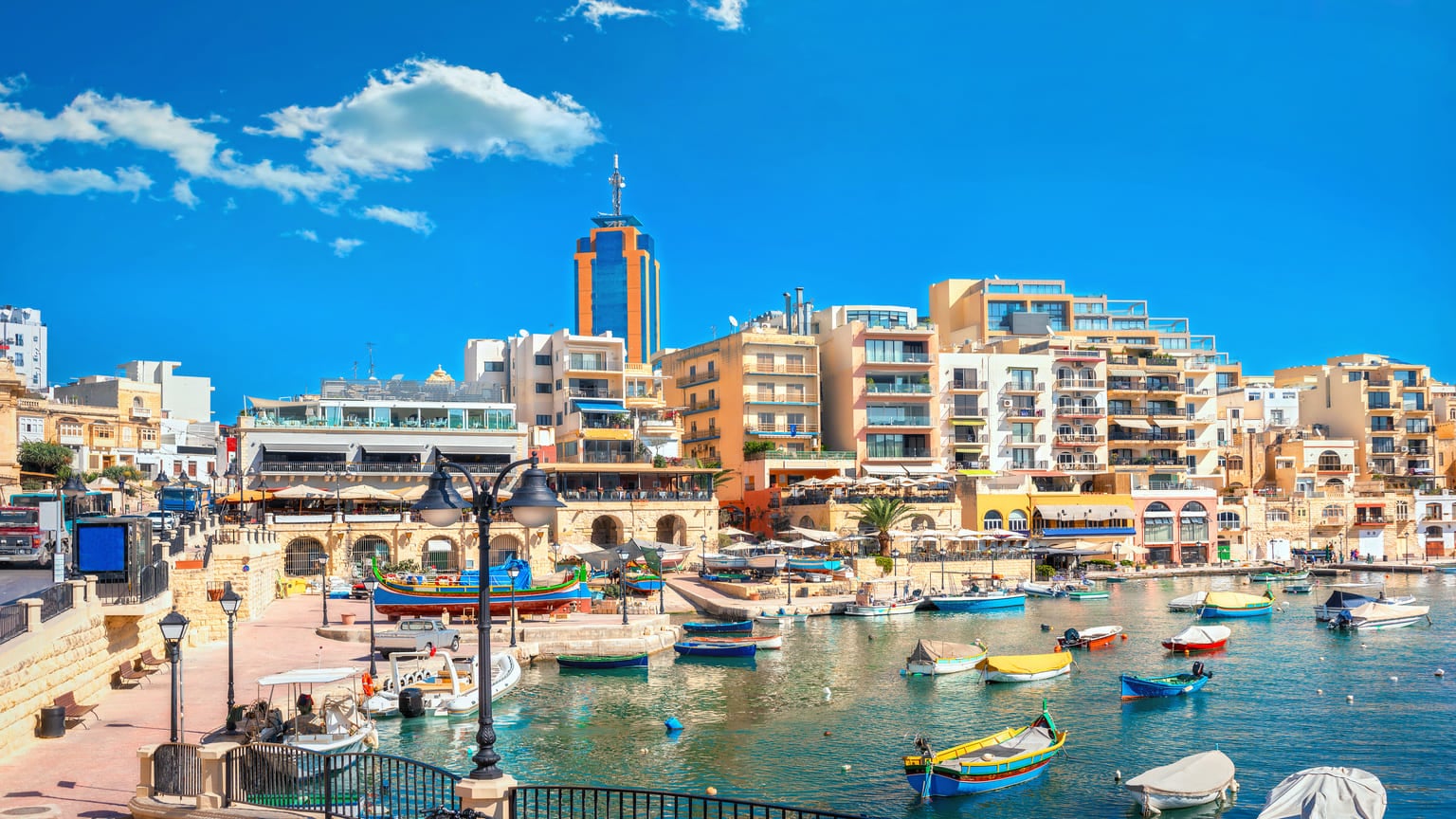
Malta’s popularity among digital nomads is growing, which is resulting in an expanding community of remote workers living on the island. Cities like Sliema, St. Julian’s, and Valletta have plenty of co‑working spaces, cafes, and networking events.
Malta was one of the first EU countries to implement nationwide 5G internet, making it an ideal location for remote workers. The country also offers high‑speed internet and co-working spaces across major cities, ensuring that digital nomads can stay connected and productive.
Top choices include Sliema and St Julian’s for their lively atmosphere and coworking spaces, Valletta for its historic charm, and Gozo for a quieter, more affordable lifestyle close to nature.
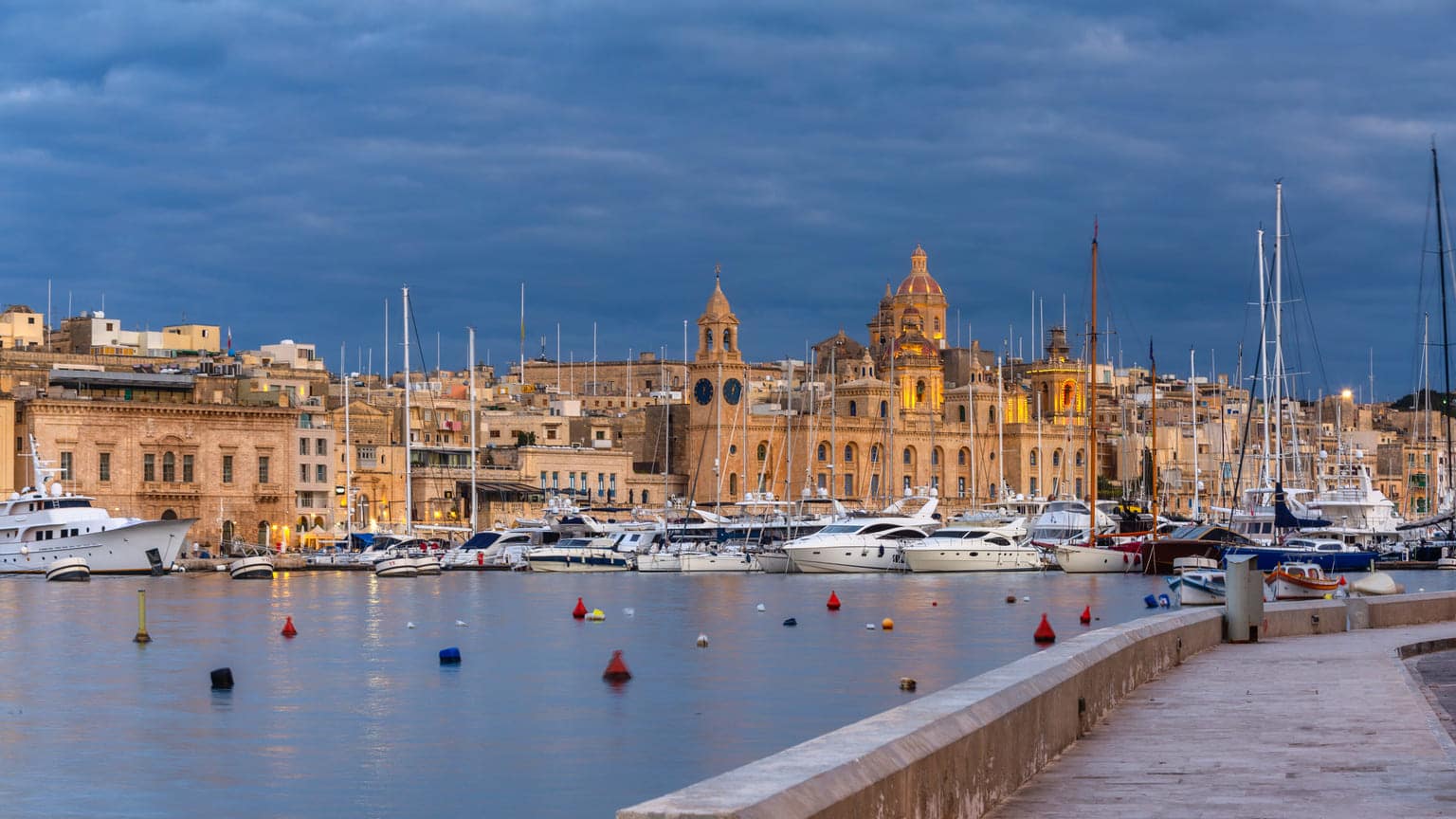
It is Malta's capital and is a UNESCO World Heritage site and ideal for digital nomads who appreciate rich history, architecture, and vibrant street life. The city offers plenty of co-working spaces, a thriving café culture, and easy access to government offices, making it convenient for residency applications and work needs.
While costs in Valletta are relatively high compared to other areas, the city’s infrastructure and walkable streets allow for comfortable living.
It is one of Malta’s most modern and cosmopolitan areas. It is perfect for nomads seeking a lively environment with plenty of amenities. Known for its seafront promenade, luxury apartments, and shopping centres, Sliema offers a blend of urban life and coastal relaxation. There are plenty of co-working spaces and cafes catering to remote workers. The city is also well-connected by public transport to other parts of Malta.
Rent here can be expensive, but the convenience and social scene are major draws for digital nomads.
It is located just north of Sliema and is famous for its nightlife, upscale dining, and vibrant entertainment scene. It’s ideal for digital nomads who want to balance work with a dynamic social life. The area also offers luxury living options, from modern apartments to beachfront properties.
It is a centrally located area between Sliema and Valletta. It offers affordable housing compared to neighbouring areas and has a growing expat and digital nomad community. The city is near business districts, universities, and co-working spaces and offers accessibility without the high costs of Sliema or St. Julian’s.
The waterfront promenade provides a great spot for relaxation, and the area is well-connected via public transport.
It is a small rural island north of mainland Malta. It is ideal for digital nomads seeking a quieter, more relaxed environment. Gozo is known for its beautiful beaches, historic temples, and scenic countryside. The island lacks the urban amenities of places like Sliema or Valletta, and would better suit those looking for a laid-back lifestyle. The cost of living in Gozo is significantly lower than in other Maltese cities.
Digital nomads often compare countries not just on lifestyle but on how salary and freelance income will be taxed after arrival. The snapshot below focuses on headline income tax treatment, whether you are a tax resident or not.
Rates change and regimes have eligibility conditions, application windows and filing formalities. Always check the latest guidance before deciding.
| Country | Special regime for nomads | Income tax for residents | Income tax for non-residents | Notes |
| Malta | Yes | 0% on authorised foreign income for 12 months, then 10% on authorised work; other local income up to 35% | Taxed only on Maltese-source income after the exemption period | Other Maltese-source income, progressive up to 35% |
| Portugal | No | Progressive up to 48% | 25% on Portuguese-source income | Bands and deductions change each year |
| Spain | Yes | Progressive up to 47% | 24% on Spanish-source income | Timely registration of tax residency is required |
| Hungary | No | Flat 15% personal income tax; social contributions may apply | Same 15% on Hungarian income | The final burden depends on social contribution rules and your setup |
| Italy | Yes | Progressive up to 43% | Taxed only on Italian-source income | Registration, factual presence and centre of vital interests are key |
Digital nomads moving to Malta enjoy a high quality of life, combining a Mediterranean lifestyle with the convenience of modern infrastructure. Below are key aspects to consider when settling in Malta.
Public transportation is primarily bus‑based, and the costs are reasonable. A one-way bus ticket costs around €2, while a monthly pass ranges from €15 to €26. For more flexibility, many digital nomads opt to rent cars or scooters. Renting a car for a day can range from €5 to 40, depending on the model and the chosen rental service.
For short distances, taxis are also available, with a 10 km trip costing around €20. Trips between Malta’s islands, such as Gozo, are convenient and affordable thanks to ferries which cost under €20 for a car and passenger.
Malta has a well-developed healthcare system that ranks among the top 20 globally. To seek treatment in Maltese public clinics, non-EU digital nomads must purchase private health insurance, which can cost around €25 per month for basic coverage. Private healthcare services are also relatively affordable, with GP visits costing around €20 and specialist consultations up to €60.
Malta's price level index is 10.8% lower than the EU average and around 20% lower than that of France and Germany. The average cost of living depends on location, with urban centres such as Valletta and Sliema being more expensive and smaller towns and villages offering more affordable options.
The average costs of accommodation and basic food in Malta are as follows:
As of 2025, applicants must show a minimum annual income of €42,000, or €3,500 per month, to qualify for the Malta Nomad Residence Permit. This ensures that digital nomads can support themselves and any dependents while living in Malta.
Yes, it is possible to get Malta citizenship by naturalisation after 5 years of living in the country. There’s also naturalisation granted for exceptional contributions to Malta or humanity. It is called Citizenship by Merit.
Eligibility fields include entrepreneurship, investment projects, job creation, innovation, science, education, culture, philanthropy, security, and social impact.
After receiving the permit, digital nomads must register with the Maltese tax authorities and obtain a tax identification number. They then report eligible income and pay a flat 10% tax on Malta-sourced earnings, following the local filing rules.
No. The Malta Nomad Residence Permit does not exempt US citizens from paying Social Security or Medicare taxes. As the United States and Malta do not have a totalisation agreement, American digital nomads remain liable for these contributions while working remotely from Malta.
It depends on your personal situation. The 10% Maltese flat tax applies only to income earned from work performed in Malta. The Foreign Tax Credit may still offer better tax relief for US taxpayers, depending on their total income, deductions, and residence status. Consulting a tax adviser familiar with both Maltese and US tax systems is strongly recommended.
Malta is not entirely tax-free for foreigners. Under the general rule, Malta does not tax foreign income that is not transferred to the country.
Digital nomads holding a Nomad Residence Permit are exempt from taxation on foreign-sourced income for the first 12 months of their stay. After that, a 10% tax applies to income from authorised work. However, other income types, such as property-related earnings or capital gains, may be subject to tax earlier.
Foreigners generally do not pay tax on income generated abroad and not transferred to Malta. In other cases, income is taxed progressively from 0 to 35%.
Digital nomads with a Nomad Residence Permit pay no tax on foreign-sourced income for the first 12 months. After that, a 10% flat tax applies to income from authorised remote work.
If digital nomads earn rental income or sell property in Malta, those activities are subject to specific tax rates, such as a 15% tax on rental income or up to 8% on property sales.
To qualify for the Malta Nomad Residence Permit, applicants must demonstrate a minimum of €3,500 per month, or €42,000 per year. This requirement remains unchanged even if family members are included in the application.
Malta consistently ranks high as a destination of choice for digital nomads. The country offers high standards of living, a warm Mediterranean climate, and plenty of activities to suit various lifestyles.
Digital nomads moving to Malta can optimise their taxes by paying no income tax during the first 12 months of residency. The country’s English-speaking population makes integration easier, and Malta provides reliable 5G internet, an expanding digital nomad community, excellent healthcare, and modern infrastructure, making it ideal for remote work.
Yes, digital nomads might be subject to certain taxes in Malta, depending on the length of their stay and their sources of income.
Income from authorised remote work outside Malta is tax-exempt for the first 12 months. After that, a 10% tax applies.
However, the 1-year tax exemption does not cover income from property transactions or dividends and interest earned in Malta. These are taxed at progressive rates of up to 35%.
The cost of living in Malta varies by location. For example, renting a one‑bedroom apartment in the city centre can cost around €950 per month, while outside the city centre, it can drop to €790 per month. Monthly groceries cost about €300 to 400, and basic utilities’ costs can range from €90 to €150.