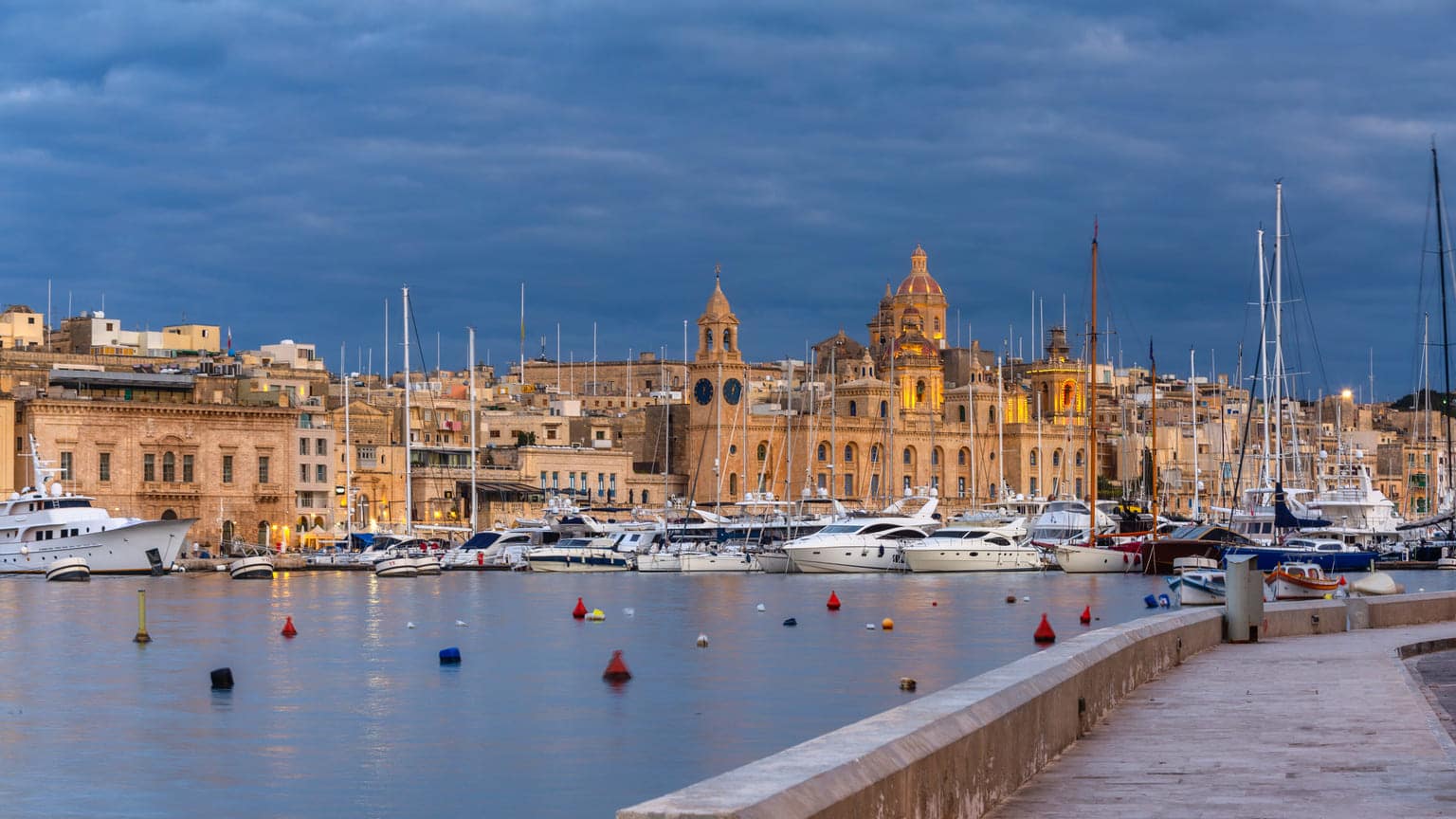
Americans choose Malta for its high security, relaxed lifestyle, lower cost of living, and Mediterranean climate. Also, it is easy to get to major European cities within a couple of hours from Malta.
Typically, US citizens opt for investment-based residence routes. The Malta Global Residence Programme requires paying at least €30,000, while the Malta Permanent Residence Programme involves contributions of €169,000 or more and grants lifelong status. There are also non‑investment paths for digital nomads and startup founders.
Learn about the best ways to become a resident in Malta, including the key requirements, expenses, and timeframes for the various residence permits.




One of the safest countries in Europe, Malta also offers an English‑speaking environment, lower living costs than major US cities, and real tax advantages. Expats already make up nearly 30% of the country’s population[1].
Malta boasts strong public security environment and consistently high levels of perceived safety further support this assessment[2]. For example, the country is overall safer than France, the UK, or Italy.
According to the World Justice Project Rule of Law Index, Malta is ranked 12th among the top countries globally for safety and security, reflecting strong institutional stability and public order[4]. The country records one of the lowest homicide rates in the European Union — 0.37 per 100,00, with violent crime levels remaining significantly below the EU average[3].
The State Department awards Malta its highest Level 1 safety rating, advising travelers to exercise normal precautions[5].
Malta's location in the central Mediterranean makes it one of the most accessible hubs in the region. From Malta International Airport, flights reach Rome or Athens in 1.5 hours, Barcelona in 2.15 hours, and Paris in 3 hours. The same trips from the US East Coast require 7—10 hours.
Beyond Europe, Malta offers direct connections to North Africa and the Middle East. Istanbul is 4 hours away, Tunis — 2.5 hours, Cairo — 2.5 hours, and Marrakesh — 3.5 hours. These routes allow weekend getaways to regions that would otherwise require long-haul travel from the US.
Americans do not need to learn Maltese because English became an official language due to Malta's colonial history. The British ruled the islands from 1814 to 1964, leaving a lasting influence on the legal system, education, and public administration.
Today, English is used alongside Maltese in government, courts, business, and schools. Approximately 96% of Malta's population speaks English, and most schools teach in English, particularly at secondary and higher levels.
The prevalence of English removes the barrier Americans face when relocating to Europe. One can sign contracts, deal with bureaucracy, and manage daily life without translators. Children integrate into schools immediately, and professionals can continue their careers without language retraining.
According to price aggregator Numbeo, rent for a one-bedroom apartment in central Malta’s capital Valletta, averages $1,224 monthly, compared to $4,535 in New York[6]. Restaurant dining costs 13% less than US averages. Groceries run 27% lower overall. A family of four in Malta spends approximately 30—45% less per month than a comparable family in the United States.
Malta imposes no inheritance tax, wealth tax, or gift tax, which provides long-term planning advantages for high-net-worth individuals and families.
Malta and the USA have signed a double tax treaty, which prevents double taxation on income earned in both countries[7]. US citizens remain subject to US worldwide income taxation but may claim foreign tax credits for taxes paid in Malta .
Certain categories of residents may benefit from special tax regimes. For example, investors who moved to Malta with the Global Residence Programme pay a flat 15% tax on foreign-source income remitted to Malta with a minimum annual tax of €15,000. Foreign capital gains are fully exempt from Maltese tax, even if remitted.
Retirees approved under the Malta Retirement Programme may also benefit from a special tax status. Qualifying pension income remitted to Malta is taxed at a flat 15% rate with a minimum annual tax of €7,500.
The Mediterranean climate provides over 300 days of sunshine annually, encouraging residents to spend time outdoors[8]. The islands offer historic sites, beaches, and water sports within short distances, supporting an active and varied lifestyle.
This environment allows Americans to step away from the everyday rush and absorb the tranquility of coastal living. The natural beauty and world-famous historic sites promote a more outdoor-oriented and relaxed way of life.
Maltese corporate culture reflects this approach. Workplaces emphasize work-life balance with reasonable hours and minimal overworking. The work environment tends to be more collaborative and less hierarchical than in many US companies, allowing professionals to maintain productivity while enjoying the benefits of island living.
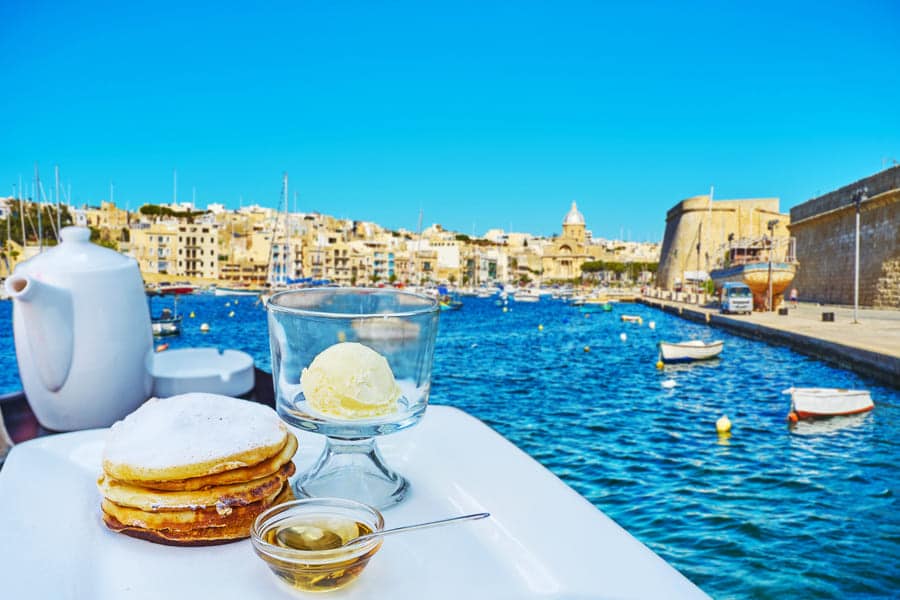
Americans relocating to Malta can pursue several residence pathways, each designed for different profiles and goals. US citizens may obtain a residence permit in Malta within 2—6 months by investing in property, demonstrating remote work income, securing employment, launching an innovative startup, or retiring with pension income.
Residency options in Malta are structured under clearly defined government frameworks. Each pathway sets out precise eligibility criteria — from minimum income thresholds and qualifying investments to proof of professional activity or pension income.
| Program | What it provides | Validity period | Financial requirement | Processing time | Residence requirement | Residence for family members |
| Global Residence Programme | Temporary residence | 1 year,2‑year renewals | €30,000+ Investment | 3+ months | No minimum stay | Spouse, children under 25, siblings, parents, grandparents |
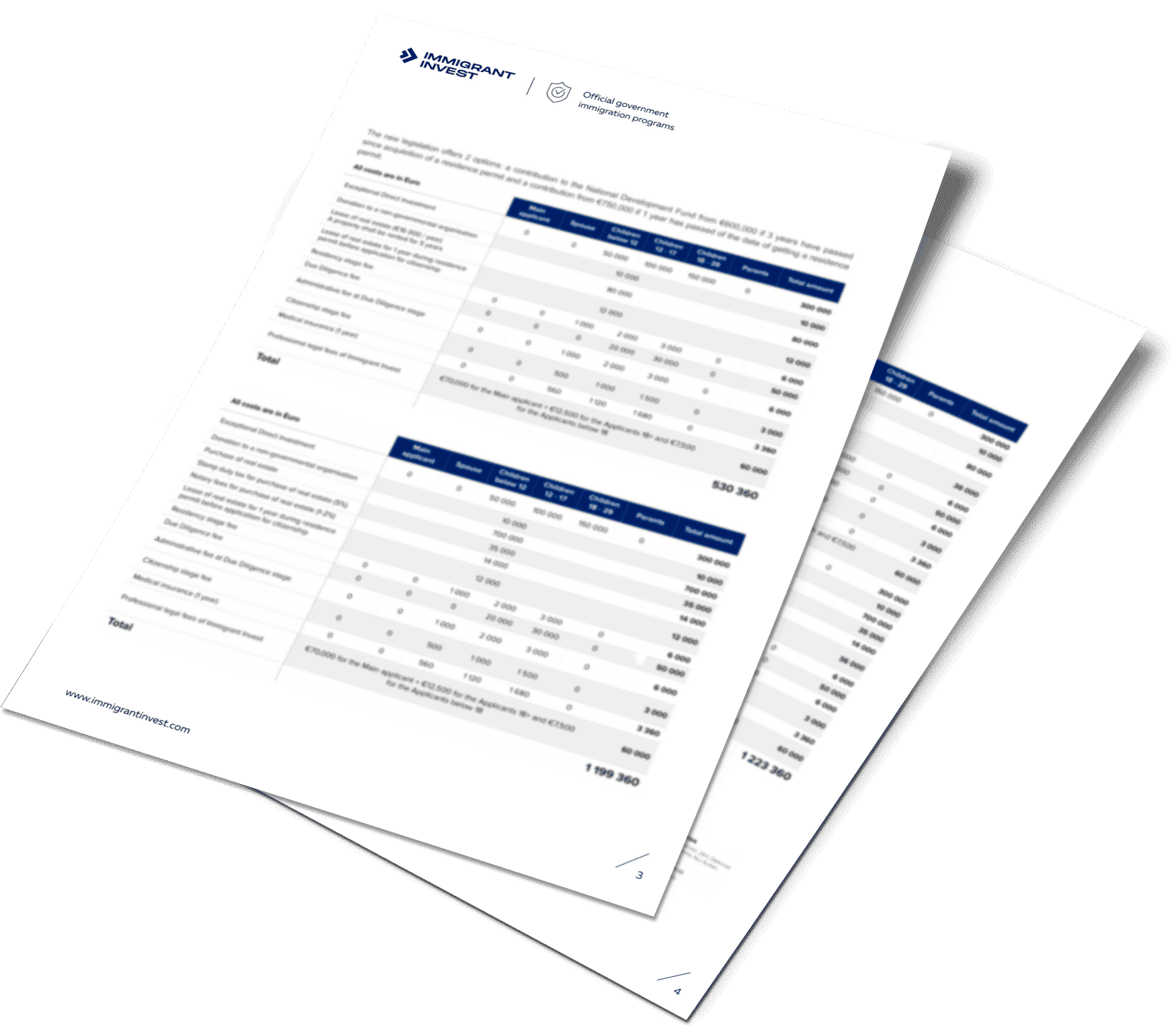
| Permanent Residence Programme | Permanent residence | For life | €169,000+Investment | 4—6 months | No minimum stay | Spouse, unmarried children under 29, parents, grandparents |
| Nomad Residence Permit | Temporary residence | 1 year, renewable three times | €42,000+Annual income | 2—3 months | 5+ months a year | Spouse and minor children |
| Key Employee Initiative | Temporary residence | 1 year, renewable three times | €45,000+Annual salary | 4 months | Tied to employment | Spouse and minor children |
| Specialist Employee Initiative | Temporary residence | 1 year, renewable three times | €30,000+Annual salary | 4 months | Tied to employment | Spouse and minor children |
| Startup Residence Programme | Temporary residence | 3 years, 5‑year renewal | €25,000+Share capital | 3—6 months | 183+ days per year | Spouse and minor children |
With the Malta Global Residence Programme, US investors can obtain a residence permit in Malta, which will allow them to visit the country at any time and take advantage of a special tax regime.
Malta Global Residence Programme offers a residence permit to investors, who buy or rent property in the country.
Minimum property values depend on location:
The investor pays tax at a flare rate of 15% with a minimum annual tax of €15,000 for the whole family.
Property acquisition costs also include one-time taxes such as a 1.5% notary fee plus 18% VAT, 5% stamp duty, and 5% property tax. A qualifying residential property, whether owned or rented, cannot be rented out or subleased.
Residence is granted to the main applicant together with family members, including a spouse, children up to 25, siblings, parents, and grandparents. The investment requirements remain the same regardless of family size.
The obtaining period is 3 months or more.
| Expense category | Renting real estate | Buying real estate |
| Property cost | €8,750+ annually | €220,000+ |
| Administrative fee | €6,000 | €5,500+ |
| Minimum annual tax | €15,000+ | €15,000+ |
| One-time purchase tax | — | €25,300+ |
| Medical insurance | €400+ per person | €400+ per person |
| Translation and apostille of documents, notary fees | €4,000+ | €4,000+ |
| Total | €34,150+ | €270,200+ |
Investors join a special tax regime. Annually, they pay a 15% tax on income transferred to Malta, with a minimum amount of €15,000 per family.
Validity of the residence card is one year once it’s issued. Subsequent permits are renewed for two years. To renew the permit, investors have to continue maintaining investment and pay tax according to the special regime.
There’s no minimum stay requirement. However, participants of the program are not allowed to live in any other country than Malta for more than 183 a year and become a tax resident anywhere else.
Investors are not allowed to rent out or sell the property that was purchased as an investment under the program.
To apply for the Malta Global Residence Programme, an investor needs to submit:
Another program aimed at investors is the Malta Permanent Residence Programme, which allows US citizens to obtain a lifelong status in the country.
Malta Permanent Residence Programme is designed for foreign investors. Applicants buy or rent real estate, pay state and administrative fees, and make a charitable donation to a Maltese organization.
The processing period is 6 months or more. Malta permanent residence is issued for life, but the residence card needs to be renewed every 5 years.
The main applicant’s spouse, unmarried children under 29, and principally dependent parents and grandparents are also eligible for permanent residency. The investor pays an additional administrative fee of €7,500 for each family member over 18 included in the application, except the spouse.
| Expense category | Renting real estate for 5 years | Buying real estate |
| Property cost | €70,000+ | €375,000+ |
| Administrative fee | €60,000+ €7,500 per family member over 18, except for the spouse | €60,000+ €7,500 per family member over 18, except for the spouse |
| Contribution fee | €37,000 | €37,000 |
| Charitable donation | €2,000 | €2,000 |
| Total | €169,000+ | €474,000+ |
The permanent residence permit does not require living constantly in Malta to maintain the status. However, holders must always maintain a registered address in Malta. This can be the qualifying property or another accommodation that meets the program’s requirements.
After five years, investors may sell the purchased property or cancel the rental agreement, provided they secure a new registered address in Malta. The new address must comply with the program’s rules, though it does not need to meet the original minimum thresholds.
Malta Nomad Residence Permit is available for remote workers who earn at least €42,000 per year. This type of residency is available to freelancers, remote employees of foreign companies, and sole proprietors.
Work must be performed exclusively for employers or clients based outside Malta. The permit excludes individuals whose employer maintains a subsidiary in Malta or serves Maltese clients.
Aside from showing sufficient income, applicant applicants must own or rent a residential property in Malta for the entire permit validity period.
A digital nomad can add their spouse and children to the application. It takes at least 2—3 months to obtain the residency.
The Nomad Residence Permit is initially issued for 1 year. The status can be extended 3 times, each time for one year. To qualify for renewal, digital nomads need to spend at least 5 months a year in Malta. This type of residency does not make one eligible to apply for a permanent residence permit.
Required documents. Digital nomads in Malta submit the following specific documents:
Residence permit by employment is granted to Americans who have a job offer from an employer in Malta. The invitation is issued if a suitable candidate for the job could not be found in Malta or other EU countries. Several pathways exist depending on the applicant's qualifications and the nature of the job offer.
The most common route is the Single Permit, which combines work authorization and residence status. For highly qualified professionals, Malta offers the EU Blue Card and two national fast-track schemes: the Key Employee Initiative and the Specialist Employee Initiative.
The Single Permit is the most common employment-based residence permit for non-EU nationals, including Americans[9]. The permit combines work authorization and residence status in a single document.
The application process requires a confirmed job offer from a Maltese employer. The employer initiates the application online through the Identity Malta system and provides evidence that the position could not be filled by a Maltese or EU national.
Processing times for the Single Permit can take up to 4 months. Applicants outside the Schengen Area must apply before entering Malta and may not commence employment until they receive an interim receipt or the physical eResidence card.
The EU Blue Card allows highly qualified non-EU citizens to live and work in Malta[10]. The framework applies in 25 EU countries, excluding Denmark and Ireland.
Applicants must meet several requirements:
Applications are submitted online via the Identity Malta platform. The employer must provide proof that they advertised the position locally for at least 2 weeks within the 2 months before application.
The permit is valid 2 two years upon first issuance. If the employment contract is shorter than that, the permit remains valid for the contract duration plus 3 months. Renewal is possible for up to 3 years, provided all documents remain valid.
Malta offers fast-tracked routes for highly qualified workers through the Key Employee Initiative.
The Key Employee Initiative targets non-EU nationals in managerial or highly technical roles with an annual gross salary of at least €45,000 and relevant qualifications or proven experience[13].
The Key Employee Initiative applications follow the same administrative process as the regular Single Permit, including Due Diligence. The difference is that within the Key Employee Initiative, the processing is fast-tracked.
The employer must provide proof that they advertised the position on an appropriate local media platform for at least 2 weeks within the 2 months before the application.
Applicable fees:
Successful applicants receive a residence permit valid for one year initially. The permit may be renewed for up to three years, provided the employee submits a valid employment contract and annual tax declaration form stamped by the Inland Revenue Department.
The Specialist Employee Initiative is a residence pathway for highly skilled non-EU citizens who do not qualify for the Key Employee Initiative[14]. Eligible candidates possess the academic, vocational, or technical skills required for their job offer in Malta.
Applicants must meet two criteria:
Proof of experience must be demonstrated through contracts, certified employment history, or reference letters from former employers.
The Startup Residence Programme offers a 3-year residence permit, which can be extended for up to 5 additional years[15]. It is available to founders and co-founders who want to set up an innovative startup in Malta. The status is also granted to applicants’ immediate family members and key employees.
The startup must be in its early stages, meaning it has not been registered anywhere for more than 7 years and has not yet distributed profits. The business also cannot have been formed through a takeover or a merger.
Holders of the Startup Residence permit are required to spend at least 183 days per year in Malta.
To obtain residency under the Startup Residence Programme, applicants collect the following:
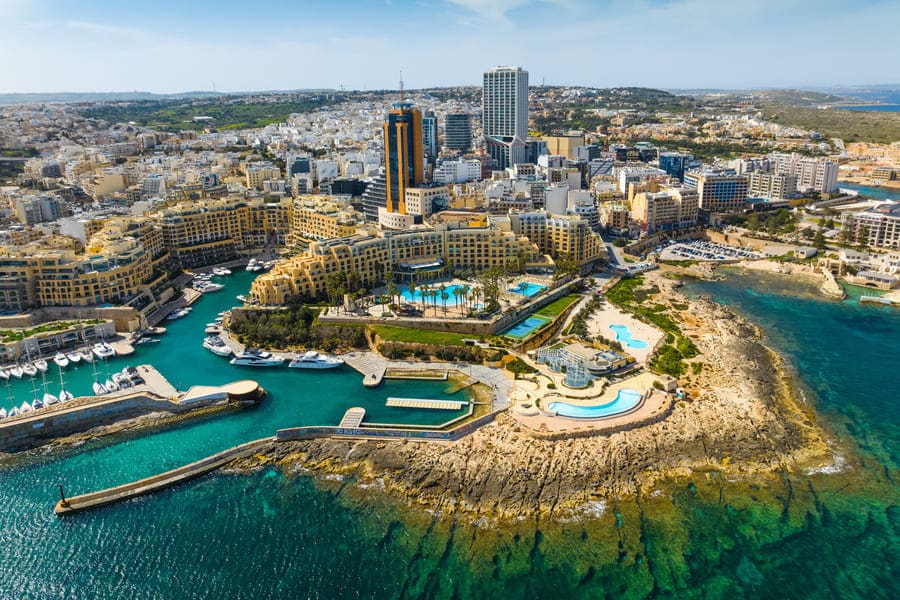
Malta Retirement Programme grants a residence permit to unemployed Americans who receive 75% of their taxable income from a pension[16]. Their spouse, financially dependent children, and household staff are also eligible for the status.
Applicants pay an administrative fee of €2,500 and buy or rent property in Malta for a certain minimum amount:
The residence permit for retiring in Malta is valid as long as the conditions of the program are met.
US citizens may acquire Maltese citizenship through several legal pathways. Malta permits dual citizenship, so Americans can hold both passports simultaneously.
Ordinary naturalization in Malta is governed by the Maltese Citizenship Act, Chapter 188[17]. Applicants must have resided in Malta for at least 5 years during the 6 years immediately preceding the application. For the 12 months before applying, residence in Malta must be continuous.
Additional requirements include:
Applications are submitted to the Community Malta Agency with supporting documents: proof of residence, police clearance certificates, birth certificates, and declarations from two sponsors. One sponsor must be a Maltese citizen who did not acquire citizenship by naturalization. Approval is at the Minister's discretion, and there is no right of appeal against refusal.
Malta citizenship by merit is a discretionary form of naturalisation governed by the provisions of Subsidiary Legislation 188.06. It is based on Malta's Vision 2050 strategy[18].
Consideration for naturalisation may be given to entrepreneurs, innovators, cultural leaders, scientists, athletes, and philanthropists with a proven international profile whose achievements align with Malta’s national interests.
There is no fixed checklist or guaranteed criteria. When assessing a request for naturalisation, the competent authorities may take into account the following factors:
The applicant’s achievements must clearly stand out from the ordinary and bring tangible benefits to Malta. Each request is assessed on a case‑by‑case basis based on whether naturalisation serves the interests of Malta.
Fields where contributions may be relevant include entrepreneurship, investment projects, job creation, innovation, digital transformation, scientific research, education, healthcare, culture, sports, philanthropy, national security, and Malta Vision 2050 initiatives[18].
Family inclusion. The legislative framework allows for inclusion of the spouse or partner, dependent children under 18, and in some cases adult children and parents if strict financial dependency criteria are met.
Both Malta and the USA allow holding more than one citizenship. This means that Americans do not have to renounce their US passport in order to obtain a Maltese one.
With Malta citizenship, Americans will have legal rights and obligations both in Malta and the USA. For example, they can work, vote, access social services, and get consular protection abroad from both countries. However, they will not be able to use the benefits of a Maltese passport within the United States, and vice versa.
Relocating to Malta takes 2—8 months from initial preparation to receiving the residence card. The exact timeline depends on how quickly documents are gathered, apostilles obtained, and how promptly applicants respond to requests from Maltese authorities.
Routes such as the Nomad Residence Permit can be completed in 2 months, while investment-based programs like the Malta Permanent Residence Programme require up to 8 months. The specific steps vary by residence pathway, but certain stages are common to all.
Applicants should evaluate their profile against the eligibility criteria for each program. For example, investors seeking flexibility without employment may consider the Malta Permanent Residence Programme. Remote workers should review the Nomad Residence Permit.
Consulting with a licensed Maltese immigration advisor is recommended to confirm eligibility and select the most suitable pathway.
Preliminary Due Diligence check helps applicants avoid common pitfalls and ensures their profile meets program requirements before funds are committed.
Immigrant Invest conducts Preliminary Due Diligence checks through their own certified Anti-Money Laundering Officers before submission. The company complies fully with the European Union’s 6th Anti-Money Laundering Directive and is directly accountable for every application submitted. As a result, the risk of government refusal drops to approximately 1%.
Common documentation requirements across programs include:
Additional documents depend on the chosen route.
Applicants must authenticate documents issued in the United States with an apostille. State-issued documents require an apostille from the Secretary of State of the issuing state. Federal documents, including FBI background checks, require an apostille from the US Department of State in Washington, D.C.
Documents in languages other than English or Maltese need translation by a certified translator and notarization. Malta accepts documents in English without translation.
Applicants submit requests either to Identity Malta for employment and standard residence permits or to the Residency Malta Agency for investment, nomad, and startup programs. Most programs require online submission through official portals with digitally uploaded supporting documents.
Applicants must pay application and administrative fees, government contributions, and any required investments or donations according to the relevant authority’s instructions. Payment is required before formal processing begins.
Processing times vary by program. The Nomad Residence Permit takes approximately 2 months. The Malta Permanent Residence Programme requires 4 to 6 months or longer. All investment programs involve strict source-of-wealth and source-of-funds Due Diligence conducted by specialized agencies in collaboration with Maltese authorities.
Applicants may be required to provide additional documentation or clarifications during the Due Diligence process. Delays can occur if documents are incomplete or unclear.
Upon approval, successful applicants receive notification and instructions for travel to Malta. Most residence programs require the applicant to travel to Malta to complete biometric enrollment and collect the physical residence card from Identity Malta offices.
New residents must register their Maltese address with local authorities. For certain programs, they must open a Maltese bank account and complete tax registration with the Malta Commissioner for Revenue.
After biometric enrollment, applicants receive their residence card. The card confirms legal residence status in Malta.
With the residence card, new residents must register their Maltese address with local authorities. For certain programs, they must open a Maltese bank account and complete tax registration with the Malta Commissioner for Revenue.
Due Diligence is a mandatory step in all Maltese residence and citizenship programs. It involves a comprehensive background check on applicants and their family members to verify they meet the legal requirements for admission. To pass this scrutiny, applicants should avoid the following common pitfalls.
Insufficient source of funds documentation. Applicants must provide detailed evidence explaining the origin of their wealth and the specific funds used for the Malta application. For US citizens, this often means producing tax returns, W-2s, bank statements, and investment account records covering 5 to 15 years. Insufficient or unclear documentation is a frequent cause of requests for additional information, processing delays, or outright refusals.
Previous immigration violations. A history of visa denials, overstays, or bans, including from the UK, Schengen Area, or other jurisdictions, can critically affect a Malta application. Disclosing any prior immigration issues upfront and obtaining legal assessment of admissibility before filing can prevent wasted time and costs.
Adverse media or criminal records. Negative press coverage, even if unproven or related to dismissed matters, can constitute grounds for refusal. Criminal records in any jurisdiction may result in automatic ineligibility depending on the nature and timing of the offence.
Sanctions list matches. Applicants are screened against international sanctions lists including those maintained by the UN, EU, OFAC, and Interpol. Any match will result in immediate refusal.
Selecting the right advisor is critical when applying for Maltese residence or citizenship. The process involves significant financial commitments, strict Due Diligence, and complex documentation requirements. Working with a licensed, experienced partner helps mitigate risks and increases the likelihood of a successful outcome.
As a government-licensed agent, Immigrant Invest conducts preliminary Due Diligence checks through our own certified Anti-Money Laundering Officers before any application is submitted. The goal is to identify potential red flags before they become grounds for refusal.
Early identification allows time to prepare explanatory documentation, correct deficiencies, or in some cases, advise against proceeding altogether. Thanks to these measures, our company maintains a refusal rate of under 1%.
Since 2006, we have helped deliver over 10,000 passports and residence permits with a 99% success rate on completed applications. Our clients come from more than 100 countries. We hold government licences for residence and citizenship programs in the European Union and Caribbean jurisdictions. For Malta, we are a licensed agent for the Malta Permanent Residence Programme.

US citizens may legally acquire real estate in Malta. The country applies different ownership rules depending on whether the property lies inside or outside Special Designated Areas.
Properties in Special Designated Areas or SDAs are pre-approved residential developments designed for foreign buyers. These areas allow Americans to purchase multiple properties and rent them out freely. No government approval is needed, and purchases close in 2 months.
Most SDAs are located in prime coastal or urban zones and operate as managed complexes with shared services. Examples include developments in Sliema, St Julian's, and select projects in southern Malta and Gozo.
Standard properties outside designated zones require a government approval known as the Acquisition of Immovable Property permit from the Ministry for Finance. It costs €233 and takes 6–8 weeks to process. The permit limits ownership to one property for personal use rather than investment.
The most popular areas include Valletta for historic apartments, Sliema for modern seafront living, and St Julian's for lifestyle and investment property. Gozo attracts buyers seeking lower prices and long-term residence.
Prices vary significantly, with Valletta and Sliema representing the highest entry points and Gozo offering the most affordable options.

The map shows a modeled property price index € per m² across Maltese localities. Values are derived from aggregated market listings and are used to illustrate relative differences in property price levels, not exact transaction prices
Property buyers in Malta pay one-time acquisition costs at purchase. These include:
Malta does not impose annual property taxes, inheritance tax, or wealth tax.
Ongoing costs relate mainly to utilities, insurance, and management fees in serviced developments. Total yearly holding costs usually fall between €13,000 and €17,000, depending on property value and location.
Malta's rental market is driven by tourism and a growing expatriate community. Gross rental income levels in Malta are reported at a median of around €12,000, according to the Housing Authority Malta[19].
Rental yields typically range from 4% to 7% annually, with premium areas like St Julian's and Sliema offering up to 15% for well-located properties. Rental income is taxed at 15% under Malta’s final withholding tax regime or up to 35% under progressive income tax. The applicable tax treatment depends on tax residency status and available deductions.
Purchasing property in Malta typically takes 2 to 6 months :
Buying property in Malta involves more than choosing the right location. American buyers should consider financing structure, compliance requirements, ongoing costs and banking procedures in advance.
Financing. Maltese banks do provide mortgages to non-residents, including US citizens. Maltese banks typically lend up to 70—80% of the property value, subject to income verification and credit assessment.
However, some residence routes require clear title to the property or impose restrictions on mortgaged assets. Before applying for a loan, it is important to confirm that the chosen structure does not conflict with immigration requirements.
Property insurance is not legally mandated in Malta but is strongly recommended. Annual premiums typically range from €100—200 for apartments and from €500 and above for villas, depending on size and coverage. Standard policies usually cover fire, flooding, water leaks and theft.
Some policies also include liability coverage for damage to common areas in shared buildings. If the property is financed through a mortgage, the bank will normally require insurance.
Property management. For owners who do not plan to live in Malta permanently, engaging a management company is a practical solution. Managers can oversee maintenance, rent collection, utility bill payments and local tax administration.
In Special Designated Areas service and management fees are often incorporated into annual service charges. Standalone properties outside Special Designated Areas require independently arranged management. Costs vary depending on the property type and scope of services.
Currency and payments. International property transactions involve moving substantial funds across borders. US banks may flag large transfers for anti‑money laundering review, potentially causing delays. Notifying US banks in advance of planned transfers and preparing clear source-of-funds documentation, such as tax returns, bank statements, or investment records, helps prevent transaction delays. Engaging a currency exchange specialist can further streamline the process.
Energy Performance Certificate is a mandatory document for all property sales and rentals in Malta. It rates the property's energy efficiency on a scale from A, most efficient, to G, least efficient, and is valid for 10 years.
The seller or landlord must obtain the certificate from a registered Energy Performance of Buildings assessor authorized by the Building Regulation Office[19]. The certificate must be presented to the buyer or tenant at the time of signing the promise of sale agreement or rental contract.
For buyers and tenants, the certificate shows expected energy costs and includes recommendations for improvements. Higher-rated properties, A—B, mean lower utility bills. For new builds, the developer provides the certificate upon completion.
Buyers and tenants should verify the Energy Performance Certificate rating before committing. If the owner fails to provide the certificate when required, they face fines of €500 to €5,000.
Professional guidance. At the property selection stage, legal and immigration alignment is critical. The structure of ownership, financing method and timing of the purchase can affect eligibility under residence or citizenship frameworks. Professional guidance helps ensure that the investment supports both immigration objectives and long-term financial plans.
Immigrant Invest maintains an internal database of properties pre-assessed for participation in Maltese residence and naturalisation pathways. The company provides individual property selection based on client objectives and assists with fully prepared and verified purchase documents.


Americans relocating to Malta tend to choose cities that match their lifestyle and career goals. Some prefer historic charm and cultural richness. Others seek modern business opportunities, seaside leisure, or a quieter pace of life. The five cities below are among the most popular choices for US expats, each offering a distinct balance of work, community, and quality of living.
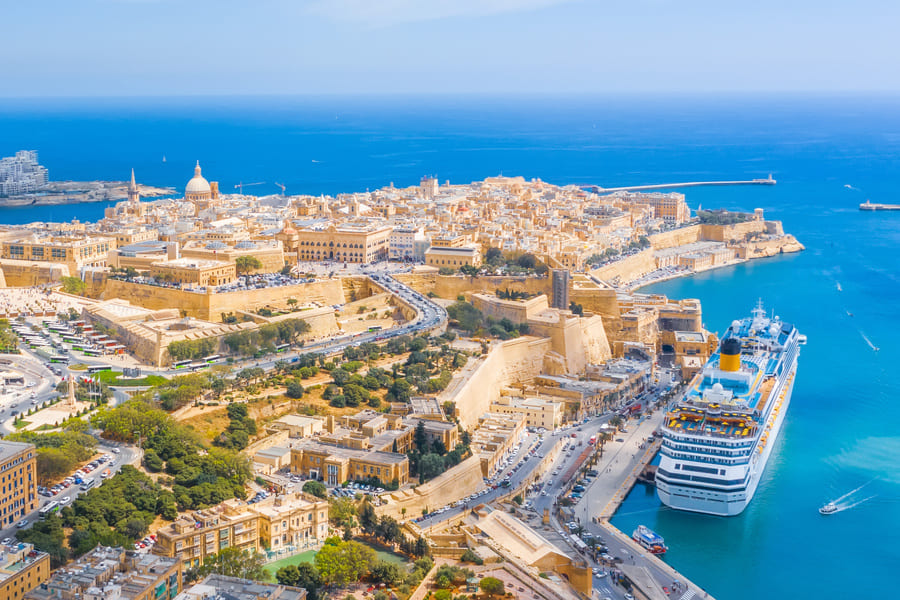
Valletta is Malta's capital city and a UNESCO World Heritage Site[20]. With a resident population of approximately 6,000, it is one of the smallest capital cities in Europe. The entire city is renowned as one of the most concentrated historic areas in the world, featuring narrow streets, baroque palaces, and ancient fortifications.
Despite its small size, Valletta serves as Malta's primary financial and business center. Major Maltese and international banks, law firms, insurance companies, and financial institutions have their headquarters here. The city offers cultural institutions, museums, theaters, and restaurants within a compact, walkable area, making it ideal for professionals in finance, law, and corporate services.
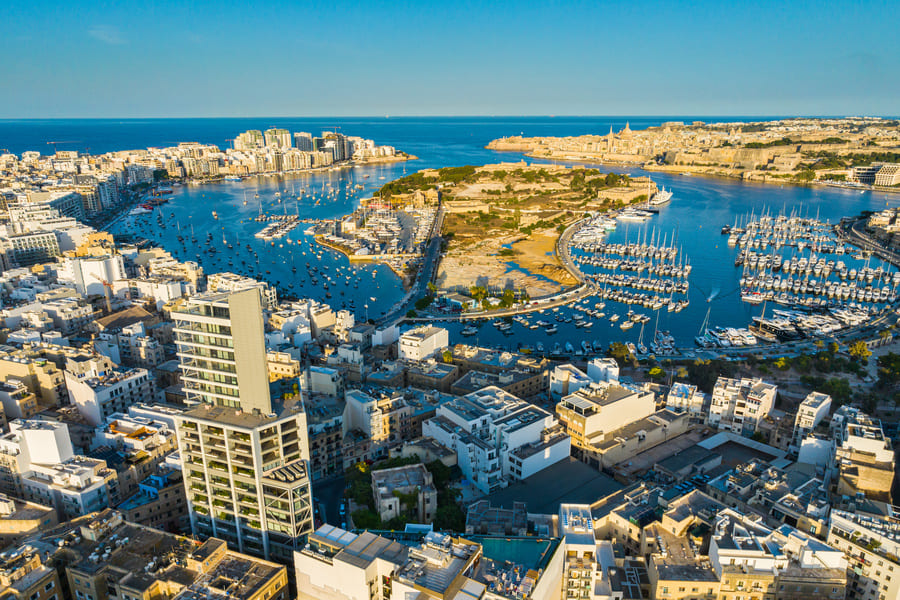
Sliema is one of Malta's most modernized and commercially vibrant towns, located approximately 25 minutes by car from Valletta. The town features shopping centers, restaurants, cafes, bars, and entertainment venues along a waterfront promenade.
The area provides numerous employment opportunities in banking, financial services, insurance, travel, and education. Sliema is popular with expatriates for its modern residential developments, English-speaking environment, and comprehensive access to services.
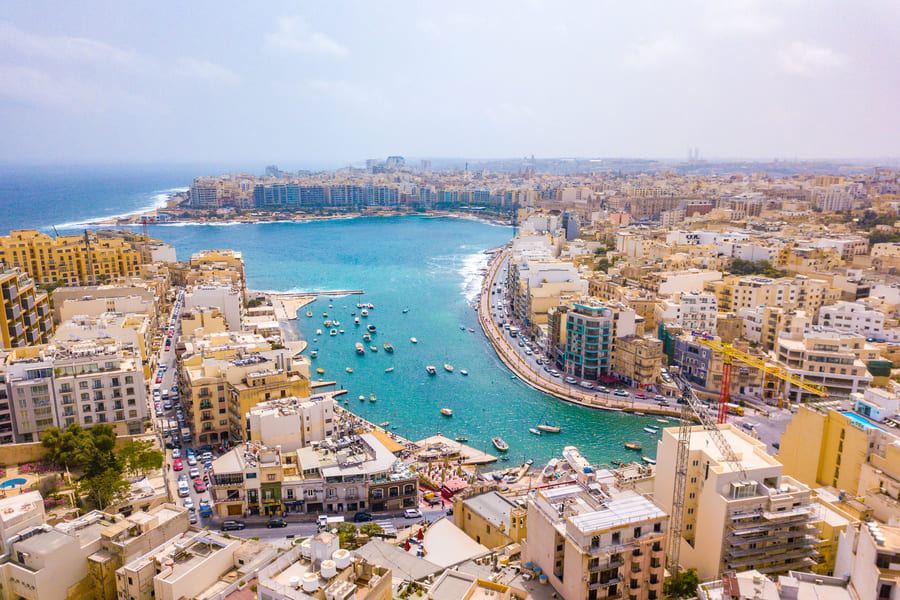
St. Julian's is a seaside town in eastern Malta known for its restaurants, nightlife, marinas, and coastal lifestyle. The area combines vibrant entertainment with business opportunities, making it a popular choice for younger professionals and families.
St. Julian's is approximately 20 minutes by car from Valletta, offering convenient access to the capital while maintaining its own distinct character. The town attracts both working professionals and lifestyle-oriented expatriates.
Victoria, also known as Rabat, is the capital of Gozo, Malta's smaller sister island. Gozo offers a more tranquil and rural lifestyle compared to the main island, with stunning natural landscapes, beaches, lush countryside, hiking trails, and world-class diving sites.
The island's slower pace, lower population density, and lower cost of living appeal to retirees, remote workers, and those seeking a quieter environment. Gozo is accessible by ferry from Malta, with crossing times of approximately 25 minutes. For Americans seeking an escape from urban bustle, Victoria provides a peaceful alternative with natural beauty and outdoor activities.
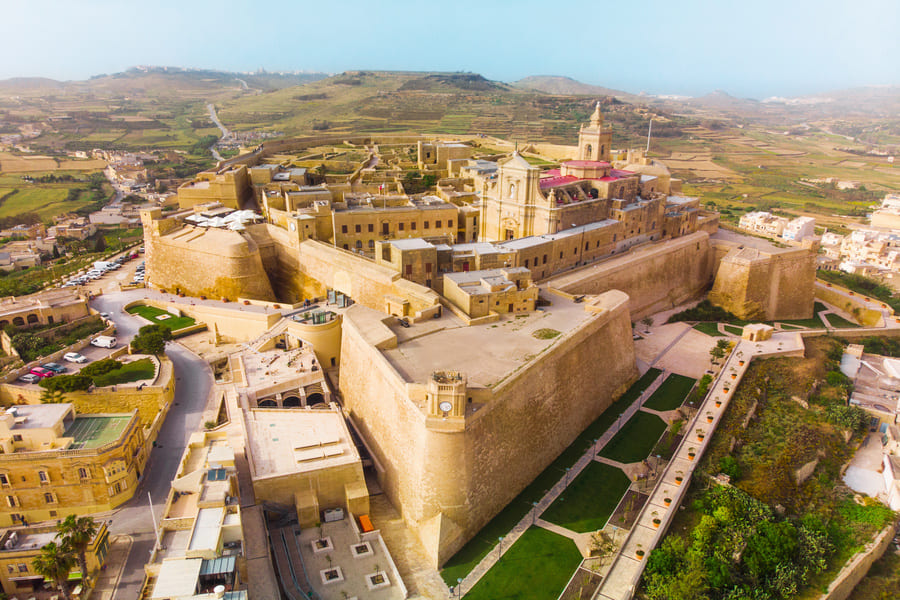
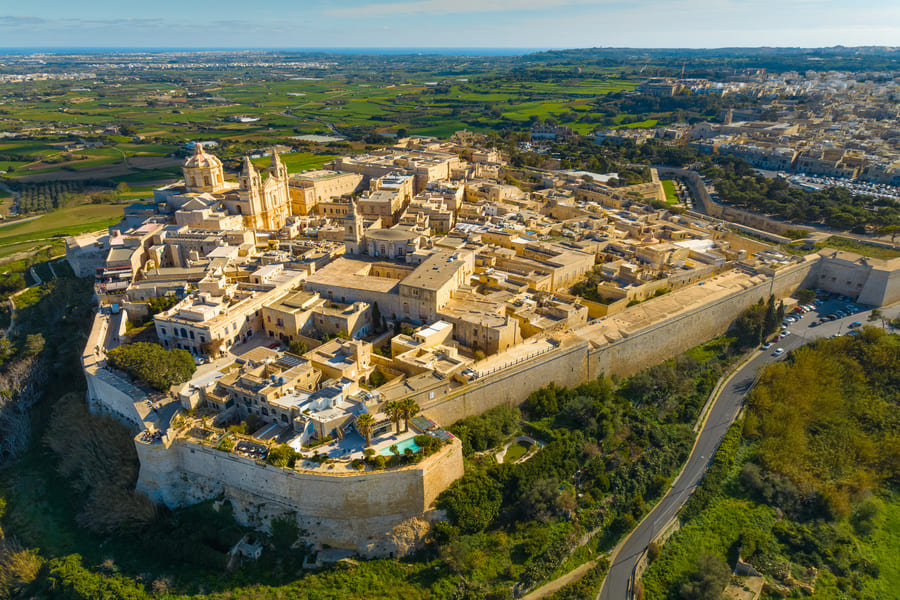
Mdina is a small, fortified medieval city located in the center of Malta. Known as the "Silent City", it is characterized by narrow winding streets, baroque and medieval architecture, palaces, and churches. The entire city offers a tranquil and unique living experience surrounded by history.
The city has a small resident population and is largely car-free. Vehicles are not permitted inside the city walls without a special permit, which is granted only to residents. Mdina is approximately 15 minutes by car from the nearby town of Victoria, providing access to daily necessities while maintaining peaceful seclusion. This setting appeals to those who value historic charm and tranquility above all else.
According to the latest data from Numbeo[6], the cost of living in Malta is generally lower than in the United States, with significant savings on rent, utilities, and everyday expenses. However, some items, such as gasoline and clothing, can be more expensive.
For a family of four a comfortable monthly budget in Malta including rent falls between €2,600 and €4,400, compared to $5,500—7,500 in the US. A single person needs €1,500—2,000 in Malta versus $2,800—3,800 in the US. The table below provides a detailed comparison of common expenses.
| Expense category | Malta | The USA |
| Restaurants | ||
| Inexpensive restaurant meal | €15 | €17 |
| Meal for two, mid-range restaurant, three courses | €75 | €65 |
| Domestic draft beer, 0.5 L | €5 | €4 |
| Cappuccino, regular | €2.5 | €4.6 |
| Soft drink, 0.33 L | €2 | €2 |
| Bottled water, 0.33 L | €1.5 | €1.8 |
| Groceries | ||
| Milk, 1 liter | €1.2 | €0.90 |
| Fresh white bread, 500g loaf | €1.2 | €3 |
| Eggs, 12 large | €3.4 | €3.8 |
| Local cheese, 1 kg | €9 | €11 |
| Chicken fillets, 1 kg | €8 | €10.5 |
| Apples, 1 kg | €2.8 | €4.5 |
| Bottle of wine, mid-range | €7 | €12.8 |
| Transportation | ||
| One-way local transport ticket | €2 | €2 |
| Monthly public transport pass | €26 | €56 |
| Taxi 1 km, standard tariff | €2 | €1.5 |
| Gasoline, 1 liter | €1.34 | €0.76 |
| Utilities monthly | ||
| Basic utilities for 85 m² apartment | €93 | €182 |
| Mobile phone plan monthly, 10GB + data | €24 | €52.5 |
| Broadband internet, 60 Mbps | €31 | €62.5 |
| Sports and Leisure | ||
| Monthly fitness club membership | €60 | €39 |
| Tennis court rental, 1 hour, weekend | €19 | €20 |
| Cinema ticket, international release | €9 | €13 |
| Childcare | ||
| Private preschool, monthly per child | €356 | €1,251 |
| International primary school, annual | €9,278 | €21,616 |
| Rent per month | ||
| 1-bedroom apartment, city centre | €1,013 | €1,429 |
| 1-bedroom apartment, outside centre | €841 | €1,159 |
| 3-bedroom apartment, city centre | €1,724 | €2,301 |
| 3-bedroom apartment, outside centre | €1,367 | €1,905 |
Moving to Malta is not just about obtaining a residence permit. It is about building a new life in a country that offers a high standard of living, safety, and Mediterranean climate. The healthcare system ranks among the best in Europe. Schools provide education in English. The culture balances work and leisure. The following sections cover practical aspects of settling in Malta.
According to the World Health Organization's 2000 global health system ranking, Malta placed 5th worldwide[21]. By comparison, the United States ranked 37th, the United Kingdom 18th, and Canada 30th.
Life expectancy at birth reached 83 years in 2024, exceeding the EU average of 81 years[22]. Malta ranks 1st in the European Union for healthy life expectancy, with residents enjoying an average of 70,1 years of life in good health — the only EU country where this figure exceeds 70 years[23]. The country also records among the world's lowest infant and maternal mortality rates[24].
This high standard is supported by a dual healthcare system with public and private options.
The public system provides free or low-cost services to residents who make social security contributions. Eligible individuals receive an Entitlement Card granting access to public hospitals, general practitioners, specialists, and emergency care. Prescription medications are subsidized.
US citizens with residence permits may qualify for public healthcare after establishing residency and making social security contributions. Long-term residents receive the same benefits as Maltese nationals.
Private health insurance. Non-EU nationals must hold private health insurance as a condition of their residence permit. Insurance must cover inpatient and outpatient care, emergency services, and repatriation if needed. Annual costs range from €300 to 3,000, depending on age, coverage level, and family size. Basic plans start around €100 per year.
Hospitals and clinics. Malta has several public hospitals, with Mater Dei Hospital in Msida being the main acute care facility. Gozo General Hospital serves the sister island. The government is currently investing €70 million in healthcare infrastructure under its Recovery and Resilience Plan, including a new 400-bed hospital in Gozo[26].
Private hospitals include St James Hospital and St Philip's Hospital, offering shorter wait times and more amenities. Clinics are located throughout the islands. Most doctors and medical staff speak fluent English.
Education is compulsory for children aged 5 to 16. Families can choose between free public schools and private international schools.
Public schools. State schools are free for all resident children. English is the primary language of instruction alongside Maltese, with English dominating at secondary level. This allows American children to integrate easily. Enrollment requires a birth certificate, proof of residence, and vaccination records.
Private international schools. Malta has several private schools offering British, International Baccalaureate, and American curricula. Annual tuition ranges from €5,000 to 20,000. Popular options include schools with IGCSE, A-Level, and IB programs.
Higher education. Maltese university degrees are recognized throughout the European Union. The University of Malta, founded in 1592, offers bachelor's, master's, and doctoral programs. Tuition for non-EU students ranges from €8,500 to 10,800 per year. The American University of Malta offers US-style education with tuition from €5,000 to 11,000 annually. Graduates can work or continue studies anywhere in the EU.
Opening a Maltese bank account is straightforward for new residents with approved residence status. Most major banks require the following documents:
Banks typically offer current accounts, savings accounts, and multi-currency accounts. Online banking is standard, and most institutions provide English-language services. The Single Euro Payments Area allows euro transactions between EU countries as easily as domestic transfers, without international fees .
Some banks may require an initial deposit, typically €100—€500. Non-residents can sometimes open accounts before arriving, though most banks prefer in-person visits after residency is established.
Language. English is an official language of Malta alongside Maltese, with approximately 96% of the population speaking English. Government services, legal documents, business, and education operate in English. Americans face no language barrier in daily life, though learning basic Maltese phrases can enhance social connections.
Work culture. Maltese corporate culture emphasizes work-life balance, with shorter working hours and minimal overworking compared to US norms. Employees receive at least 25 days of annual leave plus 14 public holidays, one of the highest totals in Europe. Maternity leave is 18 weeks, with 14 weeks fully paid.
Workplaces tend to be more collaborative and less hierarchical than typical American companies. Remote and flexible working is common, particularly in tech, finance, and gaming sectors.
Social integration. Nearly 20% of Malta's population is foreign-born, creating established expatriate communities. The Malta Expat Community, American Club of Malta, and various professional networks facilitate integration. Sliema, St Julian's, and St Paul's Bay have the highest concentrations of foreign residents.
LGBT rights. Malta ranks first in Europe for LGBT rights, with a score of 89% on the ILGA-Europe Rainbow Map[27]. Same-sex marriage has been fully recognized since 2017, and couples enjoy equal rights in adoption, property, and taxation. Same-sex partners may apply jointly for residency by investment programs.
Climate and lifestyle. Malta enjoys a Mediterranean climate with mild winters and hot summers. Over 300 days of sunshine annually support an outdoor lifestyle. The islands offer beaches, diving, sailing, hiking, and historic sites within short distances. Local markets provide fresh, seasonal produce year-round.
Shipping household goods. Sea freight from the US East Coast to Malta typically takes 4—6 weeks. Air freight is available for urgent items. Most international moving companies service Malta regularly. Shipping costs vary by volume and weight. Obtaining quotes from multiple providers is recommended.
Items that may be restricted or taxed include alcohol, tobacco, and certain electronics. Consulting with a customs broker before shipping helps avoid delays.
Bringing pets. Malta operates an EU-compliant Pet Travel Scheme. Requirements include:
Pets must enter via approved Travelers' Points of Entry. Quarantine is not required for properly documented animals. Advance notice to the airline and confirmation of pet acceptance policies are essential.
Vehicle importation. Importing a US vehicle to Malta is complex and often costly due to EU standards and import duties. Most Americans sell their vehicles in the US and purchase or lease in Malta, where right-hand drive vehicles are standard. Car rental is widely available, with daily rates starting at €30 for economy cars.
Mail forwarding and residency registration. US citizens should arrange mail forwarding through the US Postal Service or private services. Upon arrival, new residents must register their address with the local council. This registration is required for utility connections, healthcare enrollment, and official correspondence.
Relocating to Malta involves multiple steps. Some tasks require attention before departure, others after arrival. The checklist below outlines the key actions for a smooth transition.
Before departing, complete all legal, financial, and logistical preparations. These steps typically take 3—6 months and require coordination with US institutions:
Upon arrival, focus on immigration formalities, settling into daily life, and integrating into the local community. Most tasks can be completed within the first month:
Yes, Americans can move to Malta. US citizens may obtain a residence permit in Malta within 2—6 months by investing in property, demonstrating remote work income, securing employment, launching an innovative startup, or retiring with pension income.
Moving to Malta from the USA can be straightforward if you meet the residency requirements. You will need to secure a residence permit by investment or through Malta ordinary residence scheme employment, such as self-employment, study, family reunification, or retirement. The process involves paperwork and adherence to Maltese immigration laws.
US citizens may visit Malta without a visa for up to 90 days within any 180-day period under Schengen Area rules. For stays longer than 90 days, a residence permit is required. The type of permit depends on purpose: work, investment, remote work, or retirement.
For US citizens, there is not just one “visa” for Malta. You can enter Malta without a visa for short stays of up to 90 days for tourism or business, thanks to the Schengen Agreement. Your passport must be valid for at least three months beyond your planned departure.
For stays longer than 90 days, you need to apply for a residence permit. The right one depends on your purpose:
US citizens also need to apply for an ETIAS travel authorisation before travelling to Malta for short stays.
To qualify for residency in Malta, you can apply for a residence permit on various grounds, such as employment, self-employment, study, family reunification, or retirement. The Malta Permanent Residence Programme offers residency by investment in property and financial contributions.
It depends on the permit. For the Nomad Residence Permit, you apply online from the US through the Residency Malta Agency portal. If approved, you receive a Letter of Approval in Principle, then secure accommodation and health insurance before traveling to Malta for biometrics.
For employment-based permits like the Single Permit, you must apply from outside Malta before entering.
For Malta Permanent Residence Programme and Global Residence Programme, you apply through a licensed agent from the US before moving. While US citizens can enter Malta visa-free for 90 days, you should not begin long-term residency without having the correct permit approved in advance.
Processing times vary by program:
No. English is an official language of Malta alongside Maltese, and 96% of the population speaks English. Government services, legal documents, business, and education are conducted in English. Americans can navigate daily life without learning Maltese.
Living in Malta is generally less expensive than living in the USA. While housing costs in Malta can be high, other expenses such as healthcare, transportation, and dining out tend to be lower. Overall, the cost of living in Malta is about 37% lower than in the USA.
Public healthcare in Malta is free for eligible residents who make social security contributions. US citizens on residence permits must hold private health insurance as a condition of their permit and may not qualify for public healthcare until they establish eligibility through contributions.
Private health insurance costs range from approximately €300 to €3,000 annually, depending on age, coverage level, and family size.
In 2026, a single person in Malta needs around $790 per month to cover basic living expenses, excluding rent. For a comfortable lifestyle, a monthly salary of about $2,500 is recommended. For a family of four, the estimated monthly expenses, excluding rent, are around $2,500 to 2,900.
Yes. Properties in Special Designated Areas may be purchased without a special permit and can be rented out freely. Properties outside SDAs require an Acquisition of Immovable Property permit and must typically serve as the owner’s primary residence. Minimum purchase thresholds apply for residence programs.
The cost of buying a house in Malta varies based on location and type of property. For instance, in Valletta, the capital city, the cost of a square meter can reach $7,700. In Sliema. prices range from $5,000 to 9,100 per square meter. In St. Julian’s, foreigners can expect to pay $2,900 to 4,400.
Yes, a US citizen can retire in Malta. They can apply for a residence permit through the Malta Retirement Programme, which requires meeting specific financial and accommodation criteria, or through Malta Global Residence Programme by property investment.
A comfortable retirement might require a monthly income of around $2,500 for a single person, excluding rent. Additionally, if you choose to buy property, expect to spend at least $325,000 in the south of Malta or Gozo, and $380,000 in other regions. For those opting to rent, the minimum annual rent is $10,800 to 13,000 depending on the location.
Investment requirements vary by program:
Work authorization depends on the permit type:
Yes. If you want to work remotely for your own foreign-registered company or as a freelancer with international clients, you can apply for the Nomad Residence Permit. This requires a gross yearly income of at least €42,000 and proof that your business is registered outside Malta and serves foreign clients.
If you want to open a new company in Malta to do business locally, you can register a Maltese company with minimum share capital of €1,165. To live in Malta while running this locally registered company, you would need a different permit, such as the Start-Up Residence Permit or a self-employment work permit through Jobsplus.
Under the Malta Global Residence Programme, foreign-source income is taxed only if brought into Malta, at a flat rate of 15%. Foreign capital gains are exempt from Maltese tax even if remitted. However, US citizens remain subject to US worldwide income taxation and must file annual US tax returns regardless of where income is earned or held.
Most Malta residence programs allow inclusion of immediate family members:
Additional government fees apply for dependent adults in most programs.
Obtain an FBI Identity History Summary Check, then have the document authenticated with an apostille from the US Department of State in Washington, D.C. The apostille certifies the document for use in Malta under the Hague Apostille Convention.
Malta Permanent Residence Programme status allows indefinite residence but does not automatically lead to citizenship.
To acquire Maltese citizenship, permanent residents must meet naturalization requirements: at least 5 years of residence in Malta during the 6 years preceding the application, continuous residence for 12 months before applying, good character, and English language proficiency.
Renewal procedures vary by program. Some permits require the holder to be present in Malta for biometric enrollment or document collection. Applicants should confirm renewal requirements with the issuing authority well before permit expiration.
According to Numbeo 2026 data:
Yes, Malta offers a warm climate, English-speaking environment, rich history, and a high quality of life with modern healthcare and a vibrant expatriate community.
Yes. Malta has a low crime rate and consistently ranks among the safest countries in Europe. It is considered the safest country in Europe, police are visible and helpful.
Yes. Malta ranks first in Europe for LGBT rights with a score of 89% on the ILGA-Europe Rainbow Map. Same-sex marriage has been legally recognized since 2017, and couples enjoy equal rights in adoption, property, and taxation. Same-sex partners may apply jointly for residency by investment programs.