Hungary — a country famous for its rich history and culture, national cuisine and spa resorts — attracts expats who want to enjoy European standards of living combined with an affordable lifestyle.
Starting in 2024, foreigners will be able to obtain a Hungary residence permit by investment. The investment amount starts at €250,000, and the status will be granted for 10 years.



At the end of 2023, the Hungarian government announced a new residency by investment program. Starting in 2024, non-EU and non-EEA citizens get the right to become Hungarian residents in return for investments in the country’s economy.
Under the newly developed program, participants have three options to choose from:
The investor gets a Guest Investor Visa, travels to Hungary, fulfils the chosen investment condition, and then applies for residency. The status is granted for 10 years and is extended to the applicant’s family.
In the past, Hungary issued residence permits to foreign investors who purchased Hungarian government treasury bonds with a 5-year lockout period. The minimum required investment was €300,000, and the program was closed in 2017. After that, wealthy foreigners obtained Hungary residence permits for purchasing property for €155,000 or more. In December 22, 2023, this option was closed as well.
1. Visa-free travel to the Schengen Area countries. Hungary residents do not need visas and can spend up to 90 days out of 180 in the countries of the Area. The number of days spent in Hungary is excluded from the count.
2. Moving to the EU with the family. The Hungary Golden Visa allows investors and their families to relocate to the country and enjoy high life standards and a low cost of living compared to other EU countries.
3. A 10-year residence permit. Under the new Golden Visa program, investors will get residency in Hungary for 10 years. The status can be extended once for the same period.
Although the conditions are still to be clarified after the launch of the program, investors might be allowed to obtain permanent residency after 3 years of residing in Hungary. After an additional eight years, they will become eligible to apply for a Hungarian passport.
4. No residency requirements. Golden Visa holders are not obliged to move to Hungary or to spend a specific number of days there to maintain their status.
5. Right to work and do business in a European country. After moving to Hungary as Golden Visa holders, investors and their family members can get employed and set up businesses in the country.
6. Facilitated opening of bank accounts. Hungary residence permit holders open accounts in local banks under a simplified procedure: they usually need to provide only a passport and a residence permit card. Non-residents are also allowed to open bank accounts, but they must provide a Hungarian address and confirm regular visits to the country.
The Hungarian bank system is considered one of the most stable in Central Europe.
7. Tax optimisation. Tax rates in Hungary are some of the lowest in the EU. The corporate tax rate is 9%, and the personal income tax and capital gains tax rate is 15%. To become a tax resident, an investor should spend at least 183 days per year in Hungary.

To qualify, an applicant for the Hungarian Golden Visa has to meet the following requirements:
The investor can include their spouse and children in the application. As for other family members, there is no specific information yet.
The Hungary residency by investment program offers three options, with the investment amount ranging €250,000 to €1,000,000.
1. Purchase of real estate fund units — €250,000+. Under this option, the investor purchases investment certificates issued by Hungarian real estate funds and approved by the Hungarian National Bank.
2. Donation to an institution of higher learning — €1,000,000+. An applicant invests capital to support scientific research and artistic or creative activities. The chosen institution should be maintained by a public interest trust foundation that performs a public task.
3. Property purchase — €500,000+. To qualify, the applicant should buy residential real estate. When buying property, a foreigner pays a 4% stamp duty, administrative and other fees. Foreigners who want to purchase property in Hungary must obtain permission at the Land Registry.


For now, there is no detailed information on the costs that investors will bear under the Hungary Golden Visa program. Total expenses depend on the option the investor chooses. For example, real estate investors have to pay a stamp duty or a VAT, administrative fees, and charges for the services of a lawyer, realtor, and notary who accompanies the deal.
Below is the breakdown of expenses for the property purchase option.
| Investment amount | €500,000+ |
| Stamp duty paid for resale property | 4% — for properties under 1 billion forints, or €2.6 million 2% — for the amount exceeding 1 billion forints, or €2.6 million |
| VAT paid for primary property | 5%, usually included in the property price |
| Administrative fees | €280+ |
| Legal, realtor, and notary services fees | Up to 5% of the property price |
First, the investor provides documents for getting a Guest Investor Visa that allows entering Hungary and making an investment. After fulfilling the investment condition, the investor applies for residency.
The preliminary list of documents includes the following:
The below step-by-step procedure is preliminary and might be amended after the launch of the program.
Immigrant Invest checks the investor’s data to identify any risks of refusal. If there are such risks, our experts suggest possible solutions. The check is fully confidential.
The investor prepares a pack of documents for a Guest Investor Visa application as per the document list provided by Immigrant Invest lawyers. The lawyers make copies of documents, translate, and notarise them.
The investor applies for a Guest Investor Visa that will allow them to visit Hungary, fulfil the investment condition, and apply for residency. The Guest Investor Visa is valid for two years.
The Guest Investor Visa processing time will be determined after the launch of the program.
The investor has to visit Hungary during the Guest Investor Visa validity period. Within 93 calendar days from the first crossing of the Hungarian border, the investor must invest in the chosen option.
After the investment condition is fulfilled, the investor applies for a residence permit with the help of our lawyers. After approval of the application, the investor makes an appointment with a migration office.
The investor goes to the migration office to provide a passport and the original documents. They also submit biometrics and take a photo for a residence permit card. The card is prepared and sent to the specified address within 3 weeks.
Hungary residence by investment is granted for 10 years with the possibility of extension once for the same period.
Official sources have not yet specified whether holders of the Hungarian Golden Visa will be eligible to apply for Hungarian citizenship or if they will receive any preferential terms.
As for general terms, foreigners can obtain Hungary permanent residency after 3 years of living in Hungary. Eight years after getting permanent residency and registering an address in the country, a foreigner becomes eligible to apply for citizenship by naturalisation.
When the naturalisation process is completed, one can enjoy all the benefits of Hungary citizenship:
Except for the Hungary investment residence permit, five other types of residence permits are available to foreigners.
A residence permit for employment is issued to foreign employees of Hungarian companies. To qualify, applicants must provide an employment contract and a work permit issued by the Labor Authority in the region of their future employment.
A residence permit for family reunification is granted to spouses and children of Hungarian citizens and residents. In this case, applicants need to provide marriage and birth certificates and documents confirming the legal status of their relatives in Hungary.
A residence permit for students. To get the status, one should confirm the enrollment and prove having accommodation and subsistence in Hungary and paying all the required tuition fees.
A residence permit for gainful activities is available to business owners who work as directors in their companies in Hungary and to self-employed people. For business people, a residence permit of this type is granted for a maximum of 3 years and can be extended for the same period. Digital nomads get a residence permit for one year.
Financially independent people can get residence permits in case they prove a stable income of €10,000 per year from outside Hungary. The status is granted for 2—5 years.
Although Hungary has a restrictive policy regarding immigration, 2% of the population — which makes 202,000 people — come from other countries. Most foreigners immigrate to Hungary for employment reasons, education purposes, and family reunification.
When moving to Hungary, foreigners can enjoy several benefits:
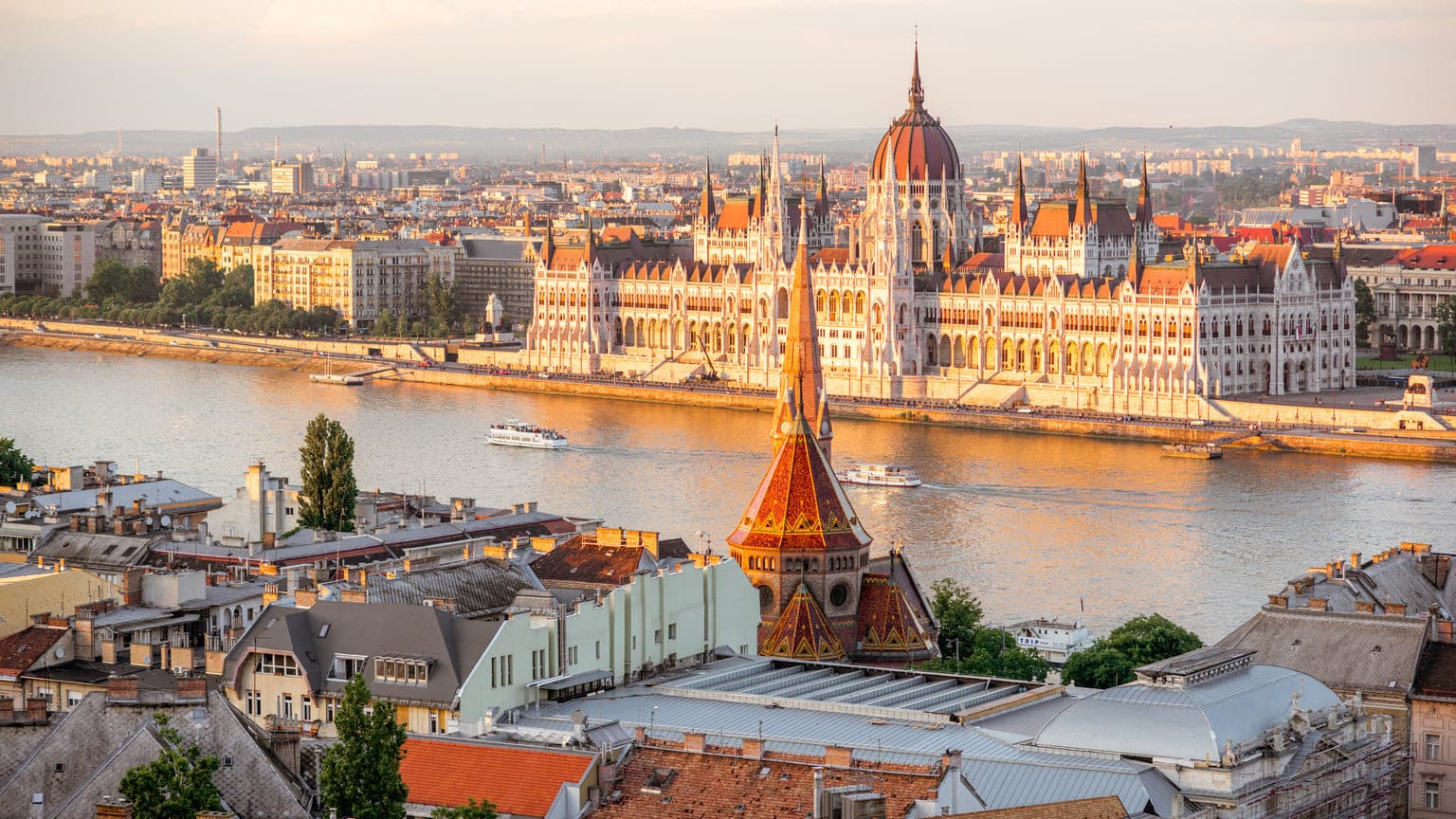
The most popular Hungarian city among expats is Budapest. It is the capital of Hungary and the largest city in the country. Inhabitants and visitors of Budapest can enjoy beautiful architecture, picturesque views of the Danube, and numerous parks and green spaces.
Budapest offers developed infrastructure, proximity to such European cities as Vienna and Bratislava, and an affordable cost of living compared to other EU capitals. For example, apartments for sale in Budapest are 20% cheaper than in Ljubljana and Madrid and 30% cheaper than in Lisbon.
Debrecen is the second-largest city in Hungary. It hosts several universities and research centres, so there are a lot of young people, which makes Debrecen a very lively and vibrant city. Debrecen is connected with other cities and towns by a developed transportation system. There is also an international airport with regular flights to other parts of Europe.
The cost of living in Debrecen is slightly lower than in Budapest: for example, a monthly rental of a one-bedroom apartment in Budapest would cost €592, while in Debrecen, it is only €414.
Szeged is popular among expats for its tranquillity. It is located in the southern part of Hungary and is not as active as Budapest and Debrecen. Szeged offers a more laid-back lifestyle, which makes it an ideal place for those wishing to stay away from the rush and pressure of the capital. The cost of living in Szeged is also lower than in big cities.
Szeged is famous for its rich culture, beautiful architecture, and plenty of parks and green spaces. There are many museums, galleries, theatres, and festivals.

The cost of living in Hungary is lower compared to other EU countries. The 2022 overall price level is 33% lower than the EU average.
Electricity, gas, and other fuels are the cheapest compared to other European countries, as per the Eurostat data.
| Type of expense | Average price |
| Meal in an inexpensive restaurant | €9.16 |
| 0.33-litre bottle of water | €0.94 |
| 1 litre of milk | €1.01 |
| A loaf of bread | €1.43 |
| A dozen of eggs | €2.52 |
| 1kg of chicken fillets | €5.03 |
| 1kg of apples | €1.42 |
| 1kg of potato | €1.08 |
| 1 litre of gasoline | €1.60 |
| Monthly plan for Internet | €14.90 |
| Mobile monthly plan | €24.69 |
| 1-bedroom apartment rental outside of the city centre per month | €337.76 |
Foreigners who do not have tax residency status must only pay taxes on income earned inside Hungary. Hungarian tax residents pay taxes both on the income earned in Hungary and abroad.
There are several types of taxes paid by individuals and businesses in Hungary.
Personal income tax is levied at the rate of 15%. This category includes any sources of income an individual might have: salary, capital gains, crypto transactions, dividends, and interest income. The income tax in Hungary is one of the lowest in the EU, and in certain cases, a deduction is applied, so it is possible to optimise taxes further.
Employees also pay an 18.5% social security contribution in addition to the income tax.
Corporate tax rate is 9%, which is the lowest in the EU. Hungarian tax residents pay corporate tax on their worldwide income, while non-resident businesses are only required to pay tax on the income from their activities in Hungary.
VAT rate in Hungary is 27% and is usually included in the prices of goods and services. This rate is one of the highest in the EU. For certain categories, the VAT rate is reduced. For example, for dairy products, the tax is 18% rate. For medical products, books, and newspapers, the tax rate is 5%.
Property taxes include stamp duty, VAT for the primary real estate, and annual building and land taxes.
The stamp duty for the title transfer rate is 4% for the amount under 1 billion forints, or €2.6 million, and 2% for the exceeding amount. The stamp duty must be paid no later than 90 days after the purchase and closure of the sale deal. VAT for primary real estate is 5% and is usually included in the property price.
Building and land taxes are paid annually by the owner on January 1st of the current year. Local governments define rates of these taxes and may depend on the area in square metres or the market value of the property.
1. In 2024, a new Hungary Golden Visa program will start operating. Foreign nationals will be able to get Hungarian residence permits by investment of at least €250,000 in the Hungarian economy. The status will be valid for 10 years.
2. After obtaining a Hungarian Golden Visa, an investor will get the opportunity to travel visa-free across the Schengen Area and move to Hungary to live, work, and do business.
3. Hungary offers high living standards and low costs compared to other EU countries. The best cities for expats are Budapest, Debrecen, and Szeged. Foreigners can enjoy the beautiful architecture, rich culture, and picturesque nature of Hungary.
4. Other ways to obtain a residence permit in Hungary are employment by a Hungarian company, family reunification, education, and gainful activities, such as doing business and self-employment.
5. To obtain a Hungarian passport, a foreigner needs to live in Hungary and obtain a permanent residency and a registered address. Eight years after obtaining those, they become eligible to apply for Hungary citizenship. Hungary allows having two passports, so there is no need to renounce the first citizenship.
Yes, in 2024, Hungary launches a new Golden Visa program. Under the program, foreigners will get an opportunity to obtain Hungarian residency by investing at least €250,000 in the Hungarian economy. Investment options will include:
It is not possible to obtain citizenship in Hungary by investment directly. Foreigners can acquire Hungarian citizenship by naturalisation eight years after getting permanent residency and a registered address in the country. Permanent residency is granted to foreigners who reside in Hungary on the basis of a residence permit for 3 years.
However, there is no information yet on whether Hungary Golden Visa holders will be able to acquire Hungarian citizenship and if they will have any preferential terms.
As per the conditions of the new Hungary Golden Visa program, foreigners can acquire Hungary residence permits with an investment of at least €250,000.
Among possible options for investment are the following:
Hungary offers several benefits to foreigners who choose to move to the country:
Yes, foreigners are allowed to purchase properties in Hungary. To do this, they need to turn to a lawyer and obtain permission at the Land Registry. For property investments over €500,000, a foreigner can obtain a Hungary residence permit for 10 years.
Hungary Golden Visa is available to non-EU and non-EEA citizens over 18 who are able to prove the legitimacy of their income and can confirm their intention to invest in Hungary.
Yes, under the new Golden Visa program, foreigners can obtain a Hungarian residence permit for purchasing property.
To qualify, an investor should purchase real estate for at least €500,000+, pay a VAT or a stamp duty, administrative fees, and charges for services of a lawyer, realtor, and notary.