Foreigners visiting Malta may be required to obtain a visa to stay in the country, either a short‑term or a long‑term one. Short‑term visas are issued for stays of up to 90 days, while a long‑term visa allows a person to remain in the country for an extended period.
Whether a visa is needed depends on the visitor’s citizenship and the purpose of travel.
This article will help you determine which visa best suits your needs and explain how to obtain it.




Malta offers three types of visas:
Type A Airport Transit visa is granted for travellers transiting through the international zone of Malta’s International Airport. It allows the holder to stay in the transit area while awaiting a connecting flight but does not permit entry into the Schengen Area.
The visa is valid only for the duration of the stopover.
Short-stay Type C visas, or Schengen visas, are mainly issued for tourism, business-related purposes, short-term studies, or visits to family and friends.
Key points about C visas:
Schengen visas can be issued for single, double, or multiple entries. The validity period ranges from several days to up to 5 years.
Long-stay Type D visas, or National visas, are issued for stays exceeding 90 days and are necessary for those wishing to live, work, or study in Malta for an extended period. Such visas can often be converted into residency permits.
Wealthy foreigners can obtain residency in Malta in exchange for investment. Investment requirements vary depending on whether the applicant seeks temporary or permanent residency.
Foreigners can apply for various long-stay visas in Malta, with each category designed for a specific purpose such as employment, education, joining family, investing, or other activities. Each type of visa has its own eligibility rules, required documents, and duration of validity.
Malta offers two types of work visas: the Single Permit and the Blue Card. Both are issued to foreigners with secured employment in Malta, allowing them to live and work in the country. However, the Blue Card is designed for highly qualified professionals with an annual salary of at least €34,956. Both types are valid for the duration of the work contract.
To obtain the work visa, applicants must provide proof of a job offer, contract, and qualifications.
Digital Nomad Visa is granted to remote workers with an annual income of at least €42,000, coming from abroad. It is available to employees of foreign companies, freelancers, and entrepreneurs. To be eligible, applicants must also rent or buy real estate in Malta.
Initially, the visa is valid for 1 year and can be extended three times for the same period.
Students accepted into Maltese educational institutions can apply for a long-stay visa. The application requires proof of enrollment, financial means, and health insurance. This visa allows students to reside in Malta for the duration of their studies.
Family members of Maltese citizens or long-term residents can obtain reunification visas. This applies to spouses, children, and sometimes parents, allowing them to live together in Malta for an extended period.
Applicants must provide proof of family ties, such as birth or marriage certificates.
Maltese long-term visas are issued for stays exceeding 90 days in cases such as:
Applicants must provide documents proving the purpose of their visit. For example, a medical report for treatment or an invitation letter for sports or scientific activities.
Non-EU and non-EEA nationals can obtain visas by contributing to the Maltese economy. There are two types of residency permits: temporary and permanent.
Applicants must have no criminal record, prove a legal source of income, and meet investment requirements based on the desired permit.
Securing a long-stay visa to Malta is a structured but straightforward process. Applicants must first show a clear purpose for their stay and provide supporting evidence, whether related to work, study, or family. The application is handled through Maltese embassies or consulates abroad.
Ensure you meet the criteria for a Malta long-stay visa, which includes reasons such as employment, studies, or family reunification.
Depending on your reason for staying, the required papers may vary. Common documents include:
Book an appointment at the nearest Malta embassy or consulate. On the scheduled date, submit your application and pay visa fees. They vary depending on the purpose of your stay.
Some applicants may need to attend an interview at the Malta embassy or consulate. During this interview, you’ll be asked about your travel plans, financial situation, and purpose for staying in Malta. You may also need to provide biometric data, such as fingerprints and photos.
Processing times generally take 15 to 30 days. Apply at least three months before your intended travel date. Once processed, you will be informed if your visa is granted or denied. If approved, you will receive your long-stay visa.
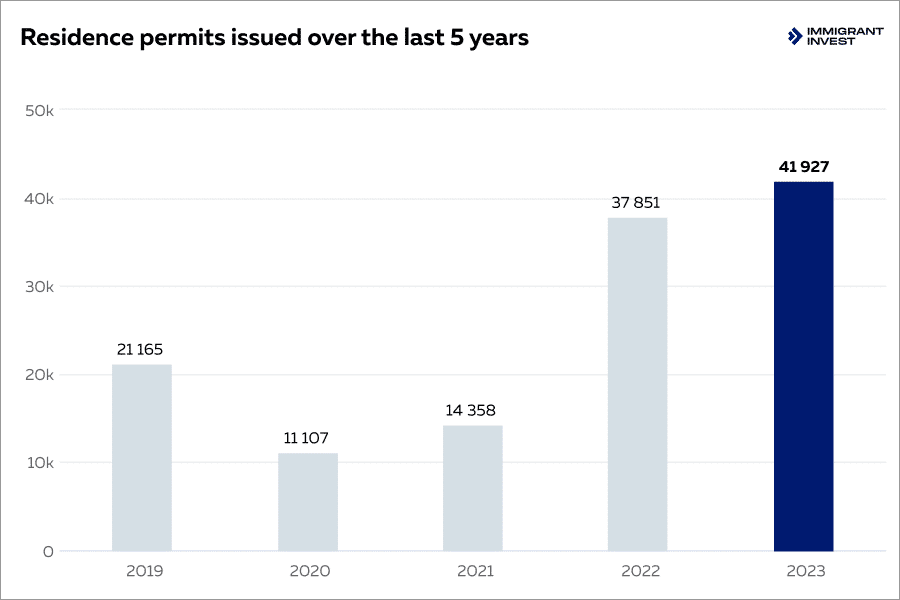
Two investment programs allow wealthy foreigners to gain a long‑stay residence permit in Malta: the Malta Global Residence Programme (GRP) and the Malta Permanent Residence Programme (MPRP).
To participate, the investor must be over 18, have a clean criminal record and legal sources of income, and buy health insurance.
To obtain a residence permit, the investor buys or rents real estate. The minimum cost requirements are the following:
The investor also pays an annual tax of at least €15,000 and contributes €5,500 or €6,000 as an administrative fee.
Residency does not require living in Malta, but the investor cannot spend more than 183 days per year in any other country.
Family members, including a spouse, children under 25, siblings, parents, and grandparents, can be added to the application. Adult children, siblings, parents, and grandparents must be principally dependent on the investor or their spouse.
To gain permanent residence, investors must meet the following criteria:
The investor must also demonstrate assets of at least €500,000, with €150,000 in liquid financial assets.
Permanent residence is granted for life, but the investor must renew the residence card every five years. Living in Malta is not required to keep the status.
The investor participating in the program can add their immediate family members to the application. This includes their spouse, children of any age, parents, and grandparents. Adult children, parents, and grandparents must be principally dependent on the investors or their spouse.
According to the experiences of Immigrant Invest lawyers, obtaining Maltese permanent residence takes at least six months. The process includes document collection, Due Diligence, fulfilment of investment conditions, and biometric submission in Malta.
Before signing a Services Agreement with an investor, our Anti-Money Laundering Officer conducts a preliminary check of the person’s background. This allows us to reduce the risk of refusal down to 1%.
If Due Diligence is successful, we sign a contract and begin the acquisition process.
Before submitting the full MPRP application, the investor and their dependants may get a 1-year temporary residence permit. This gives them access to residency benefits while the permanent application is being processed.
Documents required for the temporary permit:
Applicants must travel to Malta to submit biometrics. The first part of the administrative fee of €15,000 and a government fee of €500 per residence card are paid.
Once submitted, the temporary residence application is processed within 4 weeks. The cards must be collected in person from the Residency Malta office, either in person or by our dedicated lawyer.
The full permanent residency application must be submitted within 6 months of receiving the temporary permit. If the MPRP application is refused, the temporary residence permit will be revoked within 15 days.
Immigrant Invest lawyers compile a list of required documents and help the investor prepare them. The lawyers compile the investor’s welfare history, translate documents into English, certify copies with a notary, and accurately complete application forms.
Once the documents are prepared, the lawyers submit the application to the Residency Malta Agency.
Maltese authorities conduct a comprehensive Due Diligence check on the applicant’s financial and personal background. Upon successful completion, the applicant is eligible for permanent residency, subject to investment requirements.
Once the application is approved, the investor fulfils all the investment requirements, including paying the remaining €45,000 of the administrative fee. The latter must be paid within two months after receiving the approval. To fulfil the other conditions, the investor has up to eight months.
Applicants travel to Malta to submit biometrics at the Residency Malta Agency. Fingerprints can be submitted before or after all investment requirements are met.
After all investments are completed, lawyers send supporting documents to the Residency Malta Agency. The authorities review the papers and notify Immigrant Invest on a final approval.
The Residency Malta Agency sends permanent residence cards to Immigrant Invest, who then delivers them to the investor by courier.
During the first 5 years, investors must maintain program conditions, including property ownership or rental and holding assets worth at least €500,000. Compliance is reviewed annually by the Residency Malta Agency.
Whether you need a visa for a short stay depends on your citizenship. It also determines how long you can stay in Malta.
Malta is part of the EU; thus, nationals of the European Union and EFTA countries can enter Malta without visas and freely stay there for up to 90 days.
However, if they plan to spend more than 90 days in the country, they may need to register at the police station.
Citizens of countries like the USA, Canada, or the UK can also enter Malta without a visa for up to 90 days. At customs, they only need to present their passport. For stays longer than 90 days, a National visa is required.
| Albania | Guatemala | Panama |
| Andorra | Honduras | Paraguay |
| Antigua and Barbuda | Hong Kong | Peru |
| Argentina | Hungary | Poland |
| Australia | Iceland | Portugal |
| Austria | Ireland | Romania |
| Bahamas | Israel | St Kitts and Nevis |
| Barbados | Italy | St Lucia |
| Belgium | Japan | St Vincent and the |
| Bosnia and | Kiribati | Samoa |
| Brazil | Kosovo | San Marino |
| Brunei | Latvia | Serbia |
| Bulgaria | Seychelles | |
| Canada | Lithuania | Singapore |
| Chile | Slovakia | |
| Colombia | Macao | Slovenia |
| Costa Rica | Malaysia | Solomon Islands |
| Croatia | Marshall Islands | South Korea |
| Cyprus | Mauritius | Spain |
| Czech Republic | Mexico | Sweden |
| Denmark | Micronesia | Taiwan |
| Dominica | Moldova | Tonga |
| East Timor | Monaco | Trinidad and Tobago |
| El Salvador | Tuvalu | |
| Estonia | Nauru | Ukraine |
| Finland | United Arab Emirates | |
| France | New Zealand | United Kingdom |
| Georgia | Nicaragua | United States of America |
| Germany | North Macedonia | Uruguay |
| Greece | Norway | Venezuela |
| Grenada | Palau |
Nationals of countries not mentioned above must obtain visas to visit Malta for both short and long stays. If they plan to visit the country for less than 90 days they get a short-stay visa; in other cases, the long-stay visa is necessary.
Biometric passport holders from Armenia, Azerbaijan, and Cabo Verde take advantage of a simplified visa procedure, requiring fewer documents and lower or no fees. They are also more likely to receive multiple-entry visas, and their visa applications are processed faster.
Individuals holding residence permits in EU countries can enter Malta freely.
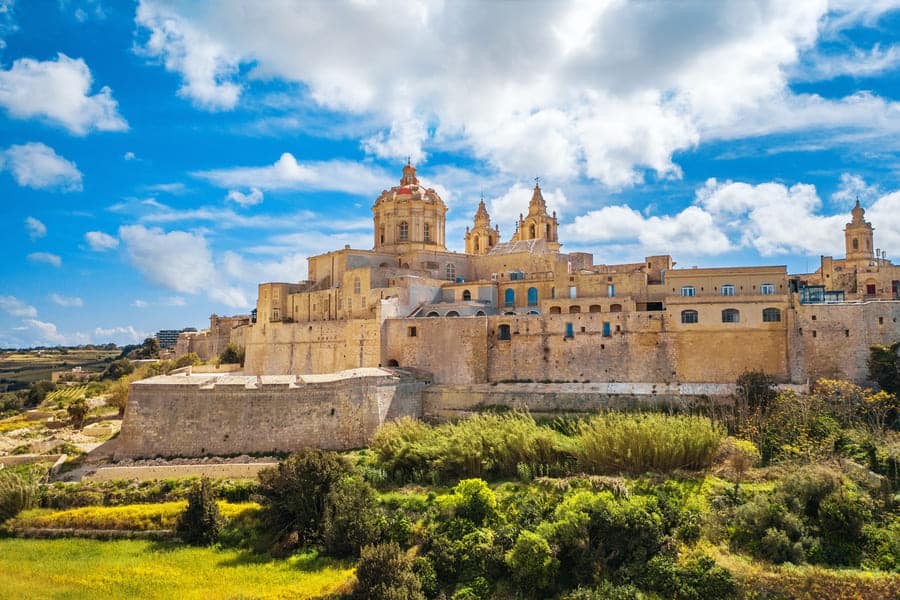
The Schengen visa permits foreigners to stay in all Schengen states for up to 90 days within a 180-day period. Travellers should apply for a Maltese Schengen visa if Malta is their main destination in the Schengen Area. For other cases, Malta can be visited using a Schengen visa issued by another country.
The Schengen visa to Malta can be issued for several days up to five years and may allow single or multiple entries. Single-entry visas permit only one visit to the Schengen Area. After you have left the area, you cannot reuse the visa. Multi-entry visas allow multiple visits within the visa's validity.
To obtain a Schengen visa for Malta, the foreigner must follow five steps.
1. Determine your visa type. Choose the appropriate category based on your visit’s purpose: tourism, business, or family visit.
2. Gather documents. The package of required papers usually includes:
3. Book an appointment at the nearest Maltese embassy, consulate, or visa application centre.
4. Attend the appointment. Submit your application and documents, provide biometric data, and pay the visa fee of up to €90. The fee varies by nationality and age.
5. Receive the visa. Processing typically takes 15 days. If approved, you will be notified to collect your passport with the visa. Be sure to check all details on the visa before leaving the consulate or visa centre.
There are three types of visas in Malta:
Yes, it is possible to get Malta citizenship by naturalisation after 5 years of living in the country. There’s also naturalisation granted for exceptional contributions to Malta or humanity. It is called Citizenship by Merit.
Eligibility fields include entrepreneurship, investment projects, job creation, innovation, science, education, culture, philanthropy, security, and social impact.
Whether you need a visa to visit Malta depends on your citizenship and the length of your stay. For example, US nationals can enter Malta without a visa for up to 90 days. For stays longer than 90 days, they must apply for a long-term visa based on the purpose of their visit, such as employment or studies. Meanwhile, Chinese and Indian nationals must obtain a visa for both short and long stays.
EU nationals do not need a long‑term visa and can stay in Malta indefinitely, though they may need to register at a police station.
Type C is a short-term visa, also known as a Schengen visa. It is issued to foreigners visiting Malta for tourism, business, or personal purposes. This visa allows stays of up to 90 days within a 180-day period in Malta and other Schengen countries.
Yes, Malta is part of the Schengen Area, so foreigners can enter the country with a Schengen visa.
The type of visa and the acquisition process depends on the purpose of your visit. Generally, it involves the following steps:
The applicant must provide proof of their purpose of visit. For instance, tourists need to submit a travel itinerary, tickets, and accommodation bookings. Students must provide letters of enrollment from Maltese universities.
To get a work visa in Malta, the person is required to be employed by a company operating in Malta. The foreigner gathers documents, including a letter explaining the purpose of your stay, such as an employment contract, a valid international passport, health insurance, an application form, and proof of financial stability, such as bank statements or income proof.
To obtain Malta permanent residence by investment, the applicant must fulfil several investment requirements:
During the process of obtaining Malta PR by investment, the applicant undergoes Due Diligence and visits Malta to submit biometrics.
To obtain a Malta residence permit by investment, you must have at least €30,000, which covers renting an apartment for five years and paying the administrative fee.
For permanent residence, the total cost is at least €150,000.
Yes, a foreigner can get temporary and permanent residency by purchasing a house in Malta.
The minimum property price for a temporary residence permit is €220,000. For permanent residence, the value of the real estate must be at least €300,000.
In addition to buying a property, one must fulfil other requirements, such as paying an administrative fee or making a charitable donation.
It is relatively simple to get permanent residence by investment in Malta. The foreigner must only fulfil several investment requirements:
The PR acquisition process lasts at least six months. After this period the residence is granted for life, provided the investment requirements are maintained.